
 In 19th-century Bengal, Bulbbul, a child bride, is married off to the much older Indranil, a wealthy lord, and sent to live on his estate. She grows close to his youngest brother Satya, who is nearer to her age. As the two grow up together, they share stories of a chudail (a demon woman) lurking in the forest.
From the opening shots, there is much to absorb in Anvita Dutt’s gorgeous and dreamlike film. Young Bulbbul waits in a tree, her feet dangling from a branch. Later, as her mother places a toe ring on her that pinches, Bulbbul is told it is there so she doesn’t wander. Feet and freedom become intertwined from the earliest moments. Twenty years later, Satya returns home after several years in London to find a changed Bulbbul, his brother gone and his other brother dead. As men in the village begin dying, locals blame the demon woman said to haunt the woods. Dutt cleverly uses flashbacks to move between past and present, slowly filling in the pieces of Bulbbul’s story and changing our understanding of the woman Satya finds when he returns.
Bulbbul shows us early on the cage of being a woman in this world. Bulbbul isn’t simply young when she is married off; she is about five years old. Let that sit for a moment. She is young enough that she naturally assumes Satya, a child only a few years older than her, is her husband. They grow up together, and a natural bond forms between them, something her husband grows to resent. But Bulbbul is not the only woman trapped by circumstances beyond her control. Her sister-in-law enters a marriage with Bulbbul’s brother-in-law without fully understanding his needs or what will be expected of her. Other women in the village are beaten, discarded, and mistreated, left largely powerless against the whims of their husbands. Men hold the power and women are expected to live with it.
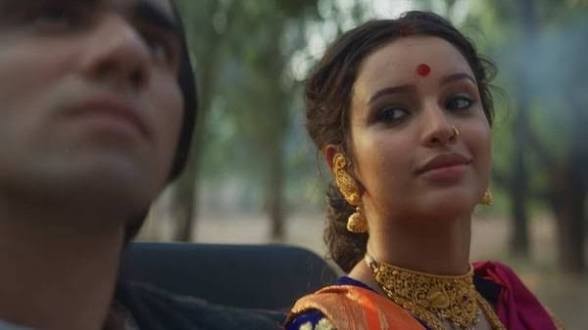 When men begin dying, allegedly at the hands of the demon woman, it’s difficult not to question where the real monsters are. Even Satya, her friend, questions what Bulbbul has become but not why she has changed. At one point, he exclaims, “What woman is capable of such brutal murder?” Spoken like a man who has never had reason to understand the depths of female rage. He becomes consumed with the possibility of a monster lurking in the woods while remaining willfully blind to the monster living in his own home.
Dutt also wrote the screenplay, crafting this tragic fairytale. Bulbbul is as much a princess trapped in a tower as Rapunzel. No prince is coming to rescue Bulbbul, nor any of the women. Dutt carries that fairytale quality into the film’s visuals, creating a lush, dreamlike world that hides the rot of the patriarchal system. Her use of red is particularly effective, giving everything an otherworldly quality and setting the mood. Murders occur beneath a saturated blood-red moon, blood stains bandages, and even Bulbbul’s wardrobe incorporates more red as she changes.
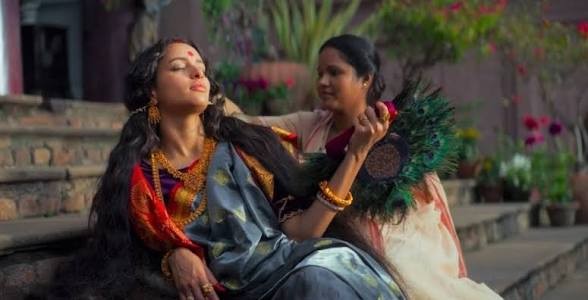 Tripti Dimri as Bulbbul gives a nuanced and layered performance. She tackles the challenge of playing Bulbbul across multiple years and life experiences that fundamentally change her. She never overplays, and her ability to shift from sweet young girl to confident, unimpressed woman is flawless. She utilizes posture and body language to convey emotions without having to say a word. A small tilt of her head speaks as loudly as her screams to the universe. While dealing with insignificant men, she remains relaxed and almost catlike in her level of unimpressed.
Bulbbul is a gorgeous, gothic-leaning fairytale about a woman reclaiming the power that was violently taken from her, but Dutt never lets that empowerment erase the tragedy of what it took to get there. It also shows how supposedly good men can remain complicit and blind to the abuse around them, failing to question systems they have never had reason to fear. Dutt has created a powerful and beautiful film that turns the idea of the monstrous woman on its head, asking us to look instead at the world that created her.
Bulbbul is available to stream on Netflix