
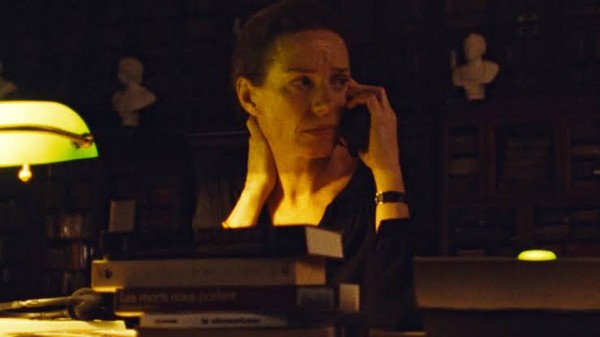
 A researcher heads down a strange path in Chronovisor. Jack Auen & Kevin Walker’s quiet, enigmatic wonder comes to theatres this weekend.
Chronovisor is a different kind of strange, esoteric film. Low-key, discordant, cursed-media, and yet quietly comfortable; a peculiar atmosphere with a bookish, scholarly tone. Chronovisor has a vibe of a quiet, wooden classic library. If one can turn the feel of sitting in the hushed, low light, page-bound, old book musk; the sound of the crinkling of yellowed pages into a film, that’s Chronovisor.
Chronovisor is hard to describe. It’s absolutely fascinating, pulling you in with a method to a calm madness, but putting it into words has been difficult as I’ve worked on this review. Writer-director pair Jack Auen & Kevin Walker’s film is unlike any other, with a pushing uniqueness that draws you in and engages you in a wholly different way. It would be easy to joke or dismiss it as “research: The Movie!” but that’s a purposely unfulfilling description. Anne Laure Sellier is a researcher, and her work points her to a missing priest, Italian monk Pellegrino Erneti, who claims to have invented the titular Chronovisior. The film follows Sellier’s Beatrice Courte; it’s essentially a one-hander, with Sellier, a scholar in real life (professor of behavioral sciences at HEC Paris business school), as the only live person on screen, with everyone else either off camera, on the phone, or reading correspondence and articles. The unseen others, focusing her fully on screen, transport a ghostly loneliness of research and academia. The search to find out more draws her, and the audience, in with an uncomfortable ease in an academic horror mystery, a ghost story sort of vibe. Auen & Walker say they were inspired by Umberto Eco and Jorge Luis Borges, a wholly apt comparison. CoughsomethingDanBrownButHesAHacksomething; if we’re sliding into more popular methods – the feeling of House of Leaves by Mark Z. Daniewlwski or S. by Doug Dorst & J. J. Abrams.
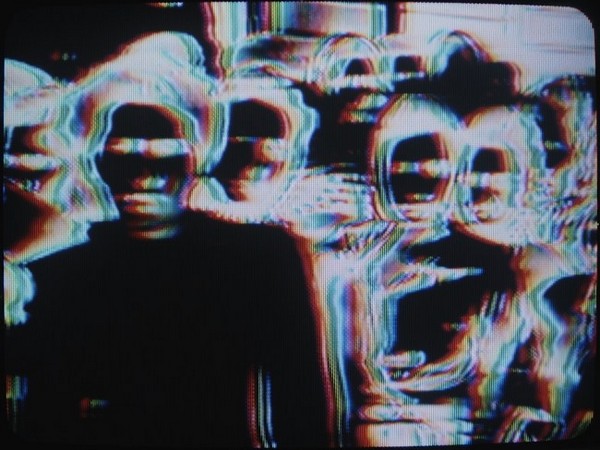 I’m impressed with how Auen & Walker present the story. It’s an enigmatic wonder. The source is presented as fact, with Erneti as a real person who claimed to have made such an invention: a device that can look into the past and pull a silent video or still image, including the seen-as-blasphemous face of Christ or a missing Greek play. Courte reads books, with a fantastic touch of the translations hovering above the text; reaches out to others; travels to dusty libraries; watches staticy old VHS tapes, and digs in with a quiet reserve, but it holds dangerous, forbidden knowledge. It’s an encompassing puzzle as she digs deeper into the research, following lines of inquiry and searching the Church’s strange histories and annals. But it’s so simply done, it’s surprisingly effective.
The Forteana document of a film is bathed in low light, like those earlier-mentioned Elden academic libraries, coated in the brown of fading pages. I can almost smell it. Leo Zhang shoots it in 16mm, giving just enough strange fuzz; almost giving it the feel of a cursed document (heading to Miskatonic’s backrooms for THOSE books, are we?). The ethereal repurposed score, from the works of Gustav Holst purposely suited to the film, fully embraces a film that feels from another age, although if pressed I couldn’t say “this decade” in particular. It’s like it’s out of time, not unlike the subjects and their drives. 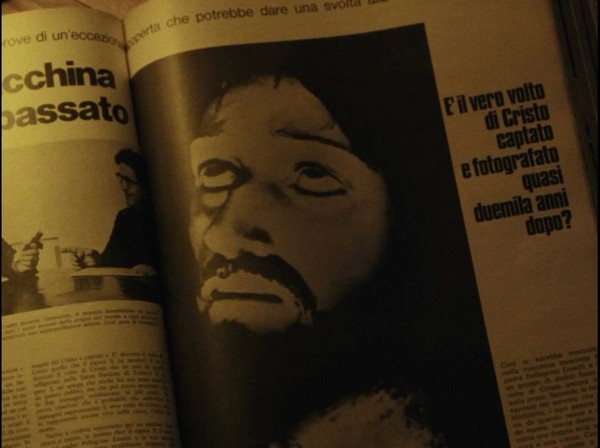 The downside to this storytelling method is that many will be kept at arm’s length and unable to engage fully. But to film’s credit, within a scene or two someone would be able to grasp if it’s for them or not. The nature of the story also keeps from having too many direct answers for those who need things wrapped up. Heck, I’ll admit I wish things were a little more tidy or direct, even though I knew it wasn’t going to be. The hum of watching and reading scholarly articles and histories can become a little hum after a moment. Because of life, I watched the film in a few chunks. Overall, I could see a more tired me starting to check out in a darkened theater, despite my strong interest.
Chronvisor, written and directed by Jack Auen & Kevin Walker, is a film of secrets. It asks the viewer to follow its slightly disconcerting, slightly understated, but wholly engrossing path: a simmering horror. It’s a lo-fi marvel of fuzzy research and academia, soaked in oak-paneled rooms and dusty books. For those willing to let it steep, Chronovisor will work wonders with the esoteric unraveling of a forgotten mystery.