
 After several years away, Lisa returns to her home in Kitamaat, British Columbia. Able to see and communicate with spirits, she embarks on a perilous journey when her brother Jimmy goes missing at sea.
The nonlinear narrative shifts between Lisa’s childhood, adolescence, and the present with varying degrees of success. As she navigates past trauma, Lisa finds herself caught between multiple worlds, both spiritual and physical. Lisa’s family has grappled with intergenerational trauma in different ways, leaving her struggling to find her own place. Based on Eden Robinson’s novel, Monkey Beach struggles at times to translate its source material to the screen.
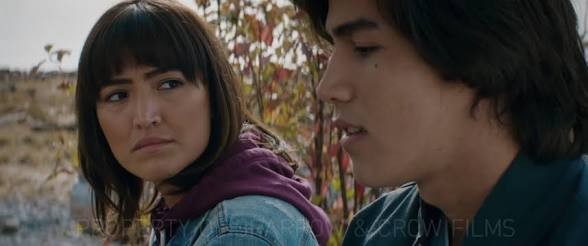 Directed by Loretta Todd in her narrative feature debut, Monkey Beach benefits from her background in documentary filmmaking, particularly when it comes to the cinematography. The film nails the atmosphere, and while budget limitations may have hindered the special effects, Todd understands how to make the land speak for itself. This makes some of the other visual choices frustrating. The camerawork is so strong that there is little need for the color filters applied to certain scenes or the strange effects accompanying some of the supernatural elements. The depiction of the ghosts, for example, is inconsistent throughout. The film is at its strongest when Todd allows everything to simply be.
The screenplay, written by Johnny Darrell, Andrew Duncan, and Loretta Todd, suffers at times from stilted dialogue. It takes a while for the film to find its footing, and the pacing remains uneven throughout. The strongest moments come from the interactions between family members, where the dialogue feels more natural and the performances are allowed to breathe. Much of the credit belongs to the talented ensemble cast. Conversations between a young Lisa and her grandmother, Ma-ma-oo, are especially effective, providing context for Lisa’s experiences. Ma-ma-oo teaches her the difference between ghosts and spirits, as well as the importance of preserving the old ways. Her interactions with Lisa, both as a child and as an adult, offer an intimate and powerful exploration of the connections between culture, identity, and family.
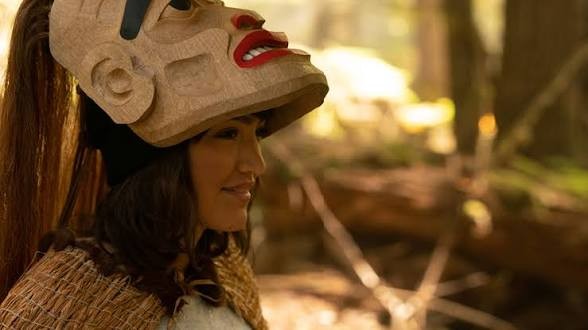 Grace Dove has to do a lot of heavy lifting as Lisa, balancing the natural and supernatural worlds while portraying a woman struggling to embrace her abilities and reconnect with her family and roots. It’s a lot to handle, but Dove navigates it all seamlessly. Adam Beach is also a standout as Lisa’s uncle, bringing an easy charm and welcome levity to many of his scenes. Tina Lameman delivers a performance full of warmth as Ma-ma-oo, while Joel Oulette brings a believable vulnerability to Jimmy. There is a genuine sense of family among the ensemble, allowing the audience to feel connected to these characters as events unfold. We care about them and what happens to them.
Ultimately, while the adaptation doesn’t fully land, the heart of the film remains intact and makes it worth watching. Lisa’s journey as a survivor is one worth witnessing. Her reconnection with the land, her family, and her own strength is a powerful reminder of the importance of knowing where we come from.