
 Jax has been caring for her 13-year-old niece, Roki, since the disappearance of her sister, Tawi. When child welfare authorities place Roki with her white grandparents, Jax takes her niece on a journey to a powwow in Oklahoma to keep their family together.
Set on Oklahoma’s Seneca-Cayuga reservation, Fancy Dance offers an intimate and, at times, heartbreaking look at what it means to grow up and live within a system of oppression. Early on, we are given a glimpse into the realities of daily life for Jax and Roki. Tawi has been missing for two weeks when the film begins, yet the alarming lack of effort to locate her is only one small piece of a much larger picture. When Roki is placed with her white grandparents, there is little consideration given to what it means for her to be separated from her community and culture. What makes these moments particularly heartbreaking is that, as upsetting as they may be for the audience, they are realities that Jax has already learned to navigate.
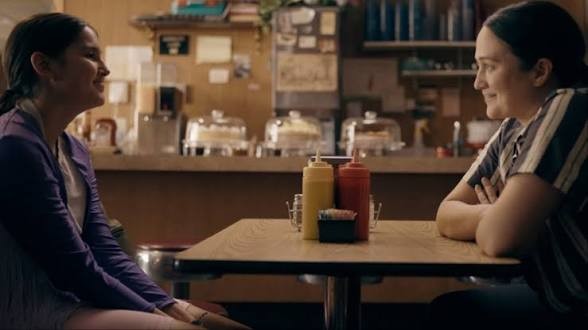 Director Erica Tremblay, who co-wrote the screenplay with Miciana Alise, explores these issues through the complicated relationship between Jax and Roki. Part of the tragedy lies in Jax’s desire to shield Roki a little longer from the harsh truths she will eventually have to face, even promising her that Tawi will be at the powwow. Jax wants to care for her niece, but she is barely surviving on her own, relying on stealing to get by. Tremblay isn’t trying to preach to the audience. She’s simply showing us. Even the camerawork has a very natural feel to it. The frequent use of wider shots keeps Jax and Roki in the frame together, visually reinforcing Jax’s desire to keep her niece connected to her family and culture.
There are some pacing issues. Certain beats feel rushed, while other moments linger a little too long. But when it lands, it hits hard. One particularly ironic scene involving an ICE agent questioning where Jax is from speaks volumes. Tremblay also features several scenes of Jax and Roki speaking Cayuga together. These moments reinforce their familial and cultural bond and underscore the importance of keeping the language alive by passing it on to younger generations.
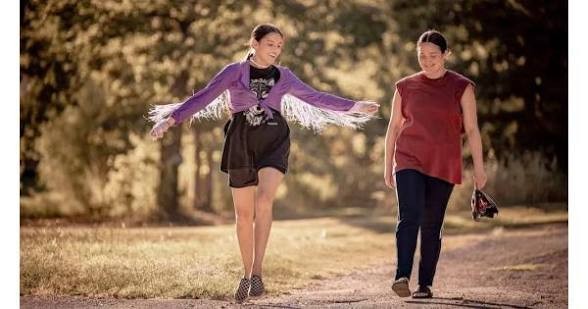 The anchor of the film is Lily Gladstone’s Jax. Gladstone gives a performance that is both tough and achingly vulnerable. Jax is a deeply flawed character, but at her core, she loves her niece profoundly. Even in the more dramatic or emotional moments, Gladstone’s performance never feels forced. Isabel Deroy-Olson’s Roki more than holds her own alongside Gladstone. The two have a natural chemistry, and their relationship feels genuinely familial. As strong as the two leads are, the casting is exceptional right down to the smaller roles. Crystle Lightning, as Sapphire, an exotic dancer who worked with Tawi, may not be on screen for very long, but she shares some memorable moments with Gladstone. Everyone in this film feels like they’re speaking the same language, which says a lot about Tremblay’s ability as a director to create a cohesive vision that extends from the page to the performances.
Ultimately, Fancy Dance is an emotional story that celebrates family and community while tackling difficult subjects without ever feeling exploitative. Even amid the tragedy of Tawi’s disappearance, there is joy in the culture and familial bond that Jax and Roki share. As much as Tremblay’s film is about what stands to be lost, it is also about what is worth preserving.