
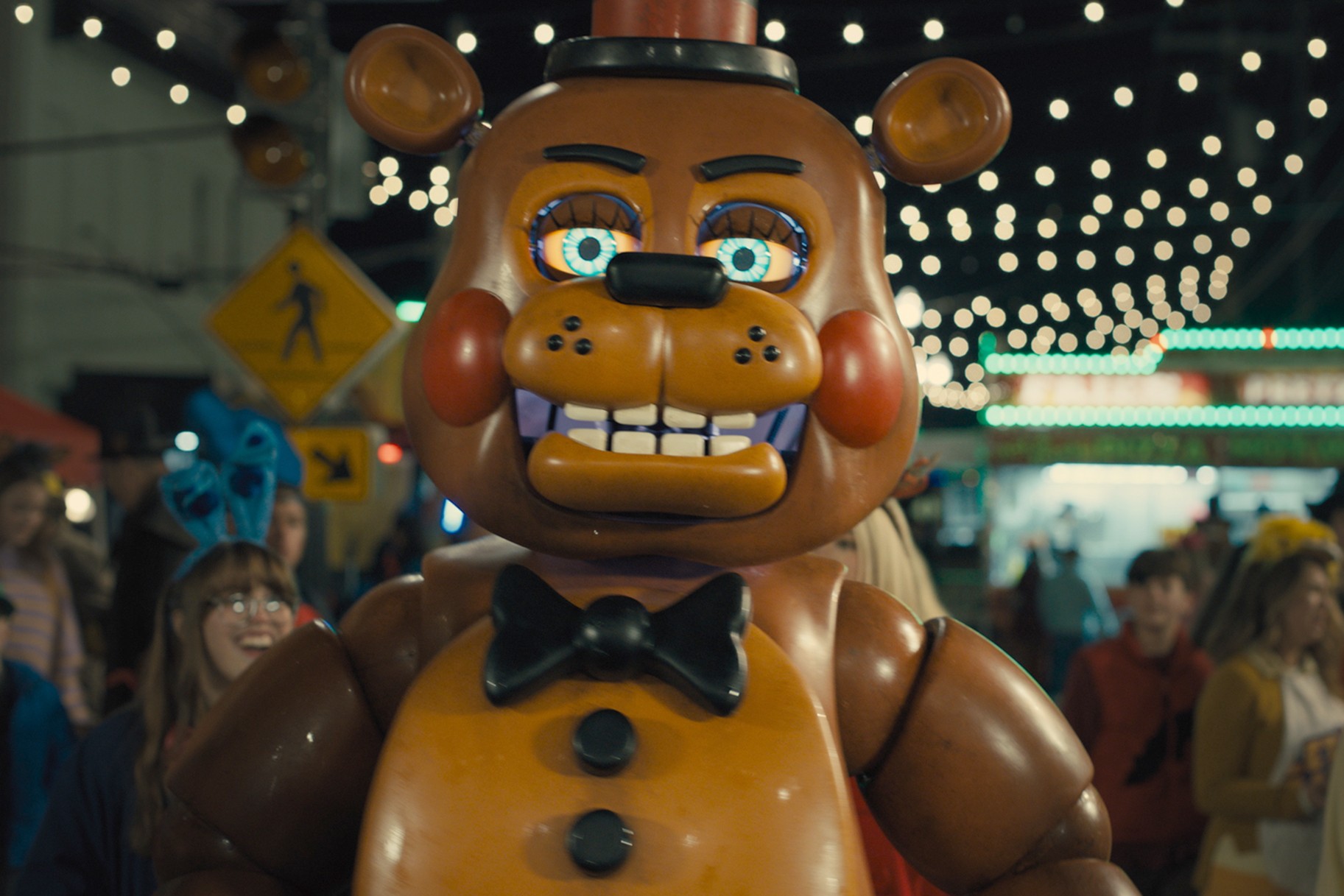
What begins as an attempt to create a somewhat normal life quickly unravels into a chilling descent back into the supernatural horrors of Freddy Fazbear’s Pizza.
The film explores the fragile line between childhood imagination and buried trauma. Blending supernatural horror, emotional family drama, and dark fantasy, Five Nights at Freddy’s 2 delivers a fast-paced, engaging continuation of the franchise, deepening the lore without ever slowing its momentum.
Directed by Emma Tammi and written by Scott Cawthon, the film maintains an accessible tone despite its darker premise, leaning into the eerie mythology of Freddy’s with confidence. Tammi balances tension and sentiment with surprising finesse, allowing the animatronics to remain both frightening and strangely endearing. While the movie expands the franchise’s mythology, its deeper themes, grief, memory, and the consequences of generational secrets, remain embedded within the spectacle rather than dissected outright, keeping the film firmly audience-friendly even as it pushes toward more emotionally complex territory. Five Nights at Freddy’s 2 follows Abby as she uncovers the buried truth behind the animatronics’ origins, forcing both her and Mike to confront a history steeped in loss, manipulation, and unresolved trauma. The past returns not just to haunt them, but to reshape everything they believed about Freddy’s, their friends, and themselves.
Piper Rubio delivers a standout performance as Abby, now older, more inquisitive, and more emotionally vulnerable than in the previous film. Rubio balances youthful wonder with an unsettling clarity, portraying a child who is both lonely and deeply connected to the supernatural forces surrounding her. Her quiet intelligence gives weight to scenes that might otherwise feel fantastical, especially as Abby begins to question what is real, what is memory, and what is being manipulated around her. Opposite her, Josh Hutcherson returns as Mike, continuing to ground the story with a sense of protective exhaustion. Hutcherson’s portrayal emphasizes the internal conflict of a man desperate to outrun his past, his missing brother, his custody battles, and the emotional fallout of their supernatural ordeal. His performance is steady, sincere, and human, offering a compelling counterbalance to the film’s escalating horror.

The film’s horror sequences are some of its strongest elements, blending animatronic eeriness with psychological tension. The opening flashback to the 1980s sets the tone, a cold, unnerving moment that reintroduces the audience to the legacy of violence and lost children that shaped Freddy’s mythology. The animatronics are not only threats but also emotional anchors for Abby, creating a duality that amplifies the unsettling tone.
FNAF 2 is vibrant and intentionally stylized. Early scenes frame Abby’s world with warm amber tones of early-2000s nostalgia, contrasted with the flickering neon of FazFest, a carnival-like celebration built around the very tragedies locals now treat as folklore. When Abby’s journey leads her back to the ruins of Freddy Fazbear’s Pizza, the cinematography shifts dramatically: tighter framing, shadow-soaked corridors, and dramatic color contrasts mirror the unraveling truth behind Freddy’s origins. These choices effectively anchor the audience in Abby’s perspective, letting us feel the pull between innocence and dread as she reconnects with her spirit friends trapped in the animatronics. The film provides an entertaining, lore-rich sequel with emotional depth, strong performances, and fan-driven cameos. Viewers craving answers about the franchise’s mythology will find plenty to latch onto, while fans of the animatronics will appreciate their expanded personality and symbolic presence. Make sure you stick around for mid and post-credit scenes.