

What begins as a brutal tale of discipline and disobedience quickly unravels into a blood-soaked reckoning with identity, loyalty, and survival.
Ninja Assassin follows a familiar revenge framework, where the protagonist escapes those who caused harm to seek vengeance later. Still, it filters it through relentless action, operatic violence, and a surprisingly emotional core. Blending martial arts and revenge thriller, the film delivers an intense, fast-paced experience that prioritizes visceral impact while still grounding its chaos in character-driven motivations. Ninja Assassin explores control, indoctrination, and the reclaiming of agency. The Ozunu Clan represents absolute authority, one that strips children of identity and replaces it with obedience. Raizo’s rebellion is not just physical, but psychological: a refusal to remain a weapon without a will. Mika’s investigation mirrors this theme, exposing how systems of power operate in secrecy, shielded by wealth and political influence.
Directed by James McTeigue and written by Matthew Sand and J. Michael Straczynski, the film wastes no time immersing the audience in its shadowy world. McTeigue embraces an exaggerated, stylized tone, allowing the film to exist somewhere between comic-book fantasy and grim historical myth. The script moves quickly, favoring momentum over exposition, trusting the audience to piece together the emotional stakes through action rather than dialogue.
At the center of the film is Rain as Raizo, a performance that carries far more weight than the film’s reputation might suggest. Rain portrays Raizo as a man forged by violence yet defined by restraint. His physicality is razor-sharp, but it’s the quiet moments that make the character compelling. His internal conflict gives emotional gravity to the film’s relentless bloodshed.
Opposite him, Naomie Harris delivers a grounded, determined performance as Europol agent Mika Coretti. Mika functions as both investigator and moral anchor, piecing together the financial and political threads connecting the Ozunu Clan’s assassinations. Harris plays Mika with focused intensity, paranoid yet compassionate, analytical yet emotionally invested. Her pursuit of truth contrasts sharply with Raizo’s instinct-driven survival, creating a dynamic that humanizes the film amid its stylized brutality. The chemistry between Rain and Harris adds an unexpected emotional balance, preventing the story from becoming a one-note action barrage.
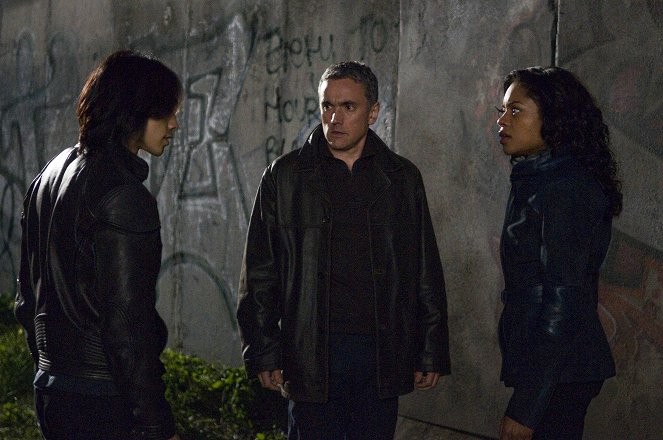
The action sequences are, without question, the film’s most defining feature. Choreographed with precision, the fight scenes are fast, brutal, and unapologetically graphic. Limbs are severed, blood arcs through the air, and combat unfolds with almost supernatural efficiency. Yet the violence never feels random; it’s purposeful, reflecting the world that shaped Raizo and the cost of escaping it. Time jumps between Raizo’s childhood training and present-day combat, which deepen the narrative, allowing the audience to understand how every strike is rooted in years of conditioning and trauma.
Ninja Assassin is striking in its commitment to darkness. The film is drenched in deep blacks, harsh shadows, and splashes of crimson, turning violence into a visual language of its own. Early training sequences are shot with rigid framing and oppressive compositions, reinforcing the suffocating control of the Ozunu Clan. As Raizo’s journey shifts toward rebellion and escape, the camera becomes more fluid. The result is a visual evolution that mirrors the character’s emotional arc.
While the film received mixed critical reception upon release, it has since gained recognition as an underrated entry in action cinema. Its commitment to style, character investment, and unapologetic intensity sets it apart from more disposable action films of its era. The backstory is fully realized, the characters are emotionally grounded, and the action serves the narrative rather than replacing it.
Ninja Assassin may not aim for subtlety, but it succeeds in delivering an immersive, character-driven action experience. Beneath the blades and bloodshed lies a story about survival, autonomy, and the cost of breaking free from systems designed to consume you. It stands as a visceral, unapologetic reminder that even in the most controlled environments, identity can still be reclaimed.