
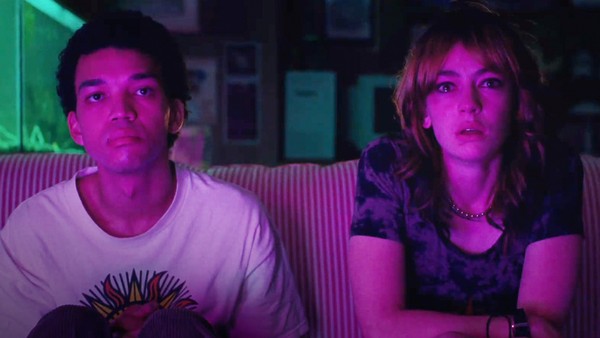
 A pair of awkward and lonely suburban teenagers connect over a TV show and perhaps find the changes they need in their lives. A single sentence here can’t properly introduce the haunting, sad, and affecting film of finding connection and the internal fight for one’s true self in Jane Schoenbrun’s second film: 2024’s I Saw the TV Glow.
Greetings programs! Bob here. This month sees the expanding rollout of writer-director Jane Schoenbrun’s highly anticipated Teenage Sex and Death at Camp Miasma, with SIFF Theatres (Seattle) presenting the film on 35mm for the first week. Kim and I are hitting it up for the Saturday show with a group of friends (and a review to come Monday). Thus, I decided to revisit I Saw the TV Glow. On second viewing, at home rather than the packed SIFF (2024 Festival) screening, it’s still a highly affecting, incredibly sad film about outsider awareness and the failure to move into something, clinging to what’s the same even as desperately wanting to change. It’s a trans allegory but so much more. But I’m getting ahead of myself. The following review was published after that first viewing. I’ve fixed some things, such as Jack Haven, who plays Maddy, transitioned between TV Glow and Queens of the Dead, and is reflected in the current review, but mostly kept it the same. See also: Felix’s review.
I Saw the TV Glow is a haunting film that will remain in the viewer’s mind like an image burned into an old TV.
In 2021, writer-director Jane Schoenbrun made a splash with the low-key indie We’re All Are Going the World’s Fair. It was a film of isolation, trying to find those human connections that seem just out of reach, and living in the day-to-day as a blip in the suburban landscape. While the film didn’t completely work for me, I felt it was almost there, and I felt the director’s next work would refine the style and world on display in World’s Fair and truly land.
I Saw the TV Glow is that film.
Like We’re All Going to the World’s Fair, I Saw the TV Glow explores isolation among others while trying to find connections with similar-minded people who may be out of sync with the world around them. I Saw the TV Glow is a more cohesive and refined film, continuing and deepening the ideas of We’re All Going to the World’s Fair.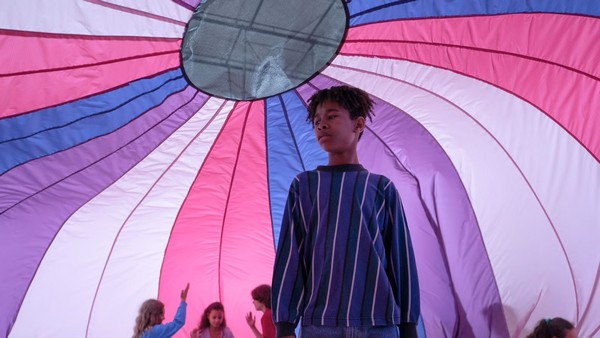
While I might note it’s more cohesive as a film, that doesn’t mean it’s a directly accessible watch; I Saw the TV Glow is a deeply odd film of esoteric ideas, characters, and worldview, and of a raw and intense sadness. It’s a film about trying to find oneself and living in your skin. This can be a long journey, a journey possibly without an end; one with fits and starts, filled with alienation and disconnection. Schoenbrun has stated it’s driven by her own journey to accepting herself as trans and becoming her true self. One can see this undulating under the surface of the film while never directly stated. It’s a testament to the power of filmmaking and screenwriting to have this reading without being told, and any viewer may place their own journey upon the film. I’m a straight, cis, White man (in my 40s to boot), but I’ve been on the outside in so much of my life and draw that to Owen’s story of self-regulated repression.
There is a hefty dose of David Lynch’s dreamscape (nightmarescape?) realities in the DNA of Schoenbrun’s films. Some filmmakers use Lynchian influence as a crutch or ease of “it doesn’t need to make sense!” (so many short films I’ve seen lean on it, or features like I Know Who Killed Me); Schoenbrun uses the style to keep the world at arm’s length and to connect with the protagonists disconnected from the world around them. They deftly blend a Lynchian discordant atmosphere with realized but distant characters to create an affecting film.
Justice Smith is perfect as Owen, using his nervous, out-of-sync nature seen in large Hollywood films of Detective Pikachu and two Jurassic World films. Dealing with an emotionally abusive father, played by Limp Bizkit frontman Fred Durst, and a dying mother, while in high school (continuing the strangeness in that he’s well past the 9th-grade Owen is for a large chunk of the runtime, reflecting a body dismorphia and infantilzation from his parents), he’s emotionally stunted and locked up, unable to grow until he finds that method to do so. He makes a connection with fellow outsider Maddy, powerfully played by Jack Haven of Bill and Ted Face the Music, over a television show, the Pink Opaque. She’s also living on the sidelines, a little older and perhaps a little more together than Owen, able to help him along. Just perhaps, as the film avoids the cliché of being a “you-and-me-against-the-world” type. (BTW, for a more direct narrative in that manner, check out Dinner in America, a wonderful film). With the nothing of an empty suburbia around them, they meld to the TV, finding an outlet in media as so many of us weirdos do.
Might I rave on the show-within-the-movie for a moment? The fictional Pink Opaque is a show weird adolescents in the 90s like me would flock to. Fitting, as our lead 90s adolescents (most of the film occurs mostly in 1996, 1998, and ~2006) connect to the show. Schoenburn has stated she was mostly directly inspired by Buffy the Vampire Slayer (the Buffy font used in the faux credits got a knowing laugh at my showing), but also by The Adventures of Pete and Pete. Pete and Pete was a seminal TV show for me (being born in 1982), also looking at the strange (and possibly dangerous, in a kid way) lying within the suburban landscape (heck, the first line of the theme song is “hey smiling strange, living happily deranged). Looking back, it’s very much a Lynch-lite, along with other 80s/90s indie auteurs. An easy entry point for the larger and weirder in film and TV that would continue to suck me in later in life (I was late to Twin Peaks but glad to live there eventually). The first time we see The Pink Opaque within the film, it’s perhaps the most iconic episode of Pete and Pete transformed into the previously mentioned Lynchian hellscape. Even if the rest of the film wasn’t fascinating, I would be in for the loving pastiche of favorite TV shows (moments of Are You Afraid of the Dark as well). How loving to these shows in particular? Amber Benson, Tara from Buffy, has a very notable moment, and it features both Petes as well. The Pink Opaque is a perfect pastiche of its era, and I applaud the stagecraft to skillfully recreate the style. I’d watch it.
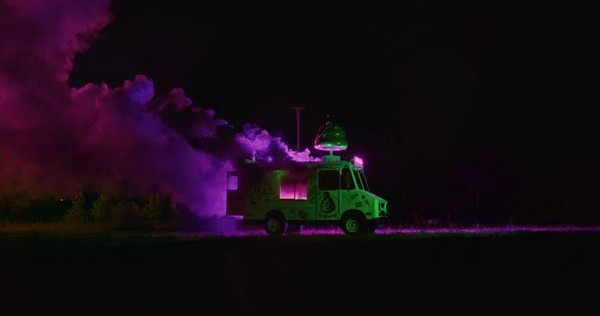 I may have just spent a lot of words praising The Pink Opaque, but I want to reiterate that the story surrounding the show- of the characters connecting as they do about it is the crux of the film. Even if we never saw the show in question, the film itself would be just as strong.
I Saw the TV Glow has been increasingly bandied about in horror circles as it approaches wide release, but if you are horror-averse, don’t be alarmed. The film is not directly scary but charged with a continual dread and unease. It hums with not feeling comfortable.
It is a deeply affecting film. Schoenbrun builds a strong personal narrative surrounded by a fantastic sense of the visual. It has a beautiful look and starkly composed shots, creating lasting impressions. It’s a film that will stick with the viewer, building in the mind after the credits roll as it sinks in over the days. Sidewalk chalk writing of “There Is Still Time” hits hard. Just the mere phrase is nearly enough to cry.
I’m curious how audiences will take it. Schoenbrun reinforces beautiful themes and ideas, but as noted with the Lynch connection, doesn’t take the standard narrative path. Not everything is set up and paid off in the ways the general audience would expect; in many ways, the whole is kept at arm’s length. For me, I loved it. I can’t stop thinking about it. I can’t wait to discuss it at length with those on the same wavelength to enjoy the feature.