
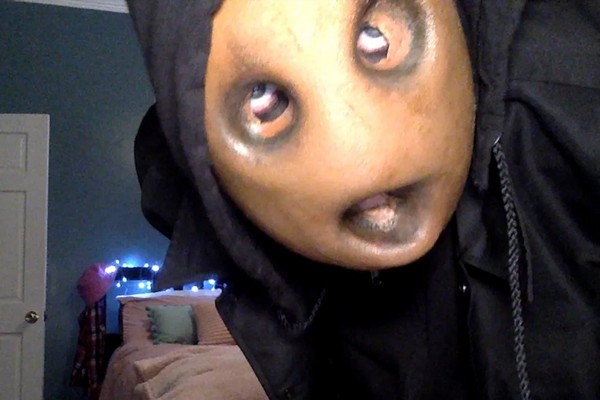
 The rise and fall of a serial killer in 90s and 00s San Bernardino County is recounted via a faux true-crime documentary in the scarily effective horror film Strange Harvest, from writer-director Stuart Ortiz.
Content warning: Children and animals in peril or have violence committed upon them.
It’s awesome when a film can restructure and reinvent a subgenre, using the well-trod expectations to its advantage by telling the story in a mostly new way. Giving new life is exhilarating, wondering how the genre shifts will work. In Strange Harvest, the police are hunting for a serial killer in 1990s and 2010s San Bernadito County, California. “Mr. Shiny” selects victims, stalks, kills in gruesome manners, leaves his clues and occult messages, and remains one step ahead, taunting the police. A pretty standard plot, cops vs. serial killer, and the two getting closer, but told in an effectively different manner.
For Strange Harvest, the method of how the madness unfolds is the main drawing point. The tenets of the “hunt the taunting serial killer” plot are presented via a faux-true crime documentary. While it has been a popular sub-genre since the 1966 release of Truman Capote’s In Cold Blood, true crime has experienced a major uptick in the last decade or so, fueled by podcasts and YouTube, yet has remained a mainstay of cable television for decades. Strange Harvest is presented as one of those cable documentaries. I won’t call it a mockumentary, as the film takes the subject straight; there are no winky nods to how this sort of show works or satirical commercials cut in. It’s a serious and disturbing film; done in a new style for film, but familiar for a TV genre.
It’s been done for film before, such as the Curse of the Blair Witch sister-faux-doc released to SyFy just before the original movie hit theatres (originally part of the film itself, removed to be a portion of the marketing build; a great choice) or the incredible Lake Mungo, but not often. ‘’ It’s such an obvious take, especially in the simultaneous rise of found footage (Ortiz previous made the unsung found footage flick Grave Encounters. Skip the sequel), which has often kept up with the technology (such as ScreenLife films). American Vandal and others effectively parodied the subgenre on TV, but to present a dramatic, scary, and decidedly non-parody, that’s different.
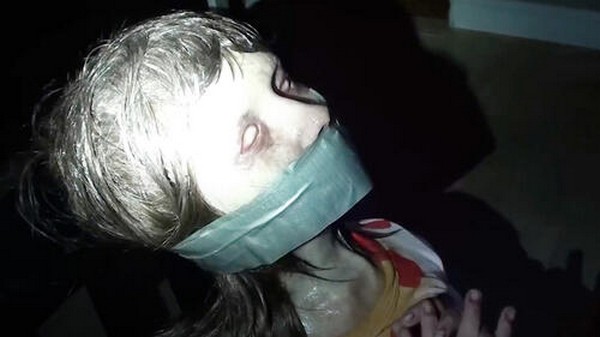 It works like a charm. The talking heads, old news footage, new interviews, expert analysis, and other sources keep the audience engaged. It allows a directorial control of information flow, the players know the whole story and can tell it at their leisure, weaving the narrative with teases, hints, and out-of-time reveals. One criticism of the serial killer procedural is that the audience is often waiting for the police characters to catch up, whether being told the culprit or truths by the filmmakers, or just putting the pieces together. In reversing the flow, the tellers are ahead of the audience, feeding tantalizing chunks, leaving us to figure out the details. This method leads the audience, though, like a carrot on a stick.
It’s surprisingly effective, legitimate in the tension and the sheer WTF nature of the crimes. All the more telling is through the format. By the nature of “watching a documentary,” we know from talking heads and interviews who makes it to the end, who will die before it happens, and the overall arc. The future is teased and told directly or from hints. There’s not a question of outcome, but the viewer is still drawn in as the details of the crimes are revealed.
The extreme versatility insists on the product. Peter Zizzo and Terri Apple are pitch-perfect as the main detectives on the case. They have the cadence and feel of every cop in every procedural documentary to a tee. Both have an incredibly natural delivery, playing all the matter-of-fact, purposely detached cop talk, but with just simmering confusion, disgust, and sheer worry and concern over what’s happening. Ortiz’s script deftly replicates the voice of the shows from which he’s drawing inspiration. On a technical end, the “recreations” are right on, the news programs, interviews, and the like are not betrayed by any obvious “oh this was filmed in 2023” modern cracks. It’s quite the feat.
If a future TV-channel-surfer comes across Strange Harvest, they might mistake it as real. Outside the visuals going much further than most TV would; even the most loose restrictions probably wouldn’t show the bodies as viscerally as the film does. Practical effect lovers will find a lot to… well, enjoy, might not be the right word, as said it’s very serious and gruesome; I was shocked and sickened at much of the gore and viscera.
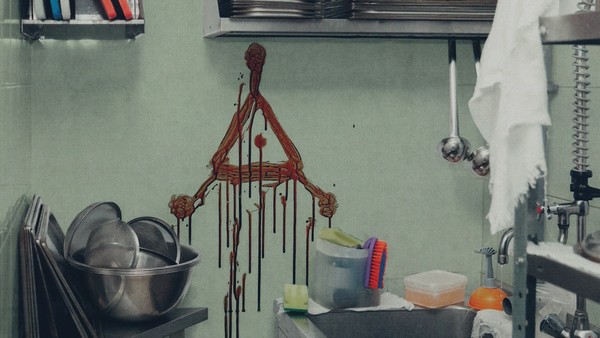 The downside is that while the faux documentary method allows new approaches to the material, it also constrains it. In a reality-based program, things have to be just that, reality. But aspects of the story don’t hold up to that scrutiny; they fall just outside the parameters of belief. As a film viewer, I appreciate the lengths and strangeness as more of the occult comes in, in the context of the “show” it stretches. A reveal halfway seems like too much, too early. With that and what Mr. Shiny is up to, one expects the other shoe to drop, another aspect of the case to be revealed to make it come together. It doesn’t happen. It feels left hanging; perhaps something was cut that is still felt. It’s possible this was wholly on purpose, but it doesn’t come off as such.
People who have seen it will say there is a slight wrinkle to the climax that does push more than the “waiting for the next reveal” criticism, but I argue it doesn’t fully factor in.
Strange Harvest is a disturbing serial killer film that uses the format of a true crime documentary to great effect. Writer-director Stuart Ortez delivers a fantastic reproduction while simultaneously making a creepy and disturbing picture.