
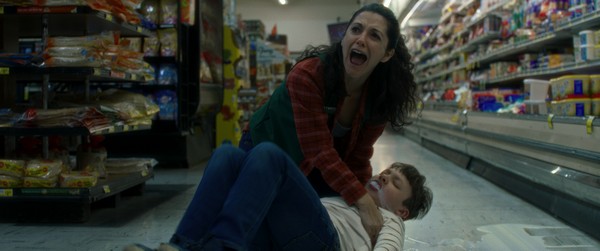
On Lilly’s daughter’s 10-year death anniversary, a quiet portrait of grief turns into a frantic fever dream of paranoia and dread.
Trigger warning: Child death
With a grieving mother at its center, the film explores the fragile boundary between trauma, addiction, and the possibility of the supernatural. Blending psychological horror, grief drama, and unsettling paranormal imagery, Lilly Lives Alone (2025) delivers a harrowing descent into isolation and paranoia. Written and directed by Martin Melnick, the film balances intimate character study with disturbing genre flourishes, never allowing the audience to fully trust what is real. While it offers a visceral, haunting survival of spirit, its deeper themes of guilt, maternal loss, and psychological decay resonate most strongly in its raw performances.
Shannon Beeby carries the film with a chilling performance as Lilly, a woman consumed by grief, paranoia, and mistrust. Beeby brings both fragility and volatility to the role, navigating scenes of intoxicated despair with startling authenticity. Her ability to shift between quiet reflection and explosive fear makes Lilly a compelling, if unreliable, guide through the film’s horrors. Even in her darkest spirals, her vulnerability keeps the audience tethered to her pain. Her neighbors and the audience have a front row seat as she spirals in suspicion and grief.
Ryan Jonze provides balance as Jed, a seemingly casual hookup who becomes entangled in Lilly’s unraveling. Where Lilly resists connection, Jed reaches out, offering moments of warmth and attempted stability. His persistence in seeing Lilly as more than a one-night stand grounds the film’s fleeting sense of hope. Their dynamic, tender at times, combative at others, serves as a mirror for the central question: is connection possible for someone haunted by guilt and grief?
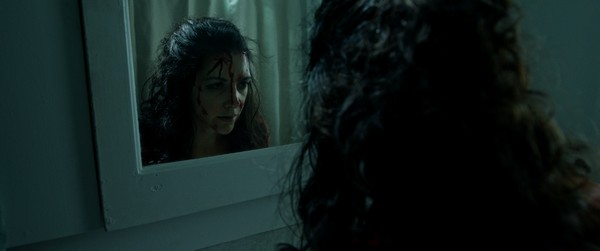
The film’s most effective strength lies in its atmosphere, where loneliness, paranoia, and hallucination overlap into a nightmarish blur. Its sound design layers whispers, echoes, and distant cries into the edges of scenes, making the viewer question whether Lilly’s dreams have meaning or are just a product of insomnia and drugs. Lilly Lives Alone is not just a ghost story but a portrait of a woman consumed by the ghosts of memory, secrets, and unresolved pain. Visually, the film leans into hallucinatory transitions and fractured editing, echoing Lilly’s fragile state of mind. Early sequences frame her world in muted tones, steeped in alcohol haze and dim interiors, grounding the audience in her loneliness. As her breakdown deepens, the camera shifts toward surreal imagery and sudden bursts of violence, blending grief with horror until the line between memory and haunting blurs. Disturbing images of a ghostly presence, reminiscent of Poltergeist, underscore the sense that Lilly’s trauma has become manifest, whether supernatural or self-inflicted. The film offers a disturbing, emotionally raw experience with standout performances and unnerving visuals. Its greatest achievement lies in its refusal to separate the supernatural from the psychological, leaving audiences questioning whether Lilly’s torment comes from beyond the grave or from the crushing weight of her own grief. By the end of film, viewers may wonder if the answers offered are enough.