
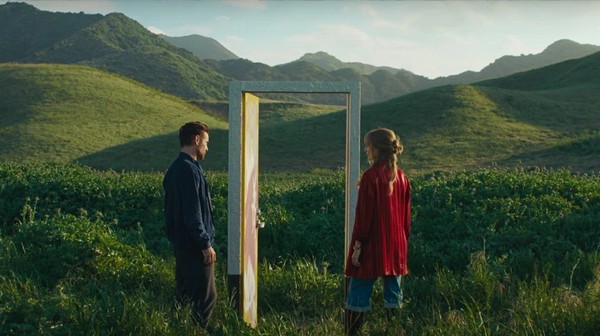
 Two single adults connect through a magical trip of self-reflection in the sloppy schmaltzly slog of Kogonada’s A Big Bold Beautiful Journey.
Who hasn’t thought about the choices in their lives? Those big moments and small that have affected and made us. Especially the embarrassments or regrets. If we’re given the chance to revisit, will we do the same? Are these specific moments truly what made us what we are? Interesting questions, when posed correctly, could make a great film. Unfortunately, A Big Bold Beautiful Journey fumbles a compelling concept with a scattershot approach due to atrocious writing. Try as they might, a great director and a lead who normally make great career choices can’t save this film from sinking under a leaden script.
Make no bones about it, Seth Reiss’s script is the key component to A Big Bold Beautiful Journey’s failure. It’s a shame. He wrote The Menu, which was one of my top films of 2022, with its biting (heh) satiric script as the glue that held it all together. Instead of wit and sharpness, the script is utterly unbelievable. Not the magic nature of the journey, which finds David and Sarah, two singles who meet at a wedding and walk through mysterious doors to parts of their past. It’s the actual dialogue and plotting. It’s twee. It’s on the nose. It’s trying got be cute but comes off forced. No one sounds natural, even in the heightened reality of a film like this. It’s all awkward. What’s meant to be cute leads to an eyeroll.
A Big Bold Beautiful Journey is a romantic comedy that is neither. There is an idea here. It could work with another draft, or twelve. There is a strong twenty years ago Michel Gondry, Spike Jonze, or Charlie Kaufman quality. Heck, in many ways, the film is Eternal Sunshine of the Spotless Mind with a different plot device and far cruder in the storytelling. These guys’ films are strange, introspective, and talk about connections through high-concept cinema. But they have a heart, a realness, and truth underneath the oddity. But A Big Bold Beautiful Journey is empty and artificial. Nothing feels real, tangible, or able to connect in any way.
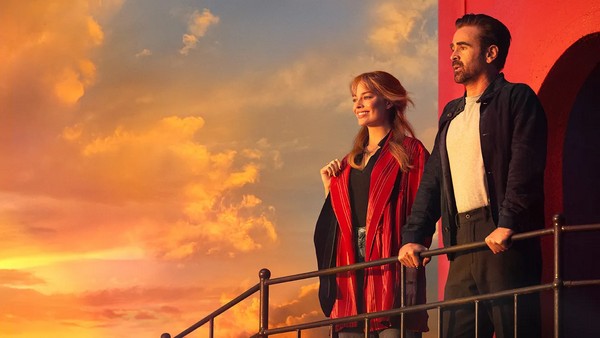 It’s not for lack of trying by the normally dependable cast and director.
Colin Farrell is as steady as ever, playing a respectable low timber. He’s not slumming, no. He’s trying, but admittedly not putting in all the effort. He brings those eyebrows, fantastic supporting players in Banshees of Inisherin, but lets them rest. He’s a strong enough actor that, even playing at rehearsal level, he almost elevates the material. He’s effortlessly charming.
Margot Robbie is a glowing presence, with big eyes and a larger smile; she’s always immensely watchable. But, in the opposite tack of the slow and steady Farrell, she is all over the place, trying everything to find something to connect to. Robbie cycles between earnestly giving her all, playing it as “oh yeah, I know this is schmaltz, I can’t believe I’m saying this” smile, and looking to be anywhere but here. Were there poorly done reshoots? She occasionally has a flat, strange voice with poor ADR lining up. Did they have a fake Robbie? Doesn’t even sound like her at times. I don’t blame her. Actors play lines in different ways to see what sticks or doesn’t. Switching methods on purpose can lead to a great character, see Willem DaFoe in American Psycho for a great example; here, it feels like poor editing choices.
Director Kogonada wrote and directed one of the best unsung features of the last decade with the beautifully low-key Columbus. He followed with After Yang, which I liked less than most but still appreciated. As director for A Big Bold Beautiful Journey, he provides a fantastic sense of camera and space. It’s a gorgeous film, how he frames the doors and the situations. Through the unfolding of the umbrellas, the offset feeling of the world, the strange sci-fi trappings, and others, there is a compelling visual sense. Color use harkens back to the Technicolor wonder of Pressman and Powell melodramas. It’s nice. It’s most notable in the sequence of climbing a Wes Anderson stop motion-like mountain. It’s too bad the visuals can’t translate to making the actors work through the artificiality. 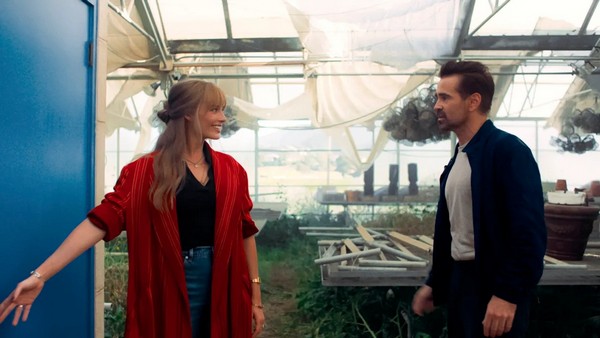
I’ll admit, A Big Bold Beautiful Journey starts well. The set-up sequence, Colin Farrell renting the 1994 Saturn he’ll be in for the Journey, is wonderfully and hilariously awkward, with a strong satiric vibe and actually gets laughs, before the groaning begins, from Kevin Kline and Phoebe Waller-Bridge. They seem to know the writing is dreck, so they try to pump it up. But this scene was intriguing. Sure, parts of their performance seem to be trying too hard, maybe a little embarrassing in the look back, but it’s something, anything, to create a memory. Too bad a steady slide downward follows. Ultimately, any goodwill left from whatever doe work of the first hour and some fizzles away what passes as a climax is so cloyingly sentimental and saccharine, I was worried I was going to spike my diabetes.
What’s most annoying about how it barely comes together coherently. Big moments come from nowhere, clearly meant ot have some emotional backing that either didn’t land in the film or didn’t make the edit. Each of these sojourns to the past should build and inform, but they don’t. Whether it be half-assed platitudes like Robbie talking to her dead mother (or not), or coming out of whole cloth, Farrell’s relationship with his father seems like there was a large plot point cut away; they don’t add up. Rearrange, dump whole sections, replace with something else; it doesn’t change the texture of the film.
Colin Farrell and Margot Robbie have skill and charm enough to almost make something work. Kogonada is a fine director who attempts to elevate through an impressive visual world. But the script they all try to work with is a cloying, saccharine mess of badly written moments and platitudes. Don’t take the Big Bold Beautiful Journey; visit a Spotless Mind instead if you crave this sort of film.