
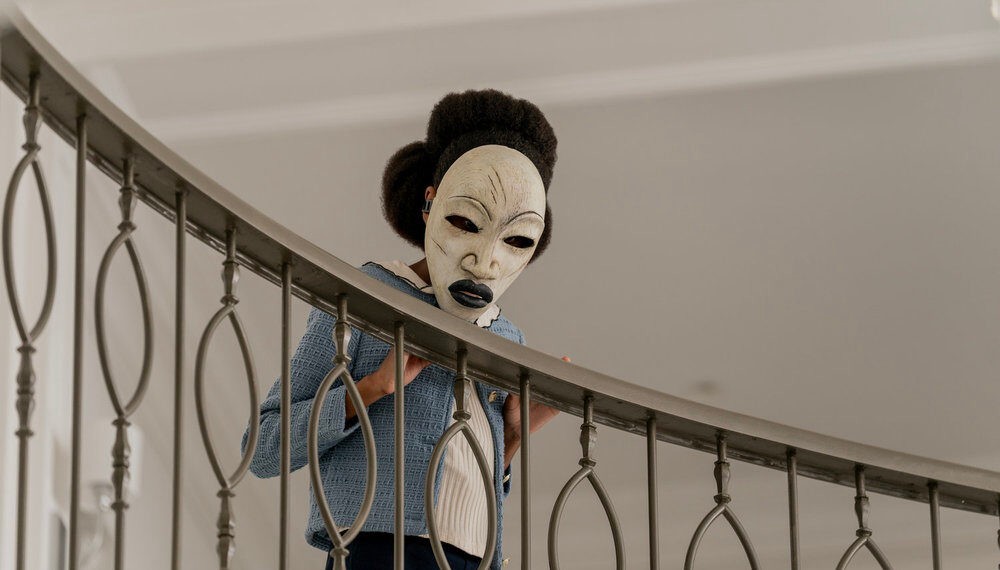
What begins as a desperate musician accepting an opportunity too good to refuse quickly reveals itself to be exactly that, and by the time the walls start closing in, leaving feels far more complicated than arriving ever was.
Strung is a psychological thriller written by Alan B. McElroy, directed by Malcolm D. Lee, and produced by the reliably unsettling partnership of Blumhouse and Tyler Perry Studios. The film constructs its dread methodically and with considerable craft, luring its audience into the same gilded cage it lures its protagonist into and making the discomfort feel genuinely personal. The film follows Laila, a violinist of genuine, undeniable talent who has nevertheless found herself stalled and grief-stricken. When a stranger named Audra offers her a lucrative live-in tutoring position for her gifted granddaughter, Laila takes it despite every quiet signal that she should not. What Laila uncovers as she settles into this world threatens not just her safety but her sense of reality, and the film is at its most effective in the mounting moments when she begins to question whether what she is seeing is actually true.
Chloe Bailey plays Laila with a vulnerability and a quiet determination that make her impossible not to invest in. She carries Laila’s grief for her younger sister in the way people carry losses they have not fully processed, present in every scene without being announced in any of them. Bailey finds the specific texture of a talented woman who has stopped fully believing in herself, someone whose naivety is not stupidity but the particular openness of a person who still wants the world to be better than it has proven to be. As Laila’s paranoia builds and her trust in her own perceptions erodes, Bailey traces that deterioration with a careful, grounded precision that keeps the audience anchored even when the film deliberately destabilizes everything around her.
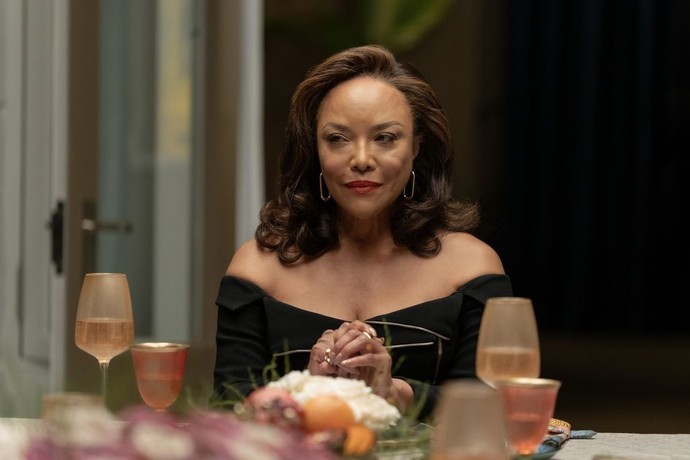
Lynn Whitfield is perfectly, almost diabolically cast as Audra. She brings to the family matriarch a surface of impeccable warmth and refinement beneath which something considerably colder operates, and the distance between those two registers is where Whitfield does her most interesting work. Audra is convincing in the way that only genuinely dangerous people are convincing, her pretension and her charm deployed with a precision that makes every interaction feel like a transaction whose terms have not been disclosed. Whitfield plays her with an intensity that never tips into caricature, keeping Audra’s menace elegant and her motives opaque for as long as the film requires. Every scene she occupies tilts slightly off its axis, and that quality of controlled, gracious unease is exactly what the role demands.
The film explores the estate with a lush, suffocating beauty that makes the location feel simultaneously aspirational and threatening. Wide corridors and high ceilings that should feel grand instead feel isolating, the production design immaculate in ways that read less like comfort and more like control. The film leans into shadow at the edges of otherwise well-lit rooms, creating a persistent sense that something exists just outside Laila’s line of sight. The musical sequences are rendered with a loving attention to craft, Laila’s violin playing treated as both character expression and emotional release, the moments of genuine musicianship standing in stark contrast to the psychological pressure surrounding them. When the score and the ambient sound begin to feel indistinguishable from each other, the film has achieved something genuinely effective, making the audience feel Laila’s disorientation rather than simply observing it.
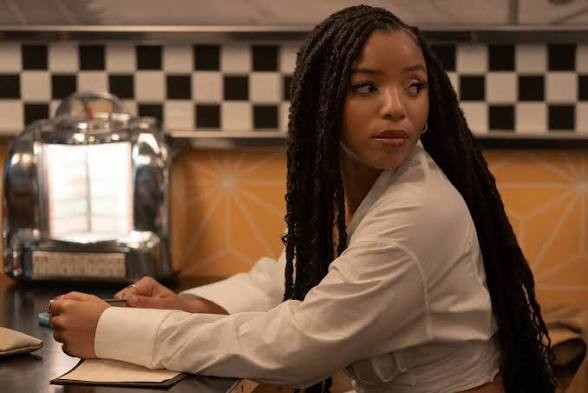
Lee demonstrates a sharp instinct for atmosphere, allowing the film’s eerie, suffocating tension to accumulate slowly before it tightens into something inescapable. This is not a film that rushes toward its reveals. Stacking unease upon unease with the patience of a story that knows exactly where it is going and is in no hurry to get there. The result is a thriller that gets under your skin early and stays there, pressing on nerves of uncertainty. Strung is a taut, dramatic, and deeply satisfying psychological thriller that trusts its audience enough to build slowly and rewards that patience with a grip that does not loosen. Grief, paranoia, and family drama make for a fun watch, that may not be an award-winning film, but is worth your time.
 Listen Here: youtube.com/watch?is=BjOa3H_COZQXA5kv&v=RnJap5TTduc&feature=youtu.be