
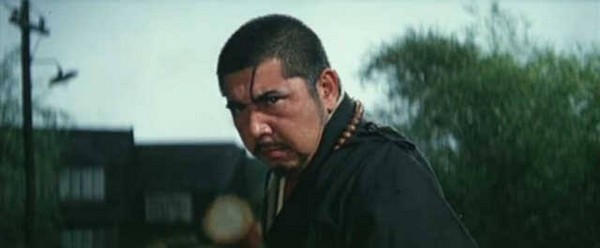
 The Wicked Priest Collection features five highly enjoyable comic martial arts films about a roving Japanese priest with strong morals and a strong libido. Now on Blu-ray from Arrow Video.
TW: Sexual assault; Animal fighting/death
Spread across four years, 1968 through 1971, the five Wicked Priest films, from Japanese powerhouse Toei, are highly entertaining comic martial arts films following the wandering title character. Played by future Lone Wolf and Cub lead Tomisaburo Wakayama (fun fact: Wakayama is the older brother of Zatoichi’s Shintaro Katsu. This gets a few winky references within the series), Shinkai is a loud, exuberant, anything-goes sort. Wakayama gives him a delicious energy with overflowing charisma. Now, the Wicked here doesn’t mean he’s evil or up to no good, but it’s the same place the comic aspects come from. The Wicked Priest acts unlike what’s to be expected with drinking, carousing, and seemingly seeking out violence. Good thing he can keep his head in a fight, no matter his condition.Because not only does he keep getting them, but he’s amazing in them,
The plots around Shinkai’s larger-than-life persona and actions would be rather direct drama if not for Shinkai’s insertion, creating a wonderful juxtaposition. For the sort of character, it’s the loner who comes into town and becomes part of the local issue. The Wicked Priest movies follow a general template but fill it in with interesting variations.
I won’t bog down the review with details on each of the five, but I’ll do a quick rundown.
In the first film (written by Akira Murao & Hideaki Yamamoto; directed by Kiyoshi Saeki), the exiled monk helps sex workers escape a terrible brothel, while also dealing with other issues in their town. My favorite, the second, Ballad of Murder (written by Akira Murao & Hideaki Yamamoto; directed by Takashi Harada), finds him taking a young boy under his wing (shades of Wakayama’s future run of Lone Wolf and Cub) to a town embroiled in a feud between the kid’s grandfather and a yakuza businessman. A Killer’s Pilgrimage, the third entry (same w/d set), has Shinkai defending a sun-soaked coastal village of women and elderly against pirates and revolutionaries who come when the men are off fishing. The fourth, The Killer Priest Comes Back (written by Akira Murao and Koji Takada; directed by Takashi Harada), has Shinkai return to his hometown and find his childhood bestie, who left town at the same time, is now a Yakuza and up to no good; with the drama of the past coming across the film. Beautifully set in the snow, there’s a great touch that connects Shinkai and the continued nemesis across the five films: the blind Ryotatsu, Bunta Sugawara. (The stories are generally disconnected, but this makes a solid connection point. Finally, Blood on the Commandments (written by the same person, now directed by Buichi Saito), per a title card, takes place 20 years before the others, though clearly after the first four. Continuity be damned. Anyway, Shinkai comes in with a female gambler and various schemes, including the standard business and yakuza. But now with Kurasawa player Takashi Shimura!
These five films are a lot of fun in many ways. Wakayama is enjoyable as hell, with a crusading, carousing priest living life while keeping a moral code. The fight scenes are generally awesome and varied, with plenty of blood and eye-gouging. These films were made cheaply and quickly, but they still put in the effort to look great, and it shows. Some striking imagery, especially in the third and fourth, and the continued fights with Ryotatsu.
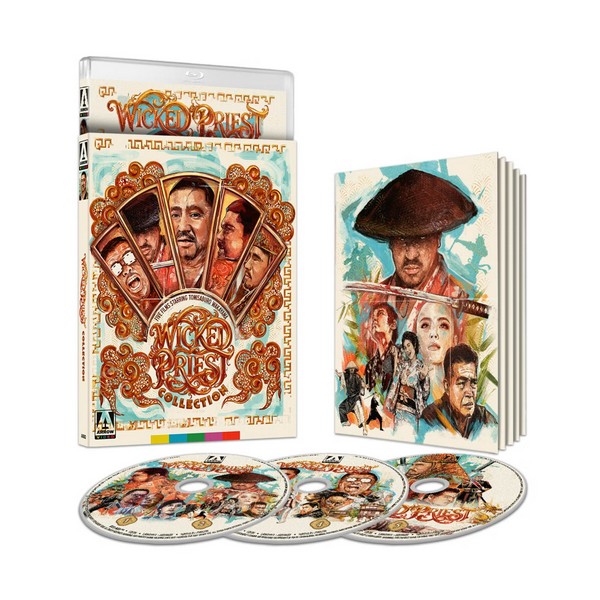
The Packaging and Presentation
Arrow Video spreads the five films over three Blu-ray discs. Disc 1 holds the first two films. Disc two has films three and four. Finally, Disc 3 contains the fifth film and all the features. The disc image includes menu images for each film: two per disc, plus one for the fifth. They are housed in a clear Blu-ray case with a booklet. The reversible sleeve and the O-sleeve feature new artwork from Chris Malbon. The transfers are solid, not exceptional. A little faded and artifact-prone, they often miss the detail in the costuming and sets. The films have a great look, and so do those transfers. All in Japanese with English subtitles.
The Features
All features are on disc 5 and aren’t tied to any specific film, except the trailers. A solid, lengthy collection, giving amazing appreciation and context.. All are in English and new.
Composing the Gospel
Japanese cinema expert James Balmont dives into the music of the series, focusing on Isao Tomita, who worked on 2 and 3. Fantastic insight and gives a great look at the films as well as Tomita’s overall career. (21m)
Taisho Troubles
Loved this. Jonathan Clements discusses the films’ historical basis, with a little on Wakayama as well. Incredibly informative and well presented. (21m)
Offscreen Battles
James Mudge takes an external look at where Wicked Priest fits in the shifts of 60s Japanese cinema. (32m)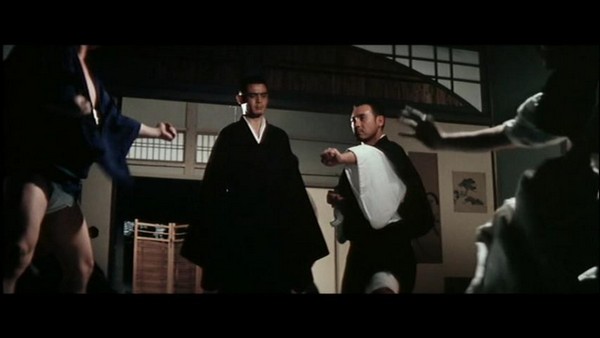 Martial Arts and Super Mario Brothers
Patrick Macias and Matt Alt, of a podcast I forgot to write down, explore the career of Tomisaburo Wakayama. They know their stuff and have an interesting, flowing conversation. (35m)
Priest or Monk
The same pair discusses the films’ historical aspects, but in a different way than Mudge’s. The focus is more on the religious aspects. (16m)
Trailers
One for each film. About 3m, they give away just about everything.
Booklet
The bound 28-booklet is beautifully put together. It includes the usual info, plus Pushing the Boundaries: Wicked Priest Paving the Way for Toei’s 70s by Camille Zaurin. Zaurin continues from Mudge, discussing how Toei bridged the decades through this film series and how it reflects those shifts.
Final Thoughts
The five films, from various directors but all written in part by Akira Murau and starring Tomisaburo Wakayama, are a wonderfully entertaining set of comic-drama historical martial arts films. I had a great time watching Wakayama’s enthusiastic portrayal and all the oddities of the films. The transfers are good enough, and the features are all off the films but really solid, helping with context internally and externally to the films.