
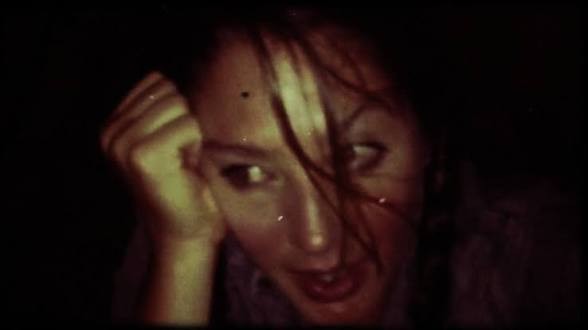
 In 2011, filmmaker Kate, along with her boyfriend Paul and friend Ross, set out to try to unlock the mystery of the Lost Dutchman Mine. They disappear into Arizona’s Superstition Mountains, and their fate remains unknown until the missing footage is discovered.
Horror as a genre has made strides in highlighting and supporting female directors, but there are still surprisingly few found-footage films directed by women. For a subgenre that has been so prevalent over the past 25-plus years, and one that is particularly appealing to emerging filmmakers because of its relatively low production costs, it seems there should be more. Tara Anaïse delivers a solid entry into the subgenre, one that understands its own history and isn’t afraid to embrace it.
Perhaps one of the film’s most effective choices is grounding its story in a real legend. Found footage has always played with the line between fiction and reality, often trying to convince audiences that what they’re watching happened (looking at you, The Blair Witch Project and Cannibal Holocaust). By drawing on an existing legend, Dark Mountain pays homage to the subgenre’s origins while lending its own story an additional layer of credibility.
 The influence of The Blair Witch Project extends well beyond that approach. Even the premise mirrors the earlier film, with three filmmakers chasing a legend. The film opens with Kate apologizing to her mother, and the dialogue even includes a direct reference to Blair Witch. Comparisons between the two films are inevitable. While The Blair Witch Project wasn’t the first found-footage film, it was arguably the one that brought the subgenre into the mainstream, and many of the films that followed struggled to escape its shadow.
One element that helps elevate the film is the use of music, including a score by Scott Meola. Most found-footage films avoid non-diegetic music because it can undermine the illusion that what we’re watching is authentic footage. But Dark Mountain establishes early on that, although the footage has supposedly been found, it has also been assembled and edited into something closer to a documentary. This allows for a level of polish that more traditional found footage usually avoids. Someone has clearly worked with the material, making deliberate choices about how it’s presented. It’s a refreshing departure from the supposedly raw footage typical of the subgenre. While purists might object, the added polish ultimately works in the film’s favor.
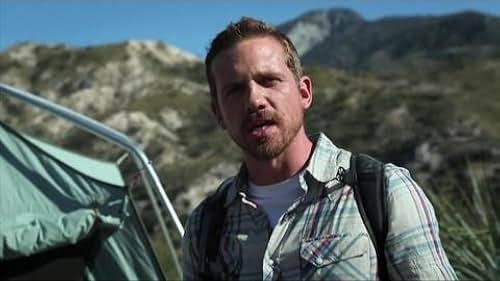 Dark Mountain takes its inspirations and creates its own distinct visual style. Where it falters, however, is in its storytelling. The screenplay, written by Anaïse and Tamara Blaich, is trying to do a lot. The real legend provides a compelling foundation, once the horror elements begin to take center stage, the story seems unsure of which direction it wants to go. Plot points are introduced and then abandoned, while moments that seem designed to have a major impact are quickly brushed aside. With so much attention devoted to establishing the story in the first half, the third act becomes increasingly muddled.
Despite a few fumbles, Dark Mountain is ultimately a stylized and interesting addition to the subgenre, one that has largely flown under the radar since its release. While it’s a bit of a slow burn, lovers of found footage will appreciate the callbacks as well as its more distinctive visual style. It may not reinvent the genre, but it demonstrates that there’s still room to explore familiar territory in interesting ways.