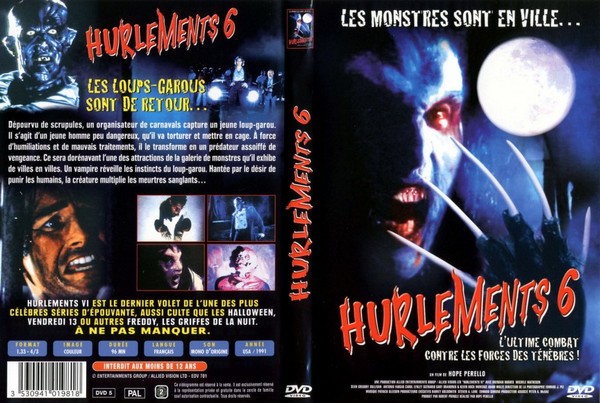
“It’s time to howl again”. This was the tagline for 1991’s Howling VI: The Freaks, and it’s fitting because it remains one of the fan favorites of the franchise. Directed by Hope Perello.
Her resume is fairly modest, but she was no stranger to horror by the time she was tasked with this series sequel. Her resume includes Assistant Director credits for A Nightmare on Elm. Street 4: The Dream Master and The Sleeping Car, a movie about a man who’s accosted by the ghost of his landlady’s dead husband on a train. She’s also credited as the second unit director for the original Puppet Master movie, which makes perfect sense because Howling VI feels like a Full Moon joint. I mean this in the best possible way.
With a straight-to-video budget, Howling VI is a modest horror that has to rely on its presentation in order to win over the viewer. Thankfully, with her experience from Puppet Master, Hope Perello knew exactly how to work with a small budget. She utilized a few sections of a small town, and a makeshift carnival set, to set the stage. Even with a low budget, Perello still insisted on cutting a significant portion of the film’s special effects. This is normally a death sentence for a horror film, but in the case of “The Freaks” it works. We’re less taken back by the visual spectacle and more drawn in by the characters themselves.
Ian Richards, played by Brendan Hughes, is a wandering British vagrant who finds himself in the town of Canton Bluff. He seeks out work and a place to stay before being taken in by a local Pastor who’s renovating the town’s old church. We’re introduced to a small assortment of locals including Sheriff Fuller, who gives him a hard time for being a nomad, and Elizabeth, the Pastor’s daughter and potential love interest. Before things can get too normal for Ian, a traveling circus comes to town with one attraction: The Freak Show. Ran by R.B. Harker, the show includes a traditional geek, a dwarf with a third arm, a tough-as-nails transexual, and Winston… A man with a skin condition that grants him the name “Alligator Boy”.
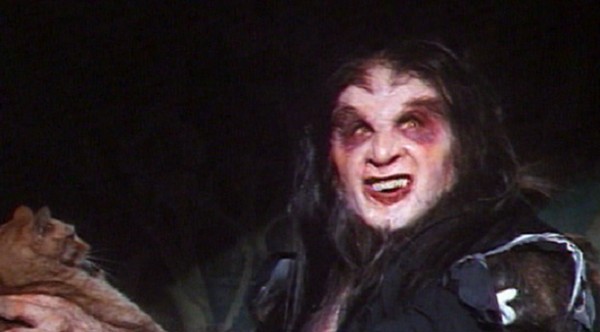
Anyone familiar with Dracula lore might recognize the name “Harker” and immediately have a clue as to where this is going. R.B. is no ordinary showman, but a vampire who travels in order to claim the occasional victim and elude capture. When he discovers Ian’s horrible secret, the fact that he’s a werewolf, he had his crew kidnap him for their traveling ensemble. The plan is simple, gather the townspeople, use an incantation to get Ian to “wolf out”, and feed him a stray cat so the audience can see his ferocity. However, even in his werewolf form, Ian spares the cat and tosses it safely toward the audience, and in the hands of Winston. This causes a rift within the local population and the traveling crew as well. Over the course of the film, hostile individuals come around as allies, and certain expectations are undermined for a unique outcome.
Hope Perello set the tone beautifully. While the film looks less than what one might expect, the final act is where it pays off. In an all-out fight against R.B. Harker, Ian becomes the film’s undeniable protagonist. From a wandering gentleman, to a gentle wolf-man, and then into a champion of the people, Hope directed an on-screen Werewolf in a direction I haven’t quite seen since. Her work with the human side of horror makes this VHS-era film more than watchable. Feeling almost like a stage play instead of a movie, the film doesn’t lose the viewer just because of its low quality. Those who stay to the end are rewarded with a feel-good take on Werewolves.
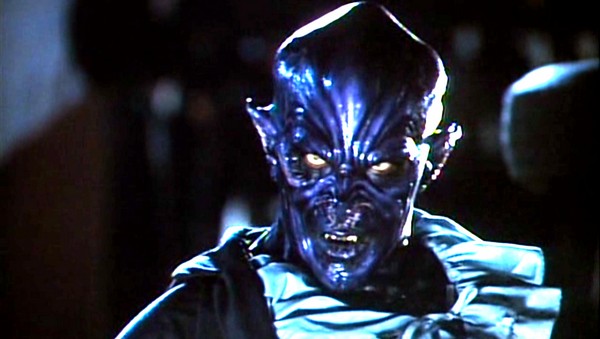
In terms of visual effects, there aren’t many. Mostly make up effects and a prosthetic arm which is used by Deep Roy, an actor most viewers will recognize from such films as The Never Ending Story and Charlie & The Chocolate Factory. The Werewolf work makes Ian look a little less “wolf” and a little more “man” than the Werewolves fans saw in prior entries, where R.B. Harker’s vampiric transformation strays from tradition and looks more like something out of Robert Rodriguez’s From Dusk Till Dawn. On screen gore isn’t abundant, but when it’s there it’s effective. Calling this film successfully modest is the best way I can think to sell it to a horror fan.
It’s mentioned at the beginning of the film that this movie is based on the three Howling books, which is only partially true. Perello tapped into the third book’s nomadic Werewolf and freak show angles, but largely remains independent from the book series entirely. Despite feeling wildly different from other movies in the series, Howling VI: The Freaks remains canonically relevant via a flashback in 1995’s Howling: New Moon Rising. This is a sign of praise in a franchise that normally does next-to-nothing to link the films together. Anyone who loved the campy nature of the original Puppet Master movie will find themselves enjoying Hope Perello’s entry. She knew exactly how to work the human element into a feature about monsters.
Unfortunately, this was Hope’s last dance with horror. She would direct Pet Shop for Full Moon’s family friendly film department three years later, before directing her own movie, St. Patrick’s Day, in 1997. However, with her leaving her mark on the Elm Street, Puppet Master, and Howling franchises, I can honestly say I’m a fan of her work. Now I need to track down The Sleeping Car so I can say I’ve seen her entire horror lineup.