
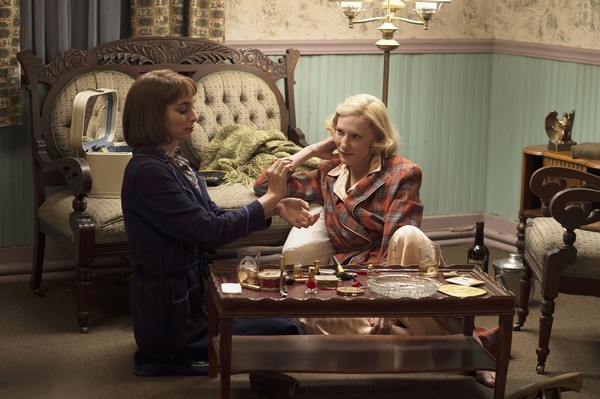
A photographer and a mother struggling with familial issues find themselves in love in a time when their love is unacceptable, further complicating their lives and their relationship.
There’s a lot of discourse about straight people making movies about LGBTQ people. Often times, straight people, specifically straight men, tend to make films that feel exploitative and callous without any actual benefit to the community it’s supposed to be representing. If you ask me, I think they should step away from those projects and let someone else from the represented community handle it, because when they do, we get incredible films like Carol. Bringing to light the painfulness of being a lesbian in the 50s, when lesbianism was treated as a disease of the mind instead of a calling of the heart, Carol is a heartwarming piece of art that feels steeped in emotion and depth that only a truly representative film can accomplish.
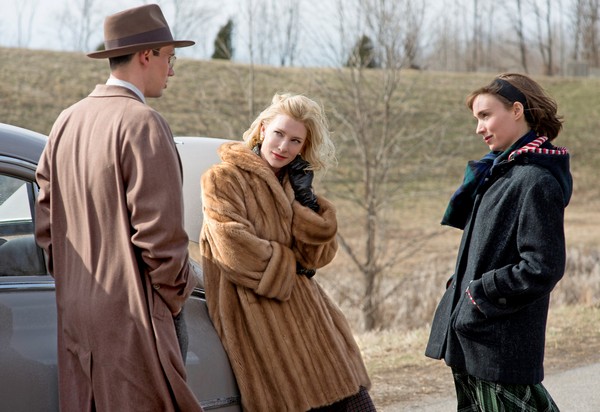
Brought to the screen by director Todd Haynes, an openly gay man, with a screenplay written by Phyllis Nagy, a lesbian screenwriter, based upon a novel written in 1952 by lesbian author Patricia Highsmith, Carol is one of the most representative LGBTQ films behind the camera to be made in recent years, and it shows through how much nuance the film brings to the table. Avoiding the cliche “tragedy” of most films featuring a homosexual romance and instead going for a fully realistic depiction of the way love was, and continues to be, weaponized, we’re treated to a truly sincere and unbiased viewpoint that doesn’t feel exploitative or told from a male gaze. It’s wonderful, from beginning to end, and deserves heaps of praise for being handled delicately by the very groups the film is representing.
While neither of the lead actresses are lesbians in real life, Cate Blanchett and Rooney Mara are fantastically cast, with flaming chemistry and sweet exchanges that are accomplished with both dialogue and wordless lingering gazes. And we get the wonderful Sarah Paulson, so we definitely do have representation on screen, as well. All of the performances are believable, raw and poignant, taking care to illustrate characters with oceans of depth and personalities that fill up the screen. Giving the stage almost entirely to female characters, and lesbian characters at that, is almost unheard of outside of Carol, and I wish we would get more films that expand upon other viewpoints and underrepresented voices in cinema, because this is the kind of beautiful project these groups can put together.
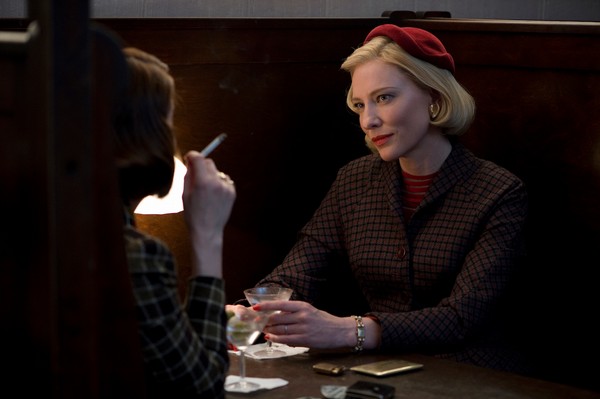
Rounded out with a score that’ll move you to tears and a warm color palette that captures the era like a time capsule, Carol is quite literally the entire package, and it’ll have you aching for these two to find their breath of happiness in a cruel world. The editing is on point, the costume design is knockout gorgeous, and everything put together is an amazing accomplishment of film and art.
Carol is a touching story that works from every angle and every facet, being not only a film about the LGBTQ community, but one fantastically representative of the LGBTQ community, on screen and off. Not to mention it’s just a genuinely good film about love and the quiet moments in life to which we can all relate.