
 A young man enters a strange and unknowable labyrinth of madness in his uncle’s house in Harry Kumel’s Malpertuis, now out in a gorgeous special edition from Radiance Films.
The film:
Watching 1971’s Malpertuis (also known, the Amicus-sounding title, as The Legend of Doom House) for the first time, from this new release from Radiance Films, I loved the weird and disconcerting trip into a maze of madness and uncertainty. However, I realize the specifics of this story resonate deeply with my sensibilities (but all film is subjective, isn’t it?). Based on a book by Jean Ray, in the 1800s in Belgium, Jan returns to his hometown. Things come to things; he gets lost in a maze of a town (setting up a lot of lost later, after an opening that directly references Alice’s adventures, a major portent), followed by strange forces, ends up in a wild burlesque, and ultimately in his uncle’s house. The home of Uncle Cassavius, played by an ornery Orson Welles, is a never-ending labyrinth. Filled with a collection of eccentrics and oddballs among the friends, family, and staff, it’s clear this is a world where rules and understandings do not truly work. It only gets weirder as Cassavius states in his will that each person in the house will receive a portion of his funds at death, but they must never leave the grounds again. Surely locking a dozen teetering folks into a house of madness will go swimmingly.
Left in “charge”, Jan wanders the home, encountering the other tenants; falling for the otherworldly Eurydale, aloof with an edge of danger in her deep green eyes. The groups and folks gather and separate, argue, quip, mess with one another, and revel in the insanity of themselves. Additionally, whenever someone tries to leave (and give up their portion of the fortune, a pointless inheritance, but that’s part of the madness, right), they are killed.
This was delightfully strange. I loved delving deep into the labyrinth with Jan as he moves through the deranged house of the damned. As was for House of Leaves, Hill House, or the Overlook, it’s an impossible geography of a shifting home. I love it. There’s a Kafkaesque unknowable nature to how it plays that always works for me. The dream logic of the absurd.
As much as I loved the film on the whole, at two hours and five minutes, it does run a little long, where all the comings and goings get repetitive, getting lost in its own labyrinth. Jan is a bit of a cipher, with actor Mathieu Carriere spending much of the time reacting or staring at what’s going on. But all the mad folks are wonderfully chewing the dilapidated scenery, especially Michel Bouquet’s Uncle Dideloo. He’s having the most fun. Most so is Susan Hamshire playing 4 roles. Gorgeous with piercing eyes, especially the enhanced green; it’s impressive how well the make-up and costuming transform her between the roles. She turns every shot into a portrait; she walks in beauty.
Malpertuis is a wonderful oddity of a film. Gorgeous and strange, I loved working through the maze of plot and location. With fantastic sets and characters rife with madness, it’s a strange journey.
 The release:
Radiance has put together a gorgeous, comprehensive package, with new and archival features. Limited to 3000 units, it is packaged in a thick cardboard case with striking artwork on both sides and a removable paper slip with synopsis and features, and a spine number #137. The 80-page bound book rests next to the clear, plastic Blu-ray case. The Blu-ray case has a reversible slip with atmospheric stills on one side and the poster and standard back-of-case information on the other. The disc itself is an all-region Blu-ray.
Video: Kumel has supervised a new 4k transfer. It’s a detailed, beautiful print with no artifacts (the special features often show older transfers; the difference is striking). It brims with strange details of 70s Eurofilm, real grit and texture with bright reds and greens, and uncomfortable darknesses. The transfer is gorgeous, highlighting the colors and depth of cinematography.
The audio is in Dutch with English subtitles for the feature. The special features are in a variety of languages.
Commentary by Harry Kumel and assistant director Francoise Levie (2005): A conversation of people who know one another very well with a great ease in the back and forth, and stories of life and the production. It’s fascinating to listen to the folks behind something so weird and purposely labyrinthine in how it unfolds and presents its material talk about it. Gives more texture and context without dispelling. It’s not weird for weird’s sake, but something more. They get into that, and I dug it. I loved the frank talk about how much of an ass Welles was to work with for 3 of the 4 days he was on set.
Interview with Harry Kumel (2025): Seeing him here and across the new features, I cannot believe Kumul is 85! Dude’s rocking it. Anyway, twenty minutes looking at this film, its reputation and status, and expanding on the commentary in a few ways. He gets into the book a little more here. (20 min)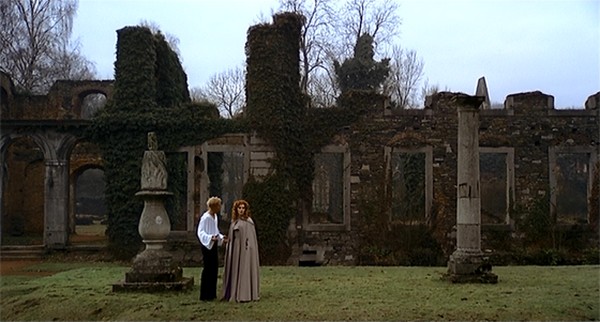
Interview with horror-expert Jonathan Rigsmy (2025). Fascinating video essay offering new views on the film. Helped me make connections and see what I didn’t see while watching. (26 min)
Malpertuis Archive (2005) Collection of interviews, making-of, looks back, and the sort. A solid mix (37 min)
Orson Welles Uncut (2005) A featurette of Welles and the film. Expands on the earlier talk of how much of a pain the legendary actor-director was. Also includes outtakes and expansions of his scenes. (26 min)
Susan Hampshire: one actress, three parts (2005) – She had 4, maybe 5, but still. The English actress talks about getting cast, and filming as so many characters, and how she and the team were able to pull it off (12 min)
Michael Bouquet and Harry Kumel interview (1971) – TV interview with the pair before the film came out. They have a nice report and interesting to see the approach of talking about it compared ot the 2005/2025 features (14 min)
Malperuis Revisted (2005) Kumel visits exterior filming locations. I always love these. (5 min)
The Cannes Cut: 1h40 cut of the film (available in English or Dutch) that premiered at Cannes after a hasty editing session. (side note: it also has a 95-minute US cut, not included here).
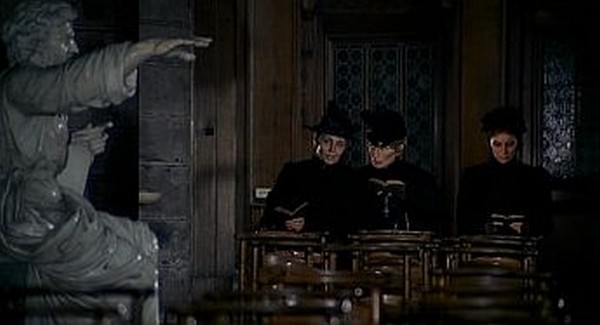 The Warden of the Tomb (1965) – a Kumel short film based on a Kafka play. Filmed in gorgeous black and white, the transfer is a little fuzzy but generally looks great. The film is engaging, but it is a lot of sitting in a room talking. (37 minutes)
The handsome 80-page booklet is a wonder. It includes: an overview of Kumel’s career, an insightful essay about the film’s meanings and messages within surrealism, two essays on the film’s place in horror: as a 70s Euro-horror and a transcendent sort (I guess we’d call “elevated” these days), and a look at Kumel’s short films (as noted, one of which is included).
Radiance Films put together a hell of a package.A great film with a great transfer, and a bounty of features. For fans of Eurohorror and the strange and esoteric, check it out.