

A scientific breakthrough meant to cure cancer quickly unravels into a global catastrophe, leaving humanity on the brink of extinction.
With a lone survivor at the center, the film explores the fragile balance between scientific ambition and unintended consequences. Blending psychological drama, science fiction, and survival horror, I Am Legend delivers an emotionally driven story that raises compelling questions about isolation, sacrifice, and what it truly means to be human. Directed by Francis Lawrence and written by Akiva Goldsman and Mark Protosevich, the film maintains an accessible tone, balancing quiet introspection with bursts of suspense and action. The narrative offers a gripping survival story, exploring themes surrounding humanity, morality, and scientific responsibility. Will Smith anchors the film with a deeply committed performance as Dr. Robert Neville, a U.S. Army virologist immune to the virus that has devastated humanity. Neville spends his days searching for supplies and working tirelessly to develop a cure, while defending himself from the infected creatures that emerge each night.
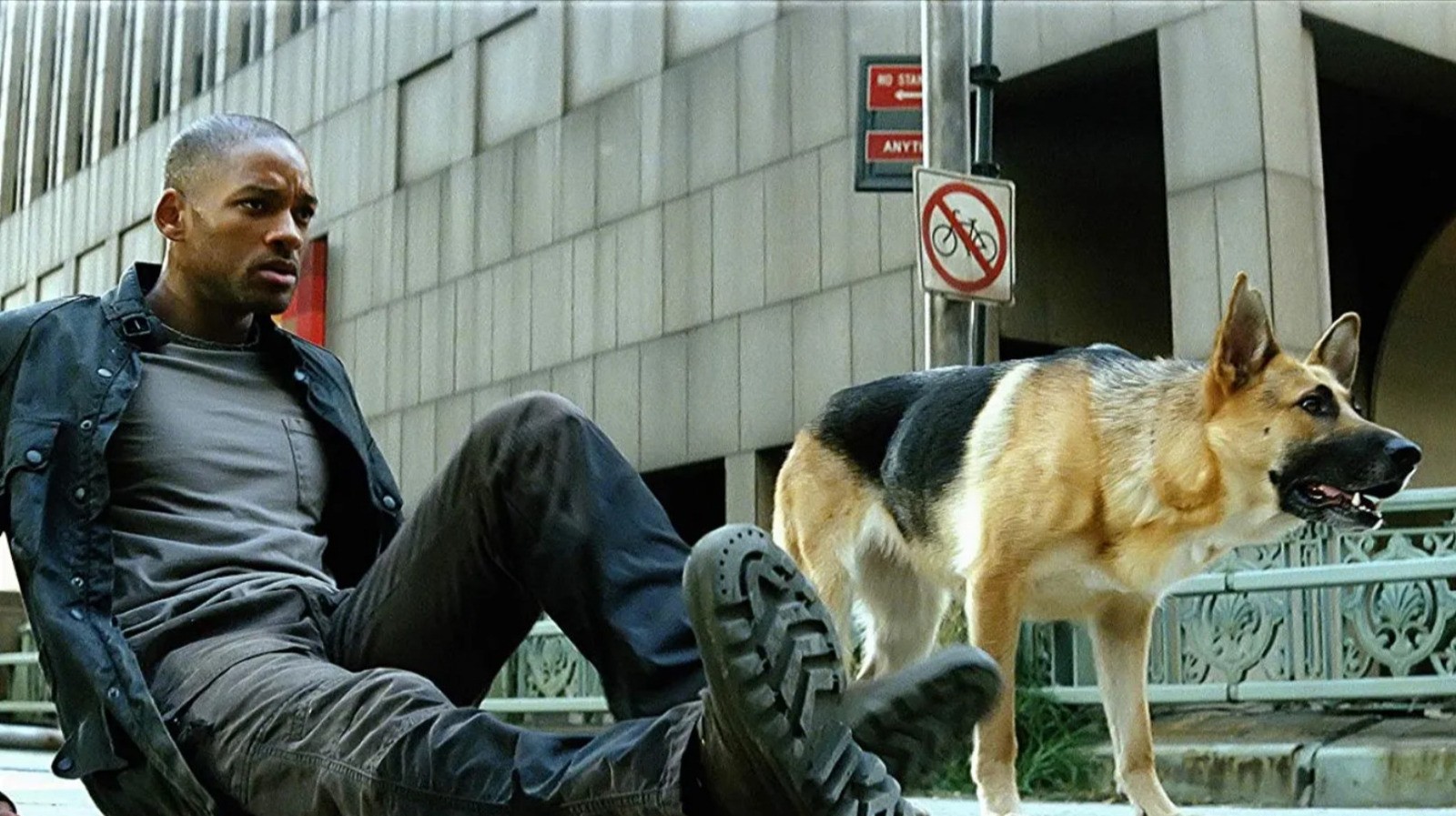
Carrying much of the film alone, Smith delivers a layered portrayal of a man driven by both scientific determination and emotional survival. Smith balances Neville’s resilience with moments of vulnerability, particularly in his interactions with his loyal dog Sam, whose presence provides a rare sense of companionship. The performance relies heavily on subtle emotional shifts, allowing the audience to feel Neville’s growing loneliness and desperation even in the film’s quieter moments.
Alice Braga provides a meaningful counterbalance as Anna, a survivor who unexpectedly enters Neville’s world and challenges his belief that he is truly alone. Her character introduces a renewed sense of hope and perspective, suggesting that Neville’s fight for survival may serve a greater purpose. While her role is more limited, Braga’s presence shifts the emotional trajectory of the story, opening the narrative beyond Neville’s isolated struggle and reminding both the character and the audience that humanity has not been entirely lost.
The film’s restrained use of action enhances its emotional focus, allowing suspense to build gradually rather than overwhelming the story. The infected Darkseekers function less as traditional monsters and more as constant reminders of the world that has been lost. Flashbacks to the early days of the outbreak help flesh out Neville’s motivations and deepen the tragedy of his situation, grounding the science fiction elements in personal loss. The musical score complements this tone with atmospheric compositions that reinforce both tension and melancholy, underscoring Neville’s internal battle as much as his external one.
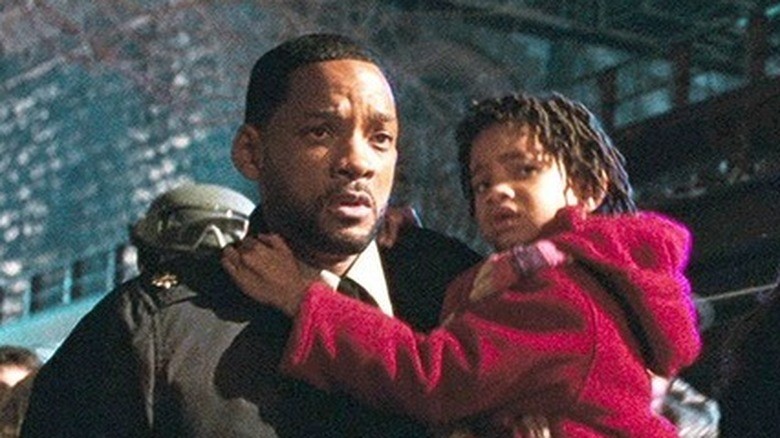
I Am Legend creates a haunting portrait of an abandoned New York City, transforming familiar landmarks into eerie reminders of a fallen civilization. Wide shots of empty streets and overgrown infrastructure emphasize Robert Neville’s isolation, reinforcing the emotional weight of being the last known human survivor in the city. The film contrasts bright daylight scenes, where Neville moves cautiously but confidently through deserted Manhattan, with dark, claustrophobic nighttime sequences dominated by the threat of the infected Darkseekers. These visual shifts heighten tension and align the audience with Neville’s perspective, creating a constant sense of unease. The production design emphasizes survivalist realism, from Neville’s fortified home in Washington Square Park to his carefully organized laboratory, reflecting a man clinging to routine as a defense against despair.
The film follows a man trying to save humanity while struggling to preserve his own sense of purpose. As Neville works tirelessly to develop a cure, his survival becomes as much about emotional endurance as physical safety. I Am Legend stands out as a rare Black-led blockbuster where the story is not centered on race, but instead on survival, isolation, and the enduring hope that humanity can be restored.