
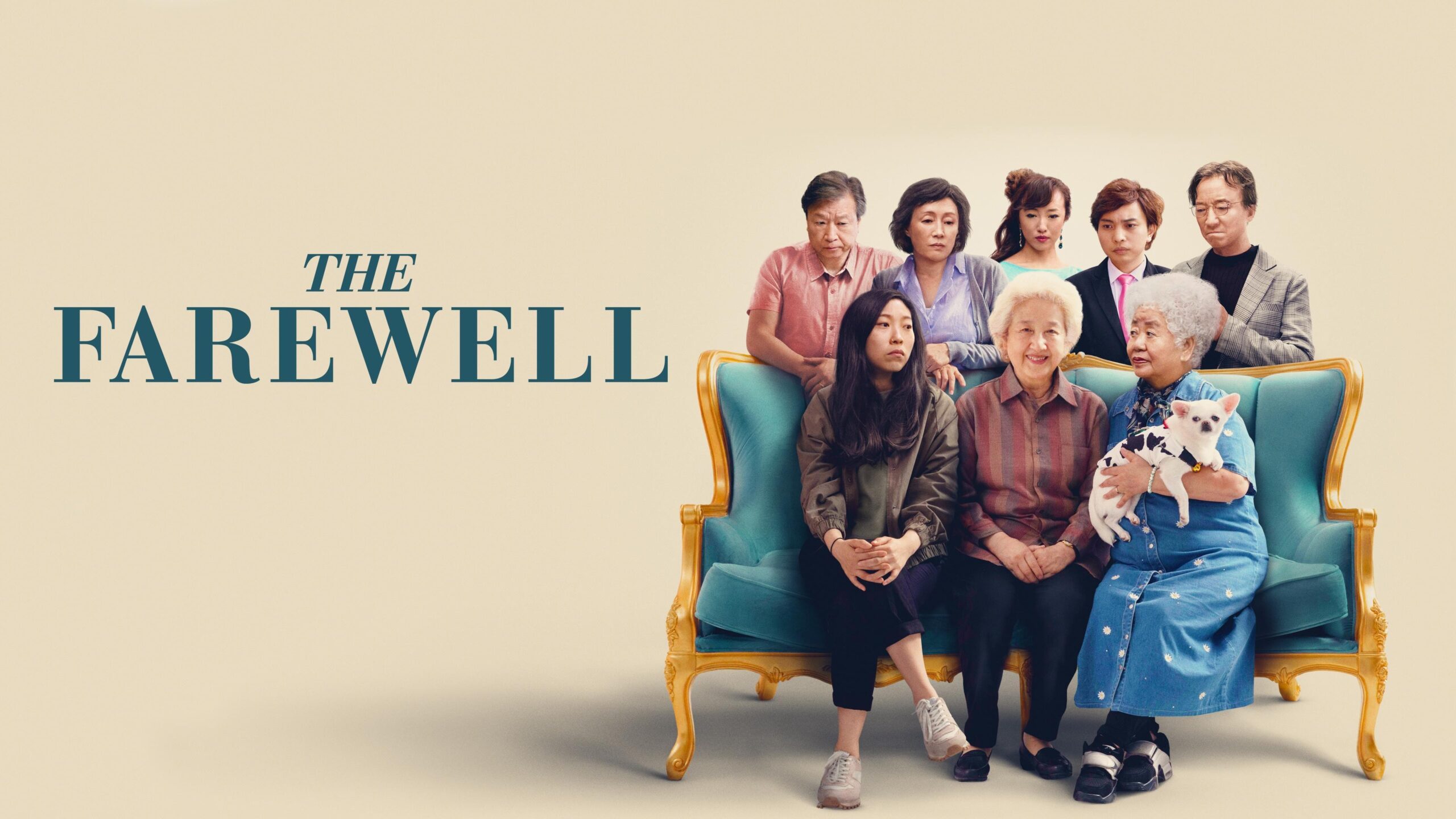
 When Billi’s grandmother, Nai Nai, is diagnosed with stage 4 lung cancer and given only months to live, her family decides the best course of action is to hide her diagnosis from her.
If you’ve been eyeing this film and been worried it might be too emotionally devastating (and haven’t we all had enough of that these days), please be assured that the sweetness, warmth, and quiet humor will leave you feeling profoundly alive and uplifted. At the center of the film is Billi. Billi was born in China, but her family moved to New York when she was six. Now, a struggling writer, she grapples with the family’s decision to keep this diagnosis from Nai Nai. To bring the family together one last time, they quickly arrange a wedding for Billi’s cousin Hao Hao and his girlfriend, giving everyone a reason to gather for what may be their final time together.
 Billi struggles with the family’s decision to keep Nai Nai’s diagnosis a secret. Her parents even insist she remain in New York, fearing she won’t be able to hide her emotions, an order she ultimately ignores. The tension between Billi and her older relatives reveals not only a cultural divide but a generational one. Billi straddles two worlds, as many children of immigrants do, and struggles with where she fits into either. Early in the film, Billi lies to Nai Nai about how her own life in New York is going, hoping to spare her grandmother unnecessary worry. She fails to recognize that, on a smaller scale, she’s doing exactly what the rest of the family is doing.
Her own grandmother’s diagnosis inspired writer and director Lulu Wang’s semi-autobiographical film, and the decision not to tell her. Wang’s script is well balanced and never overwrought. This isn’t a flashy or broad film; it’s one built on the quiet moments between family. Moments of humor. Moments of sadness. Moments of love. There is no need for big tears or dramatic monologues. The quiet simplicity of the moments is what makes it so easy to connect to. By drawing from her own life, Wang gives the film a depth and richness that can’t be replicated. Much like the story itself, Wang embraces simplicity over elaborate camera work. Oftentimes sitting in a shot that lingers on actors and allows them to simply be, it never overshadows the story or the work of the performers. Wang’s direction is so understated that it’s easy to overlook just how meticulously every performance, every quiet moment, and every emotional beat has been orchestrated.
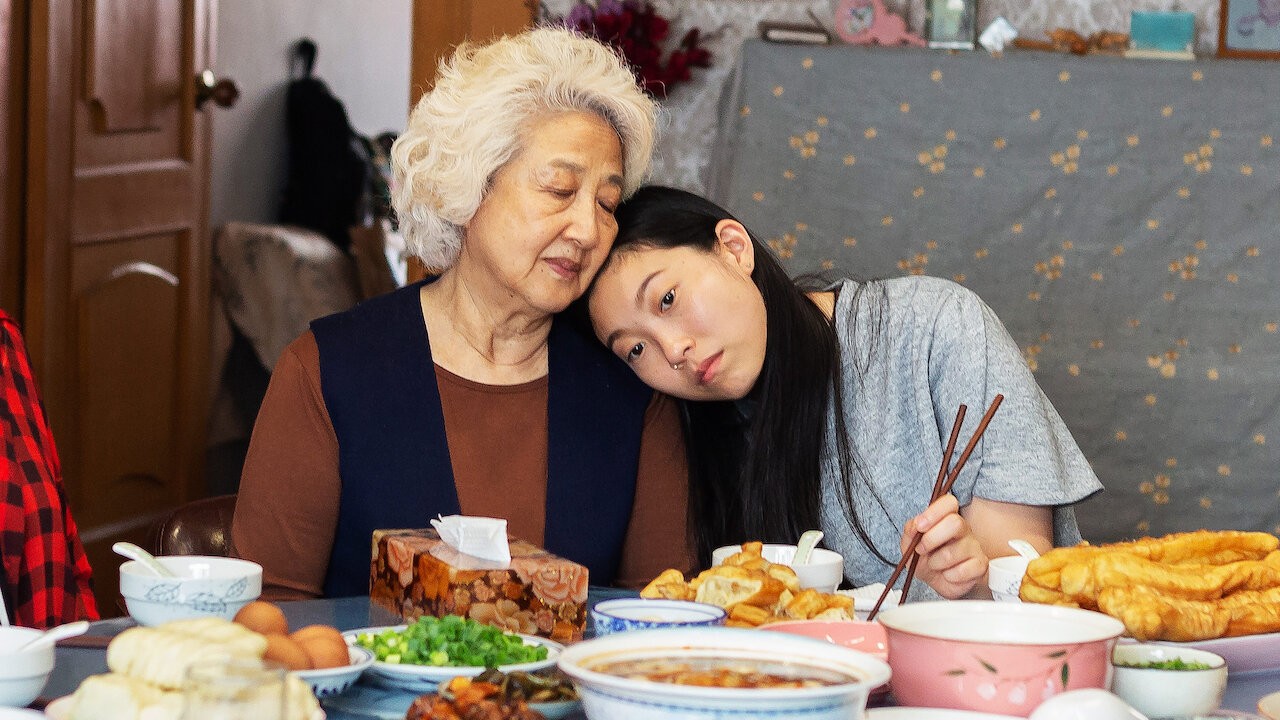 Wang has crafted relatable and achingly human characters, brought to life by a truly remarkable cast of actors. Awkwafina stars as Billi, in what is an unusually subdued role for her. It would be easy to overplay Billi, but Awkwafina keeps her grounded in a way that is one of the most honest performances seen out of her. The entire ensemble cast is pitch-perfect in their portrayals. The chemistry amongst all the actors makes it feel like you are stepping into a real family’s dynamics. However, it is Zhao Shu-zhen who steals the show as Nai Nai. She’s so genuine; she feels like everyone’s grandmother. She is the heart of the film.
The Farewell is so accomplished that it is genuinely hard to believe it is only Wang’s second feature film. She manages to balance the different tones and beats with confidence. Though it’s rooted in Wang’s own history, it reminds us that families are messy and imperfect, but the love is real.
If nothing else, The Farewell may leave you with a deep urge to call your grandmother.