
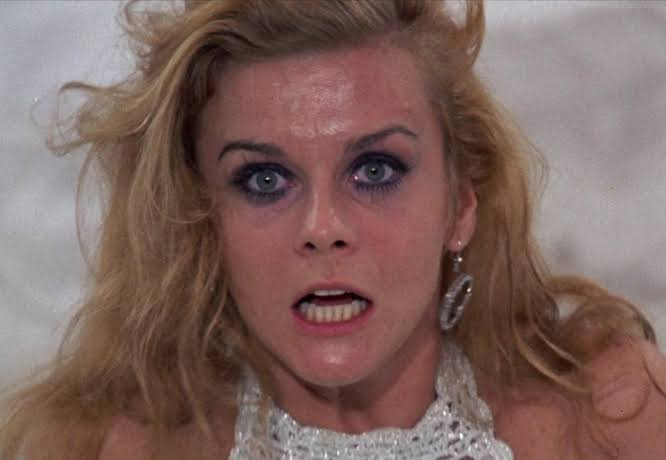
There is a scene in Ken Russell’s 1975 “Tommy” which ranks among the most remarkable and ridiculous visions ever put on film: Ann-Margret, in a swing of drunken rage, throws a champagne bottle at a television set. The bottle smashes the television’s screen, and waves of soap suds and baked beans come pouring out. Ann-Margret then writhes on the floor, covered head-to-toe in baked beans.
This scene captures everything that is wonderful and awful about the big screen adaptation of The Who’s rock opera. “Tommy” is an anything-goes phantasmagoria that pushes at the borders of good taste and good sense. Often, it falls over its own feet in the process. But in sterling moments, it reaches a new high in grotesque overkill that makes it truly captivating.
“Tommy” can be seen as an assault on Britain’s ossified socio-economic system: the “Bernie’s Holiday Camp” number provides a nasty/funny look at postwar genteel shabbiness, while the settings that frame “Acid Queen” and “Go to the Mirror” reflect the extremes of low-rent squalor and posh excess. Tommy’s liberation from a life without sight, hearing and speech is then exploited with a crass style of blatant capitalism that was alien to welfare state Britain (although it was later cultivated in the Thatcher years and thereafter).
But on the other hand, perhaps that’s just over-thinking things. “Tommy” can also be seen as vintage-70s mindless fun. The Who’s rollicking score gets a full-blown treatment with icons Tina Turner, Eric Clapton and Elton John in rare big screen appearances. (None of them look particularly comfortable on screen, but their high decibel levels more than compensates). Ann-Margret and Oliver Reed may have seemed like unlikely candidates for rock opera performances, but they pull off their roles with energy to spare Roger Daltrey’s Tommy looks good and sings well, though bandmate Keith Moon showed the possibility of genuine movie stardom with his hilarious comic pop-ups as the wonderfully atrocious Uncle Ernie. Jack Nicholson’s guest appearance as the oleaginous physician Dr. Quackson is the real scene-stealer, especially when he starts singing with a British accent.
Still, vintage-70s keeps “Tommy” stuck in a particular era that makes it seem like a relic instead of a timeless classic. And if you don’t believe me, try finding a pinball machine arcade today!
Perhaps the best way to enjoy “Tommy” is via YouTube, where clips of the individual music sequences stand out from the chaos and shine on their own merit. Especially that wacky Ann-Margret number!