

What begins with a decrepit ship drifting into a Brooklyn dockyard quickly unravels into a tale of death, seduction, and destiny.
Vampire in Brooklyn explores the tension between grief, identity, and forbidden desire, while blending horror, comedy, and supernatural mythology. Directed by Wes Craven, and written by Eddie Murphy, Vernon Lynch, and Charlie Murphy, the film delivers an unusual mixture of gruesome vampire lore and broad comedic flourishes, creating a cult favorite that continues to stand out in the Black horror canon. Though it occasionally leans more toward camp than terror, the film remains a landmark for its bold premise and star power. The film follows Maximillian (Eddie Murphy), a powerful vampire who arrives in New York after centuries of loneliness. Seemingly the last of his kind, Max searches for the only living half-vampire woman, unaware of her heritage. What unfolds is a clash between Max’s supernatural pursuit and Detective Rita’s fight to uncover the truth, all set against the gritty backdrop of mid-90s Brooklyn.
Eddie Murphy commands the film with his performance as Maximillian. Smooth, alluring, and commanding, Murphy plays Max as both charming suitor and menacing predator. His ability to shift between humor and horror is on full display, and while some critics argued that the tone leaned too comedic, his presence ensures Max is a memorable vampire villain. Angela Bassett delivers a grounded and emotional performance as Rita, who is torn between her duty as a detective and the grief of her mother. Confusion over the visions and feelings Max stirs in her, Bassett embodies strength, vulnerability, and moral clarity, elevating the film’s dramatic core. The chemistry between Murphy and Bassett adds tension to their dynamic, blurring the lines between seduction and manipulation.
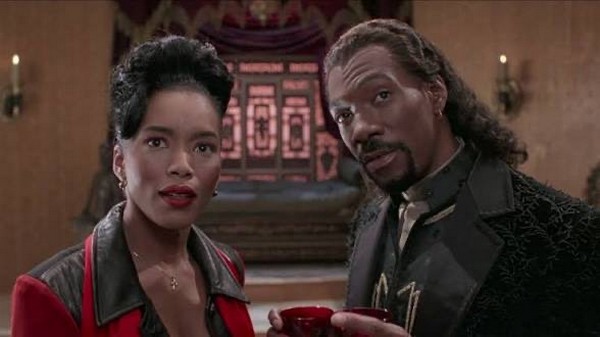
Supporting roles also enhance the film’s mix of horror and comedy. Kadeem Hardison provides levity as Julius, a chosen assistant turned rotting ghoul reluctantly serving Max, while John Witherspoon’s over-the-top humor cements the film’s cult reputation. These comedic beats sometimes undercut the horror but also give the film its unique tonal identity and classic memorable lines.
Thematically, Vampire in Brooklyn plays with ideas of belonging, identity, and legacy. Rita’s hidden heritage reflects the struggle of reconciling with one’s past, while Max’s determination to survive at any cost mirrors a hunger for power and connection. Beneath the campy moments, the film touches on deeper themes of grief, cultural displacement, and the allure of darkness.
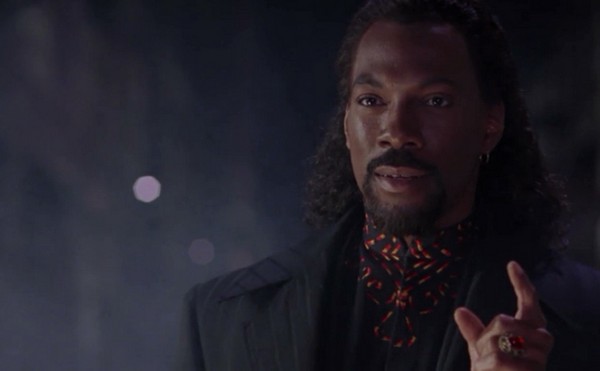
Visually, Vampire in Brooklyn carries Wes Craven’s signature atmosphere, balancing shadows and urban grit with the vibrant energy of the city. The opening sequence, an abandoned ship full of mutilated corpses, is among the most striking, setting an ominous tone that immediately hooks the audience. The production design captures the contrast between Max’s otherworldly power and Rita’s very grounded struggles, while also highlighting the duality of the story: a vampire mythos reframed in a distinctly Black American context.
While Vampire in Brooklyn did not achieve mainstream success upon its release, it has endured as a cult classic, notable for featuring a Black vampire at its center, something rarely seen in 1990s Hollywood horror. The collaboration between Eddie Murphy and Wes Craven produced a film that straddles genres, and though uneven in execution, its impact on Black horror representation remains undeniable. The all-star cast, memorable performances, and ambitious blending of tones ensure that it continues to resonate with fans of horror and comedy alike. It may have left audiences craving a sequel that never came, but it also cemented itself as a vital piece of 90s horror cinema and an important moment for Black representation in the genre.