

What begins as a simple attempt at reconnection quickly descends into silent terror, transforming an ordinary camping excursion into a harrowing exercise in raw survival, grief, and the brutality of what awaits.
Pitfall wastes no time easing in. Its cold opening immediately thrusts us into a brutal cat-and-mouse chase in the woods, before introducing us to the main storyline. Directed by James Kondelik and written by Alex Bogomolov, there is no mysticism, no elaborate setup, just earth, shadow, and the feeling of desperate survival. The story moves forward when the main character Scott, while in the woods with his friends, plummets into a ten-foot spiked pit death trap. Pitfall does not use shock for impact. It holds. It forces Scott, and the audience into the unbearable question: not just can he escape, but can his friends help him as they are busy fighting for their lives against a mysterious slasher hunting them down.
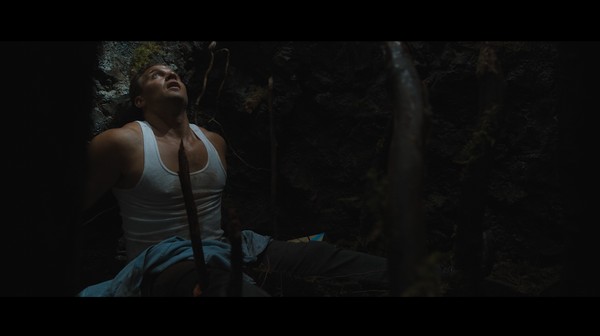
Scott, played with a deliberate inwardness by Marshall William, is still reeling from a past family tragedy, yet is desperately committed to presenting a version of himself that has already healed, keeping his pain from his loved ones. He is not in denial as much as he is fatigued from being the broken one. His injury, once falling in the pit, is not treated as a prop. The physical agony feels real. His panic arrives in waves: first survival logic, then regret, then the most dangerous stage of fear: memory. In contrast, his sister Ashley, portrayed by Alexandra Essoe, holds nothing in. Her grief is unmasked and immediate, her protectiveness instinctive, her fear earned. The two siblings, emotionally estranged by loss rather than conflict, embark on a camping trip with friends as a last-ditch effort to repair what neither knows how to name.
The forest becomes an open trap that forces the group into a night of survival and isolation. It is simply a place where silence is louder than language. The cinematography leans into that philosophy. Natural light is treated as something unreliable, not beautiful but temporary. Every wide frame emphasizes how danger can lurk in every corner. The deeper they move into the wilderness, the more negative space dominates the composition, as if the forest is observing its guests rather than housing them.
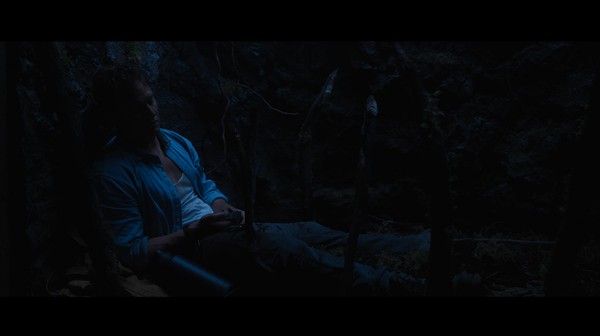
What elevates Pitfall is that it is not simply a survival thriller. It becomes a spiritual confrontation with emotional avoidance itself. The film draws a haunting parallel, Scott is physically immobilized in the exact way he has been emotionally since tragedy struck his family. He is stuck in place, bleeding out, while unable to attend to the group. Meanwhile, Ashley, frantic above ground, embodies the inverse. She feels everything too loudly. Their grief has the same wound but opposite symptoms. The violence, when it arrives is intense, gory, and brutal. The presence of the hunter, never theatrically introduced, feels horrifying precisely because there is no monologue, no true intentions. The group is just in the wrong place, at the wrong time, and comes to the chilling realization that they, among others, are being hunted. Pitfall does not glamorize survival. It analyzes it. It frames trauma not as a villain to be outrun, but as a pit that arrives long before the fall.