
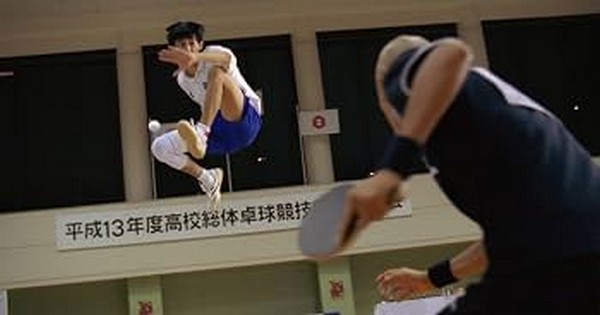
 A pair of competitive ping-pong playing pals have their ups and downs in Fumiko Sori’s 2002 drama Ping Pong, based upon the manga. Ping Pong is now on Blu-ray via 88 Films.
The Film
A down-on-his-luck Japanese table tennis champion has to regain his confidence in his skill and navigate a changing friendship in the complicated world of competitive ping pong in the aptly named Ping Pong, directed by Fumiko Sori, written by Kankuro Sudo, and based on the manga by Taiyo Matsumoto. Just noting first of all: despite sharing sports, there is nothing between Ping Pong and Marty Supreme. Ping Pong is a familiar and occasionally compelling drama with well-written characters, and hums along nicely, though often overly familiar, like watching an evenly skilled match.
The story mainly follows a pair of long-time friends: the energetic, loud, brash, and quick-headed Peco, played by Yosuke Kubozuk, and the more reserved Makoto, aka Smile (because he doesn’t), played by Arata, quietly reserved. Peco is having a bit of strained confidence due to finding out Smile lets him win practices and not giving his own all due to being more of a natural talent and a little lazy/reserved, all to help build up his friend. With a new competitor, the bulging, bald, and intense Dragon joining their insular area of East Asian competition, which also includes other antagonists in Demon, an old friend, and China, who came to Japan because he didn’t make the team there. The various games and personalities defeat Paco; he starts to frazzle and needs various pushes to get back on it.
It’s pretty standard. Training montages, often with Paco’s chain-smoking grandma. Played with a special energy by Mari Natsuki, She’s a real hoot and enlivens the film whenever she’s on screen. The dynamic between Peco, Smile, and their rivals from China, Demon, and Dragon is one of friendship and rivalry and the grey areas and how sports competition is settling those out. Of course, the emotions bleed into the matches. The friends drift as differences come and are strained by external forces, but our leads find themselves and become better players.
The manga is very well received back in Japan, and that might be a bit of my disconnect. More well received by those who know the source, certain aspects that translate or don’t. Or merely different worlds of this film and mine. I certainly enjoyed Ping Pong but was not fully brought in. That said, it was nominated for a ton of the Japanese version of the Oscars, so it did translate there.
Sori shoots the matches with a great visual flair, upping the thrill of a sport that might be rather static. Fun fact: the balls in the match are fully CG, with the actors working the ballet of pretend to play. Impressive. When the games are on, there is a jolt of kineticness that is nearly there in the rest of the film, almost waiting to burst out.
The Manga was also adapted into an animated series. I wonder how that was.
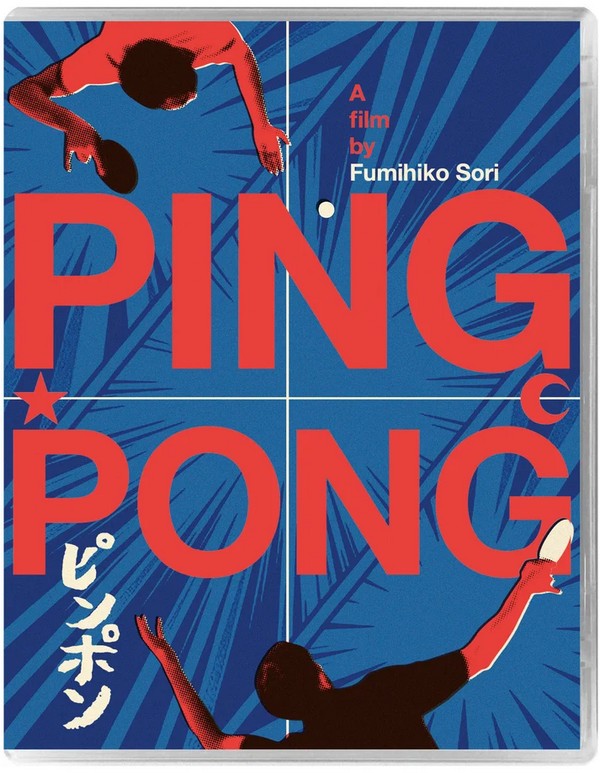
The Package
88 Films puts Ping Pong on a single disc, with a it of the new poster on the disc. It comes in a full-size clear case with a reversible sleeve; one side with original art and the other with new art by Luke Insect on the other side. It has an Obi strip to keep it clean if wanted. Limited to 2000 units. A booklet is placed within as well.
The Presentation
Ping Pong looks pretty good, but has that early 2000s overly digital look. The too neat and clean, smooth thing with some bleed. Not wowing but does the job. Audio In Japanese Mono with new English subtitles.
The Features
88 films puts a decent amount of solid features to Ping Pong
Commentary
Zack Davisson gives a full commentary, in English, of the film, adapting the manga, public consciousness of it, and how it was made. He is really into how the balls are CG; it’s a big talking point. While I’m still not so keen on the film on the whole, I have a better appreciation knowing the cultural significance.
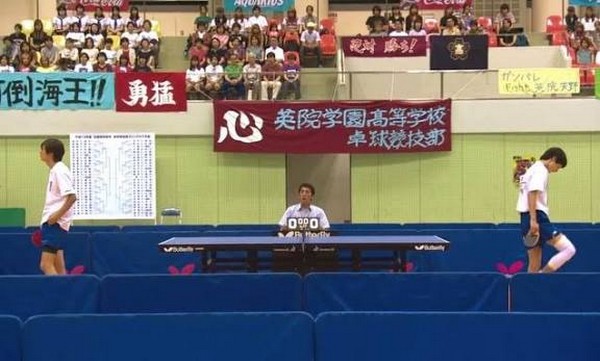 An Artist’s Take
This interview with Michael Arias gets into the adaptation and the cultural world of manga and this film/manga
A Different Class
A video essay by Jasper Sharp is informative and solid (14m)
Booklet
A 12-page stapled booklet contains the norms along with the essay “See the Ball” by Jonathan Clements. Clements gets into Sori’s adapting choices of the manga, with snippets of interview notes with Sori to build up.
Final Thoughts
Ping Pong, from Fumihiko Sari, wasn’t quite for me, but I can see how it grabbed others. But I’m not a Japanese manga-loving teenager, nor am I that much of a sports movie fan. So Ping Pong has its fans, and that’s good. That might be you. If you are, 88 Films gives a good set of features and a new way to see the film on Blu-ray. Out now.