

What begins as a family transitioning into a new home soon unravels into something more unsettling. Family dysfunction becomes raveled within the mysteries of their house.
Presence, written and directed by Steven Soderbergh, takes a bold approach to psychological horror, utilizing a first-person perspective to pull the audience deep into its eerie atmosphere. More than just a paranormal story, the film explores themes of grief, depression, loneliness, and anger, making its horror feel deeply personal rather than purely supernatural.
Blending family drama with paranormal activity, Presence is a slow burn that relies on mood and tension rather than outright scares. It’s not a film that indulges in excessive gore or shocking jump scares. Instead, it maintains a quiet, creeping dread that builds steadily, keeping the audience on edge. The film’s first-person POV is one of its strongest assets, immersing the viewer in the protagonist’s increasingly distorted perception of reality. This choice not only enhances the film’s sense of unease but also aligns us with the character’s emotional turmoil, making every flicker of movement in the shadows feel all the more unnerving.
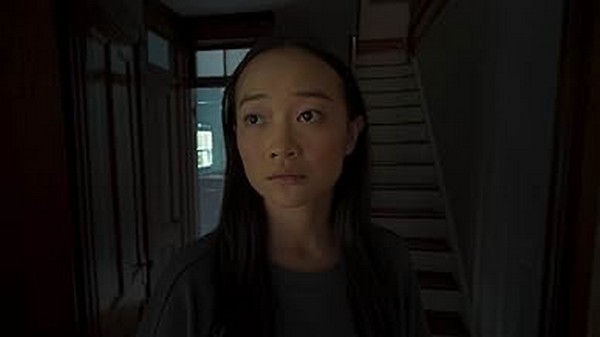
Lucy Liu embodies the persona of a mother who exhibits favoritism toward her children. Her portrayal is layered as she delivers one of the film’s most standout scenes. She is the matriarch of the family navigating her work, a star athlete son, and a grieving daughter. Chris Sullivan, best known for This Is Us, provides a grounded, emotionally resonant counterbalance, bringing depth to a character who is both a source of strength and tension within the story. Their dynamic reinforces the film’s themes of familial strain and the weight of unspoken pain.
Callina Liang delivers a poignant performance as Chloe Payne, capturing the quiet anguish of a teen weighed down by grief and isolation. Her portrayal is deeply introspective, allowing Chloe’s sorrow to manifest in subtle, haunting ways that make her connection to the presence in the home feel all the more inevitable. Eddy Maday embodies Tyler Payne, the golden child in the eyes of their mother, a favored, athletic, and often cruel contrast to Chloe’s vulnerability. His status as the family’s pride manifests in his overconfidence, his need to dominate, and his bullying nature. As the golden child, Tyler thrives under their mother’s attention, often at Chloe’s expense, and Maday leans into this dynamic with a performance that is both charismatic and unnervingly aggressive.
Visually, Presence is calculated in its use of space and framing. The cinematography, which often feels voyeuristic due to the first-person perspective, makes even the most mundane moments feel charged with subtle moments. Long, uninterrupted takes heighten the tension, forcing the audience to scan every inch of the frame for something out of place. Lighting plays a crucial role in the film’s unsettling atmosphere, with dim, naturalistic glows giving way to deep shadows that obscure more than they reveal. These choices, paired with an eerie, minimalist score, create an environment where unease lingers in every scene.
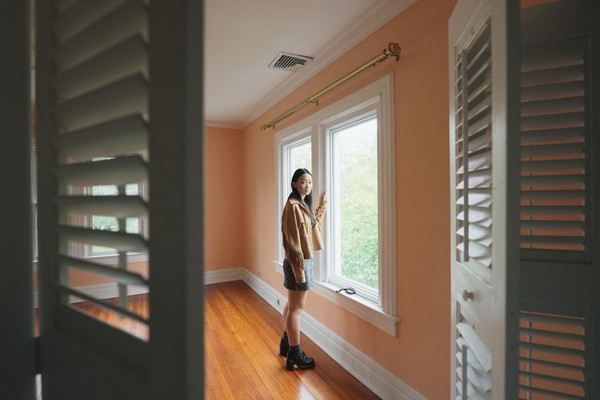
The film’s exploration of grief and depression is what makes its horror resonate on a deeper level. Presence doesn’t simply present fear, it dissects it, showing how emotional wounds can fester in isolation. The supernatural elements serve as an extension of this emotional core, blurring the line between psychological distress and otherworldly influence. Rather than offering clear explanations, the film embraces ambiguity, allowing the audience to interpret its horrors through the lens of its characters’ emotional struggles.
The final scene is chilling, a moment that lingers long after the credits roll. It’s not about shock value but about the culmination of everything the film has been quietly building toward. The last lingering shot leaves an impression that is both haunting and thought-provoking, reinforcing the film’s themes without the need for overt exposition.
While Presence doesn’t reinvent the paranormal thriller, it offers an engrossing, well-crafted take on the genre. Its strength lies in its ability to weave a deeply personal story into its supernatural framework, making its horror feel intimate and inescapable. Those looking for a traditional scare-fest may not find what they’re expecting, but for viewers who appreciate psychological tension and atmospheric storytelling, Presence is a compelling experience. Suspenseful rather than terrifying, ominous rather than outright horrific, it’s a film that lingers in the mind.