

Clare Bleecker starts her journey seeking subtle revenge, but it soon twists into a psychological nightmare marked by violence, decay, and spiritual unease. Driven by both otherworldly voices and a trail of victims, she grapples with whether her actions are a form of divine judgment or pure, ruthless vengeance.
Directed by Mitzi Peirone and based on Don Roff’s novel Clare at Sixteen, Saint Clare is a genre-blending thriller that fuses paranormal horror, vigilante justice, and mystery. The script, co-written by Peirone, Roff, and Guinevere Turner, wastes no time. The film opens with a thrilling sequence that sets the tone: brisk, violent, and laced with just enough enigma to pull you in. Pacing remains strong throughout. With each victim, the mystery deepens, especially once Clare’s latest target connects her to a web of missing women, trafficking, and small-town corruption. The narrative expands from a personal mission to a social horror, confronting viewers with the ugliness that hides beneath quiet suburbia.
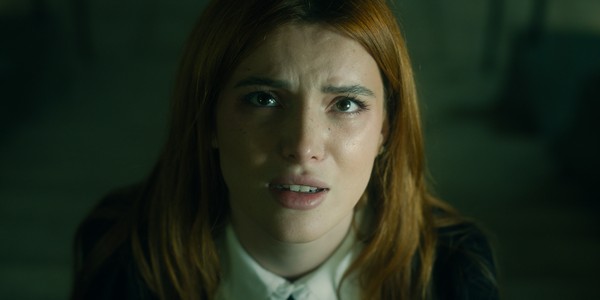
Anchored by Bella Thorne in one of her most restrained and emotionally complex performances to date, the result is a twisted and strangely intimate ride. The film explores themes of moral ambiguity and control, and the power lies with the ghosts inside the head of a grieving woman. Clare Bleecker is not your typical slasher anti-hero. By day, she blends into a college as the new girl in town, by night, she becomes a weapon of perceived justice, executing those who do harm. But Clare doesn’t kill at random, she hears voices, often from the dead, calling her to act. Whether it’s divine intervention or delusion is never entirely clear, and that ambiguity gives the film its strongest edge. Bella Thorne plays Clare with a muted intensity. She’s haunted, compassionate, but ruthlessly focused. Every kill has weight, and her grief, particularly linked to her tragic past, is present in every quiet moment. Her performance is introspective, more stillness than scream queen. Ryan Phillippe plays Detective Rich Timmons, the archetypal suspicious cop, slick, self-righteous, and possibly far more involved than he lets on. Phillippe toes the line between morally ambiguous lawman and outright villain, offering a grounded but menacing counterbalance to Clare’s ethereal mission. Their dynamic keeps the tension alive, especially as Clare begins to dig deeper into the town’s secrets.
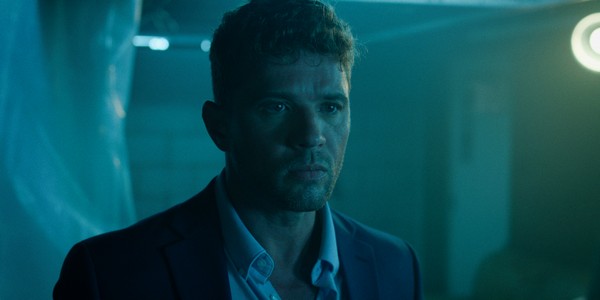
Visually, Saint Clare is moody and stylized. The film leans into a color palette of dim shadows and harsh neon flashes. The lighting design plays tricks on the viewer’s sense of reality, amplifying the film’s blurred line between the spiritual and psychological. The camera work from cinematographer Luka Bazeli is deliberate, using lingering shots to build tension and isolate Clare in the frame, a visual reminder of her disconnect from the world around her. The film’s sound design leans into minimalism, letting eerie whispers, echoing voices, and ambient drones creep into scenes. The voices Clare hears, those of her victims, linger around her like a living conscience. Saint Clare isn’t a traditional horror movie or a typical revenge thriller. It’s a slow dive into faith, grief, and righteous fury.
Saint Clare raises compelling dilemmas. Is Clare a vessel of divine justice, a traumatized vigilante, or just another lost soul rationalizing her need for control through spiritual fantasy? The film never gives a definitive answer, but the ambiguity is intentional and unsettling. Viewers expecting jump scares may be surprised by its stillness, but those who enjoy psychological tension, religious symbolism, and quiet dread will find much to unpack. And by the end, one question still lingers: Is Clare doing the lord’s work or burying her grief behind justice for those who need a savior?
Love the book. Love the writer. Can’t wait to experience the film.
Love it! Can’t wait to see the film. 😎