
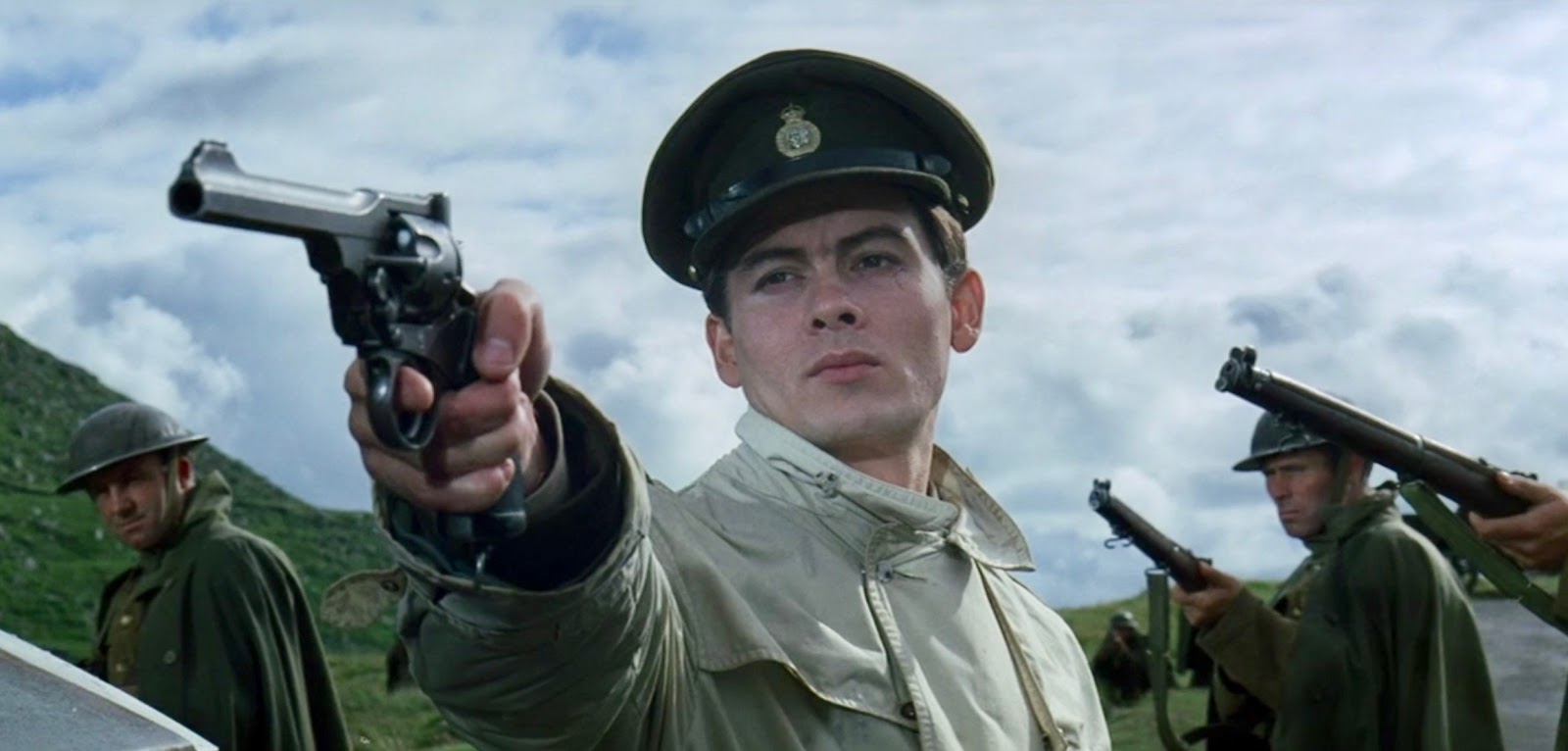
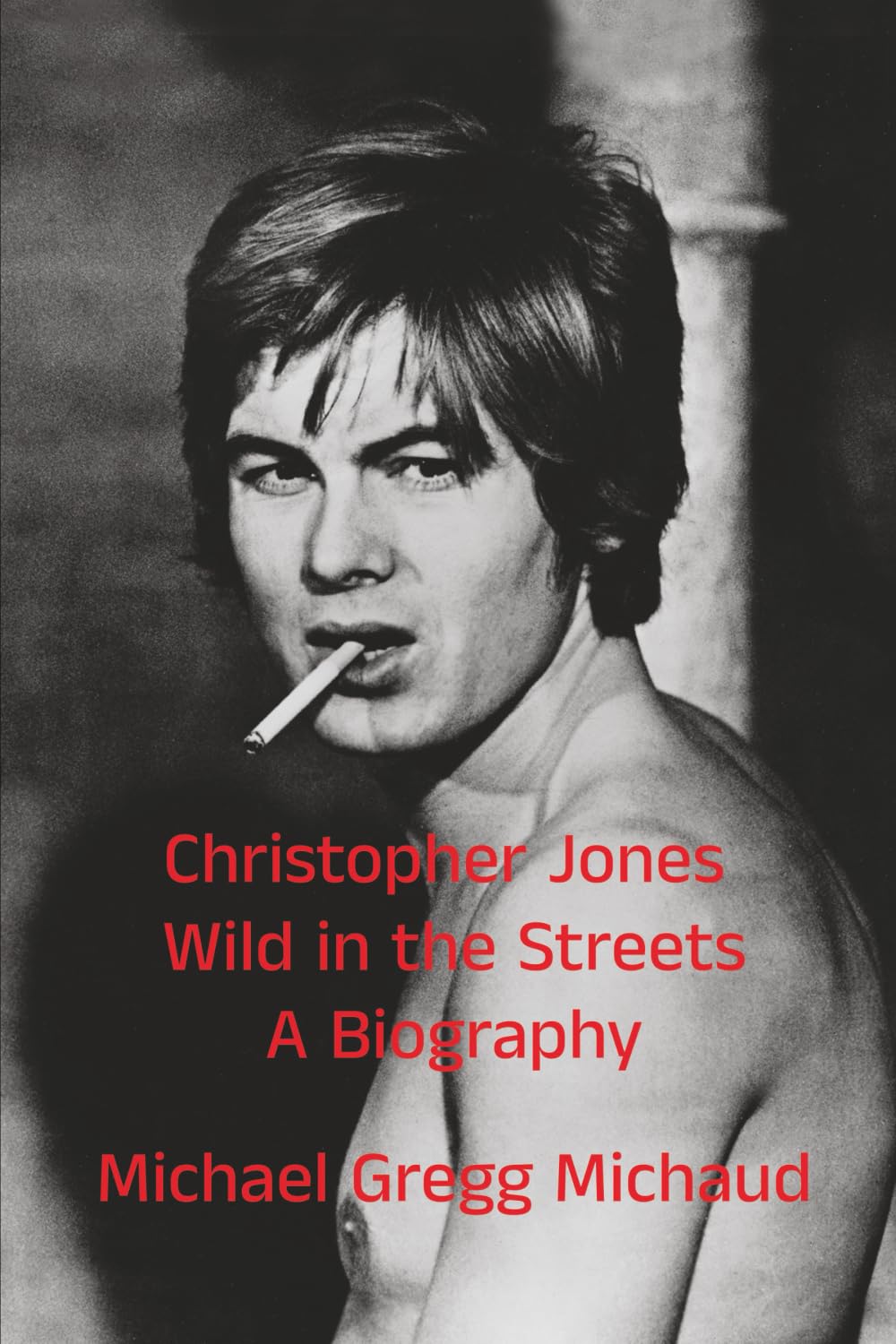
A truly peculiar Hollywood mystery involved Christopher Jones, who became an overnight sensation in the mid-1960s but abruptly walked away from show business after five years in the spotlight. Michael Gregg Michaud, the film historian who documented the life of another troubled Hollywood star in the excellent 2010 book “Sal Mineo: A Biography,” does a brilliant job in excavating the complex story of Jones’ turbulent life in his new work “Christopher Jones – Wild in the Streets – A Biography.”
He was born William Frank Jones in Jackson, Tenn., on August 18, 1941, the son of a grocery store clerk. His mother was an artist whose mental health frayed shortly after his birth – she was institutionalized when he was four and his father falsely claimed she had died. Jones and an older brother were placed and raised in an orphanage. At 18, he joined the Army but soon went AWOL and spent six months in prison before being discharged.
Michaud provides fascinating research into Jones’ extraordinarily rapid path the stardom – a triumph of being in the right place at the right time, starting in 1961 with a small role as a cabana boy in the Broadway production of “Night of the Iguana” and culminating with a screen test that landed the starring role in “The Legend of Jesse James,” which premiered on ABC in 1965.
While the series only lasted one season, Jones’ good-hearted bad-boy character generated tens of thousands of fan letters while critics hailed him as a new James Dean. He headlined three films released in 1968 – the coming-of-age drama “Chubasco,” the satirical “Wild in the Street” (as a rock star who becomes president) and the sex comedy “Three in the Attic” (1968), followed in 1969 with the Italian-lensed drama “Bright Season” (1969) and the British-based spy thriller “The Looking Glass War.” Jones was signed by Oscar-winning filmmaker Sir David Lean for his most prestigious role as a British officer who falls in love with a married Irish woman during Ireland’s independence war in the epic “Ryan’s Daughter” that was released in 1970.
Working on “Ryan’s Daughter” should have taken Jones to a higher level of stardom, but instead it destroyed his confidence and emotions. Michaud offers troubling depth on the problem-plagued production, which dragged months over schedule and budget due to Lean obsessional pursuit of perfectionism – the director would wait hours until cloud formations met his pictorial approval. But the clouds ultimately proved more reliable than Jones, who was either combative with the director or unable to fulfill the needs of the performance, requiring Lean to work around him and ultimately have another actor dub his lines. Cinematographer Freddie Young openly questioned if Jones could act and Jones later wondered why Lean cast him.
Jones became heavily depressed while making “Ryan’s Daughter” and Michaud notes the actor’s friends saw a decided personality change after he returned from the film’s Irish location – the author speculates Jones may have been living with undiagnosed paranoid schizophrenia. Exacerbating this situation was Jones’ drug and alcohol usage and concerns that his business managers were embezzling him. An exhausted and frustrated Jones jettisoned his career and vanished from the celebrity orbit.
Michaud does a fine job in trying to separate the myths and reality of Jones’ disappearance from public view. Jones had long-term relations and children with two women in his post-Hollywood years and focused on painting, but by the late 1970s he developed cocaine and crack addictions. And while he mostly lived on his earnings from his career, over time his funds dwindled to the point that he accepted his filmmaker friend Larry Bishop’s offer for a cameo in the 1996 “Mad Dog Time” strictly for the money.
But a resumption of his career was out of the question – he rejected Quentin Tarantino’s repeated attempts to get him on screen for “Reservoir Dogs” (1992) and “Pulp Fiction.” In his final years, he maintained a website where he sold autographed photos (in reality, signed by a friend) and lithographs of his art. He died on January 31, 2014, at the age of 72 from gallbladder cancer.
Jones gave a few post-Hollywood interviews but was often an unreliable raconteur who made unconfirmed claims that he had an affair with actress Sharon Tate prior to her murder by Charles Manson’s followers in 1969 and that he turned down the role of Michael Corleone in “The Godfather.” Several of the women in his life accused Jones of physical abuse – actress Susan Strasberg said she ended their three-year marriage in 1968 following repeated beatings while his girlfriend Olivia Hussey, the British star of “Romeo and Juliet,” claimed that Jones assaulted and raped her, which resulted in a pregnancy she terminated in an abortion. Carrie Abernathy, with whom he lived in the late 1970s and early 1980s, filed a restraining order after stating he twice broke her nose.
Michaud’s excellent investigative work has resulted in a disturbing and hypnotic study of a troubled man who was ultimately ill-suited for Hollywood fame. His jolting odyssey through the dark side of fame is effectively retold in this marvelous biography.
“Christopher Jones – Wild in the Streets – A Biography”
By Michael Gregg Michaud
BearManor Media; July 12, 2025
Hardcover; 352 pages
Version 1.0.0