
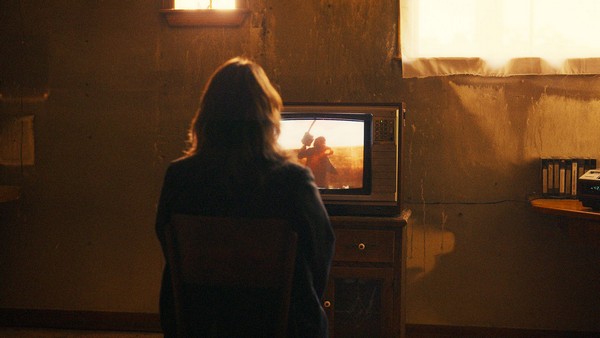
 Documentarian Alexandre O. Philippe gathers a panel of experts to discuss the legacy and culture around 1974’s The Texas Chainsaw Massacre in the excellent documentary Chain Reactions.
The Texas Chainsaw Massacre (if you want to be pedantic, it’s “Chain Saw” for the first film), directed by Tobe Hooper, has been part of the public zeitgeist for 51 years. Even after so many sequels, prequels, and remakes (nine films as of 2025, the last in 2022. I’m a huge fan of the first comedic sequel), it still cooks up its unique chili (ain’t no secret, it’s all in the meat). I’ve watched it countless times over those years, and it has lost none of its sheer, raw power. It’s a visceral, unnerving experience. Especially to see it theatrically, which I’ve been lucky enough to do several times. Truth be told, I appreciated it before, but the first time I experienced it on the big screen, I fully felt the power. It gets under the skin. It still does, up to my latest viewing at the 50th anniversary restoration last year.
That staying power is what writer-director Alexandre O. Philippe explores in Chain Reactions. Philippe has previously dug into such iconic films as Psycho in 78/52 about the shower scene, and Leap of Faith: William Friedkin on The Exorcist. The title is not just a pun, but a truth. Chain Reactions is not a making of; there are plenty of those out there, but an exploration of the cultural impact of the Tobe Hooper film over the past 51 years. At its release, there was nothing like it. No film was as rough and terrifying in such a way, coming at the forefront of the rise of the independent/auteur wave of the 70s. For Chain Reaction, Phillip gathers a panel of horror experts to speak to how it affected them personally and their view of culture. Phillip’s panel consists of comedian and professional nerd Patton Oswalt, legendary author Stephen King, prolific Japanese director Takashi Miike (Ichi the Killer, Audition), film/cultural critic Alexandra Heller-Nicolas, and film director Karyn Kusama (Jennifer’s Body, The Invitation).
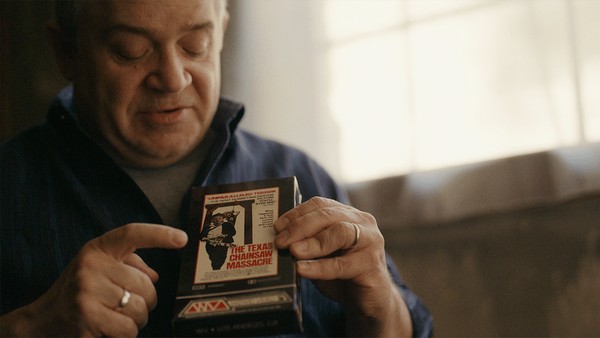 Unlike other documentaries, Philippe keeps to a single talking head at a time, sharing their insights in an eerie abandoned warehouse (the location sets a great tone). I loved this focus on a single style, thought line, or eye-opening story at a time. There’s no need to juggle memory in the mind over what King might say about Evil Dead, or some reference Miike made forty minutes before. It’s a great approach. If not for cutting to the film itself, or a possible outside reference, it could feel like just sitting with Oswalt shooting the shit, gushing over a favorite movie. Funny is that Oswalt honed in on a visual joke I hadn’t noticed until that last theatrical viewing a year ago. I wanted to yell out at my crowded show at SIFF this year (you may recall this had a capsule review then), “OMG, ME TOO!” Of course, I bit my tongue before someone sawed it off.
Philippe pulls some awesome and unexpected connections. How does Charlie Chaplin’s City Lights bring about Japanese Extreme cinema? Watch to find out. You’ll permanently connect Peter Weir’s seminal and esoteric Picnic at Hanging Rock. A very different film on the surface, but oddly connected by Heller-Nicolas (For a deeper look into her native Australia’s weird cinema, check out Not Quite Hollywood). It’s astounding looking at a film I know in and out, to see new cultural, historical, and cinematic connections. Exploring a specific scene to how it’s built, what it does, and how it pays off is like a mini-film class. I specifically loved Kusama breaking down how it relates to America and masculinity. Each interviewee brings a wholly different way to cut the meat. Same saw, different Leatherfaces.
For those who love talking film, hanging it on a meathook and making a statue of its bones (the bone room revolts me every single time), will love how Chain Reactions serves Hooper’s insane masterpiece of gonzo filmmaking. Keeping honed to the handful of talking heads (still attached to bodies, thankfully) and presenting in a unique manner; Alexandre O. Philippe’s is loaded with new insights into a well-trod film.
The Saw Is Family!