
 Black Phone 2 skates along nicely with shocks, scares, and character as Finn & Gwen help restless spirits at a winter camp, but cracks in the ice keep Scott Derrickson’s sequel from leveling with the first film.
Black Phone, released in 2022, is currently my #4 film of that year. Based on the Joe Hill short story (from 20th Century Ghosts; perhaps my favorite collection), Scott Derrickson (writing with C. Robert Cargill) crafted a scary, engaging horror film with strong writing, verisimilitude, compelling characters, and a new horror icon villain in The Grabber. It was a critical and commercial success. So, it’s no surprise that three years later, Black Phone 2 follows. With everyone returning, director, co-writer, stars Mason Thames, Madeleine McGraw, Jeremy Davies, and, yes, even Ethan Hawke, The Black Phone 2 is a good sequel, although not without some issues.
First, and most important, Black Phone 2 does exceedingly well in building on the story, world, characters, and all-around atmosphere of the first film without retreading. It is truly a sequel, not “the same thing but part II.” I appreciate the restraint by Derrickson and Cargill in this approach. There’s no cheap return to the Grabber, setting up a new slasher villain or unnecessary characters just for kills. It’s not that sort of film. The film owes a lot to the Nightmare on Elm Street series (more later), but the Grabber’s return from death through dreams is no quipping, kill-ready Freddy. Derrickson and Cargill don’t go bigger in Black Phone 2 as most sequels do. Instead, they have a personal, emotional, mostly serious (some levity, of course) slow burn of well-crafted horror.
Four years ago, Finney killed the Grabber, a serial killer who took five boys in small town Colorado. He and younger sister, Gwen, have been trying to cope with the mental fallout of the incident. He’s seeing the Grabber, hearing ghostly phone rings, and retreating from his feelings. She’s still plagued by prophetic nightmares, and they are getting worse. Last time, they led to the Grabber as Finney defeated him with ghostly help (remember, both siblings have The Shine). Now they point her to an isolated Christian camp, home to a series of unsolved murders decades ago. During a snowstorm, they must face the past: their own, their family’s, and the camp’s, and survive the Grabber, returning in increasingly dangerous dreams.
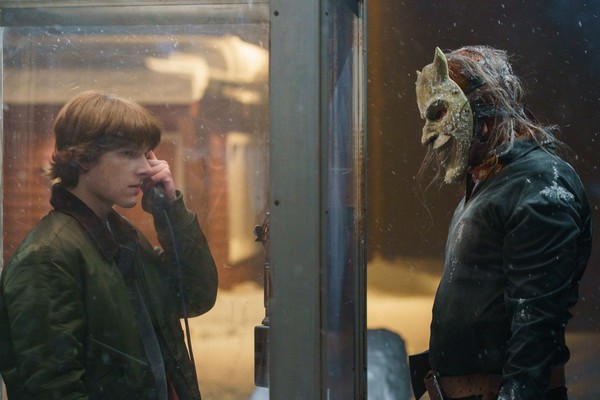
 The Black Phone 2 is, mostly, an effective and scary film. Derrickson has always been a master of creating tension and atmosphere within the cinematic presentation. His keen eye for space and scenery creates dread from a still scene. Gwen’s dreams were highlights previously, and are absolutely killer here. As she shifts into dreams, Derrickson switches to an analog look of Super-8 filmstock (not unlike the films in the pair’s Sinister). It’s truly disturbing and uneasy. With each crack and pop on the soundtrack, and grainy, miscolored shot, Derrikson increases the uncomfortable terror. Other great camera tricks, like a one-take of Finn on the phone with ghosts (similar to the first film), bring breath-stopping moments of tension. Kudos to cinematographer Par M. Ekberg for making all of this work. His work of shooting the icy, snowy desolation is breathtaking. It’s not often we have horror in the snow; it’s a welcome setting.
Dreams are at the center of the film’s focus, and yes, it’s an easy comparison ot Nightmare on Elm Street. Derickson harkens back to the simple effectiveness of the first in that series. But not just “hey, dream demon of a serial killer” and dream actions affecting the real world, but in themes of the inability to protect someone. Derrickson, being the horror nut that he is, pulls from across the spectrum with direct and thematic ideas of The Shining, Coraline, and others. (Curtains is a strange pull but interesting). On the physical end of horror, Black Phone 2 has gnarly make-up effects. From the Grabber’s chilly hell damage to damage done to folks. And as nasty as it is to rend children, the gore effects of the dead kids are grisly.
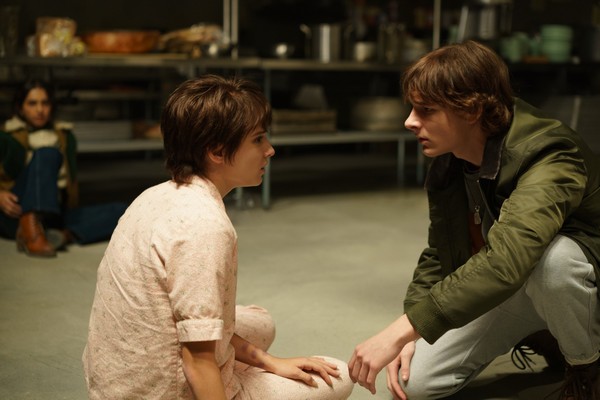
Black Phone 2 shifts the focus to Gwen as the main character, with Finn supporting, reversing the dynamic. Madeline McGraw is truly astounding. She stole the show in Black Phone, and in the follow up she proves her uncanny abilities as an actress. Yes, she is just as hilariously foul-mouthed, with a whole new set of swearing sentences that would make a sailor blush. Another welcome restraint keeps her in check, not leaning into it to get a laugh or moment, saving them for the most impact (ahem, looking at your Richie in It Chapter 2). Just as good is Mason Thames for Finn. He’s carrying so much baggage, hurt, and fear from his experience, and while “worried” seems to be his default face across the two films, it fits. There is a strong emotional core at the center of the pair, giving depth to the film. They have amazing chemistry and do feel like siblings, through and through.
For the rest of the cast, Miguel Mora is compelling as Ernesto, friend to both and brother to the previous film’s victim Robin (who is also played). Unfortunately, he nearly vanishes as a character as the film progresses. He’s there but becomes just a space filler over notability. The rest of the cast at the camp, Ariana Reivas, Maev Beaty, and Graham Abbey, suit their roles admirably, especially Demian Bichir as camp director Mando.
And of course, Ethan Hawke is chilling as The Grabber, oozing a brooding menace.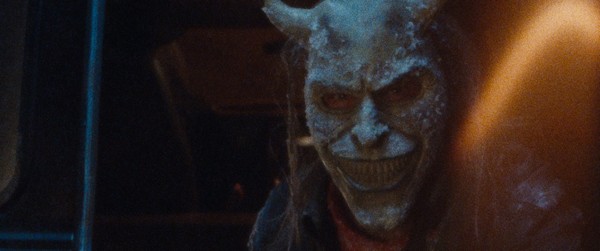
However, as much as I recommend the film as a whole, glaring issues hobble Black Phone 2. As strong as the first ninety minutes are, it stumbles in the third act. The main thing is rushing into it. The story is not ready to get there. There’s a feeling of “ah crap, we only have a little time left, gotta end this.” It’s missing a key scene to bridge a big character moment that just happened, a revelation of power dynamics to the finale. One more salvo is needed to connect and build the story to the point it needed to be at. Thus, aspects are too pat and streamlined, with changes of how this all works to expedite an underwhelming confrontation. It lacks the definiteness of oomph that a climax should have. I also question some of the logistics of the setup and getting people into place. Maybe we can shrug and say, “It’s the 80s, a different time, or the ghosts and/or the Grabber wanted it so… magic?” But it still bothered me.
However, I heard grumbling after my screening; it was slow, and people wanted the Grabber more and earlier. I appreciated holding out and letting his story and what the dead man’s plan and ideas are unfold naturally rather than shoving in for the sake of the face and scares. He’s on screen just enough, keeping Ethan Hawke’s portrayal compelling and scary.
The Black Phone 2 is flawed by some slapdash plotting leading to missteps in the third act, but the lead-up works more than enough to keep engaged. Scott Derrickson brings his fantastic, continued cast into a new, effective setting, in and out of the disturbing dreamscape. Answer the call.