
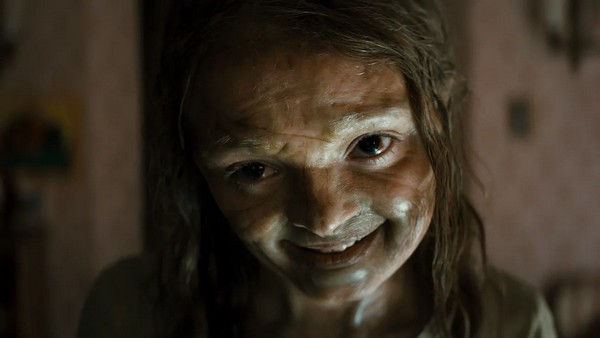
 Eight years after she goes missing, teenager Katie returns to her family. But she comes back wrong and violent in the uneven Lee Cronin’s The Mummy.
TW: Violence and trauma upon and related to children
Evil Dead might have moved on from Lee Cronin, but Evil Dead still possesses Lee Cronin. Lee Cronin’s The Mummy sheers so close to Evil Dead, especially in its back half, I’m convinced Cronin’s first draft was written to follow up his absolute banger of 2023’s Evil Dead Rise. But that film’s follow-up, Evil Dead Burn, was handed to Sebastien Vanicek of Infested (and is due for release this summer), leaving Cronin to rewrite with new details to set up the monstrous return of a missing daughter. This leads to a slightly underdone, messy storytelling that leaves big questions and some tonal issues. Lee Cronin’s The Mummy (dropping the name from the title here since it was added to avoid a lawsuit from Universal and not to confuse with the soon-to-be resurrected Brendan Frasier series) is nasty, mean, and traumatic, but also disjointed and frustrating. There’s more than enough to recommend for horror fans like myself and most of you, but it’s the weakest of Cronin’s trilogy of family-based horror features.
Heck, while Evil Dead is still bouncing around Cronin’s head, so is his 2019 film, The Hole in the Ground. That effectively creepy film finds a woman getting her missing son back, but wrong. Essentially, the plot of The Mummy is The Hole in the Ground wrapped in Evil Dead coverings, not unlike the wrappings around the “something is wrong with her” returned Katie. Others have already connected to The Exorcist reskinned. If that works better for you, fine; it absolutely lines up. In The Mummy, an American journalist covering droughts in Egypt and his family face an unspeakable tragedy: their 9-year-old daughter is abducted. Eight years later, she’s found after a plane crash. However, she’s within a lead-lined sarcophagus, severely malnourished, pale, and covered in bandages with strange markings. Taking her home to Albuquerque, it’s clear something is not right as the parents, Charlie and Larrisa Cannon, their slightly younger brother Seb, and Maud, still in the womb when Katie went missing, and their Abeula try to care for her and get her out of her coma-like stupor. And whatever evil is within her.
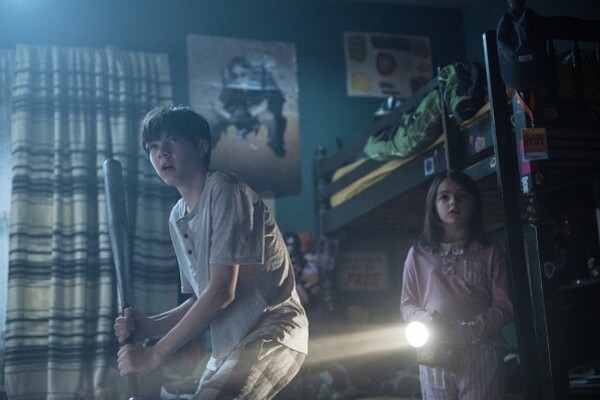 Whatever evil came home with Katie starts to spread with the family, causing them to harm themselves and others with supernatural actions and powers. When it comes to it, Katie is a version of a Deadite, and the powers and destruction from the Necromonicon-inspired monsters transfer to her and the others. On a purely horror standpoint, there’s a lot to deliver. When going, it’s intense with amazing sound design. Some nasty gore, mostly practical, is peppered throughout, leading to big reactions with my audience and even with me. Possession of the living and dead, animal violence, and more keep the horror quotient going. Some sequences are 100% Evil Dead Rise in style, twisty close-ups, the way it’s shot, and camera moments. Many moments that might be silly in lesser hands land thanks to Cronin’s ability to craft a thrilling scene. I know I’m comparing a great deal with that film series, but it’s so close it’s hard to get away. Though often very nasty, in other ways it feels hobbled, like a more gruesome version was filmed but edited back. On a wider, less violent note, any parent will find trauma with the thoughts of missing or damaged children. As a parent to a young one myself, the sheer terror of losing him and the horrors of anything that might happen drove an additional layer. There’s a heaviness across the feature with the ideas of loss and not quite regaining normalcy when the lost are found.
But around the horror, the wider story doesn’t piece together especially well. I have QUESTIONS. We expect certain liberties in films to keep things moving, have the story drive, but some of these hand-wavings are really head-scratching. Are you telling me a missing girl, obviously with huge health issues, is simply released to go around the world with no real care in Egypt, and nothing set up in the US? No doctors, no police, outside a single missing persons officer taking it on herself, no international how-ya-do? Other aspects require a police presence, but I guess people just forgot the horror they just experienced? These are things that might slide over in the streamlining of the established cartoonish world of Evil Dead, but come off strange in the Mummy. Building a new setup, getting those pieces in place, getting the cogs moving smoothly, leads to awkward pacing and disjointed and a loose telling.
On a filmmaking end, frustrations abound in how scenes and characters are treated. Many scenes slam into the next without finishing their arcs. A ramp up and BAM, we’re done, wondering how what was a big moment wrapped up and how things got to where they are now. And as noted above, why isn’t the house crawling with police? It’s so weird in the slapdash follow-through of sequences when The Mummy has extreme action that clearly has more. People also vanish for long stretches for the mere need of avoiding conversations and sharing information. Double weird is that you know they meet off-screen between the scenes, but it doesn’t come up? Awkward. As an audience, we’re sitting here gesting at big holes in the story flow, as characters make too many “horror movie character” dumb choices. Strange tonal shifts mar what gets going, such as a juxtaposition between the serious but smirky Deadite action pushed up against extreme trauma inflicted on a child. It’s often jarring to have Evil Dead moments within a dramatic family trauma flick.
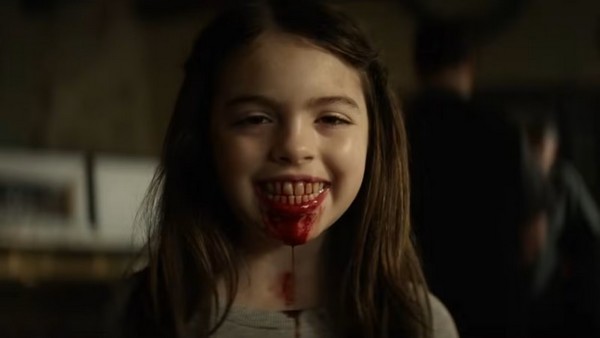 As Katie, Natalie Grace gives a fantastic physical performance, as good as any extended deadite. Under a pile of rather bland make-up, she makes the most of a mostly silent performance. As played by Bille Roy, Maud is a good go, never sliding into annoying for her single-age character. She has a lot to shoulder and does it very ably. The rest of the family, not so much. Both Midsommar’s Jack Reynor and Victoria’s Laia Costa, as the parents, spend the film in a single note; his wide-eyed gape of confusion, looking vaguely concerned, and her on the verge of a big cry. Shylo Molina’s Seb is barely a presence, and Abeula Veronica Falcon does fine. Moon Knight’s May Calamawy serves her function as exposition finder in Egypt (the jumps to her are oddly chosen, some of those “cut away from the rising action”) with a bigger push near the end, with help from a mostly unnecessary college professor who knows exactly what our hero needs, batting cleanup.
Under the wraps of the issues, the Mummy is still effective in many ways, with the horror at the core well done. The body horror has some extremities of nastiness, some moments land with a flourish, and it is entertaining watching the story unwrap, even if some of those bandages get snagged in the reveals. Often frustrating and awkwardly put together due to an obvious IP re-skinning, Lee Cronin’s The Mummy stumbles from the sarcophagus with mixed results.
PS – This year we’ve had a Frankstein riff in The Bride, Luc Besson’s revision of Dracula, and now the Mummy. With Robert Egger’s Werwulf coming at Christmas, a monstrous year!