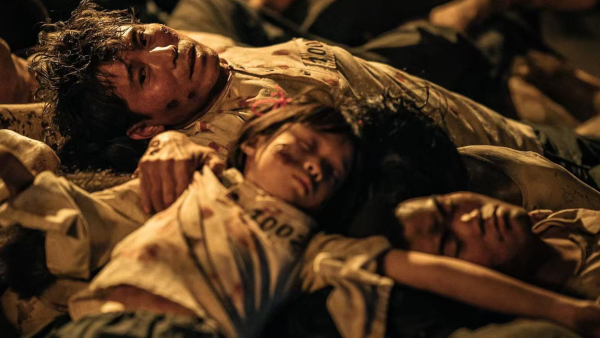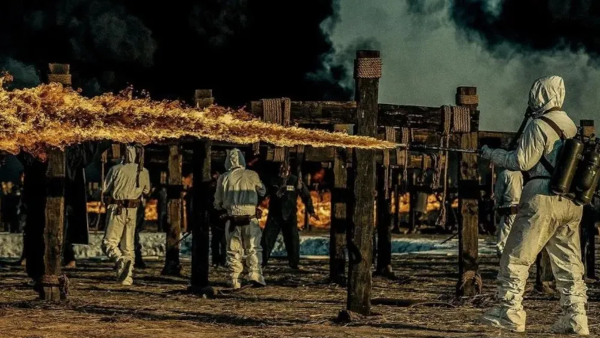
A translator is imprisoned by the Japanese Imperial Army’s Unit 731 in occupied China. After being assigned tasks around the prison camp, he discovers the horrifying truth of his inevitable fate.
Despite the macabre subject matter, and immensely oppressive tone, 731 is gorgeous and never gets dull. As I previously mentioned, Zhao has a stylized approach to his film making, which gives this installment an entirely unique appearance. With vibrant colors, brightly lit rooms, and enough liminal spaces to make you think you’re watching a psychological horror film, 731 is visually stunning. One complaint I have about the presentation is the misuse of the runtime. At just over two hours long, the movie didn’t need to rush from scene to scene as it does. You’ll find yourself incapable of fully processing something before the next torrent of information and visuals are thrown at you. This flaw becomes more evident as the film continues, with continuity errors occasionally causing you to wonder what you missed. In one instance I was following a character frantically running down a hallway in his prison garb, when suddenly he appears to round a corner while suddenly wearing a disguise. However, these jarring mishaps are small when compared to the overall experience 731 brings to the table.
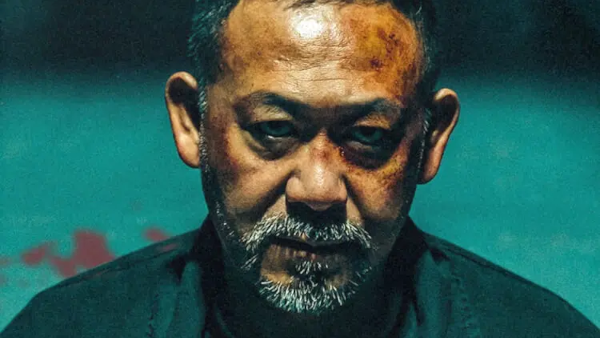
The film follows Wang, who’s captured by the Japanese Imperial Army after being identified as a runaway inmate. Now he survives the day-to-day mistreatment by translating the Japanese language to Chinese, and Russian, when needed. He’s also tasked with delivering food to the prisoners and cleaning the prison wing of the facility in which they’re held. The role is played by Wu Jiang, a Chinese actor with an impressive 75 films to his name, and growing. It’s through his journey that audiences are given a disturbingly whimsical look into the horrors that were committed by Unit 731. Jiang’s acting range captures it all, from opportunistic and downright animated bursts of joy to cold displays of pure defeat. While some of his behavior is unarguably misaligned with the tone the film is trying to convey, there’s plenty of moments where his delivery hits hard. While trying to comfort another prisoner, Wang dishes out the only line of hope he can offer… “There are no Japanese in heaven.” This scene feels appropriate given the bleak outlook at hand, but when compared to other scenes that are inescapably goofy, or whimsical enough to be in a Hunger Games installment, they lose their impact. Regardless, Wu Jiang gives this role his all and his performance remains captivating.
While 731 is still sitting with me days after viewing it, I’m incapable of deciding what the end goal of the film was meant to be. On one hand, you have a period piece that focuses on war crimes from WWII that weren’t unveiled to the world until 1995. On the other hand, you have so many overtly fictional set pieces paired with confusingly upbeat elements often seen in movies that don’t wish to ground themselves in reality at all. Unlike Jojo Rabbit, which was a dark comedy set within a fictional town in Germany during WWII, I’m not sure what 731 was trying to achieve. When the film delves into elements of torture, it does so in a similar style to such films as Snowpiercer. However, the movie’s subject manner, and final act, treats the audience as though they just sat through a serious war film. After being bombarded with a range of visuals and moments that would be at home within Edward Scissorhands, or perhaps a Hellraiser film, you’re given a grim ending and a lore dump of the actual history of the 731, what their experiments were meant for, what their final goal was, and how little-to-no punishment ever fell upon those in charge. The combination of vastly different factors won’t be for everyone. Where some moments are too comical, others will be far too brutal for anyone to expect. Furthermore, knowing that the absurd aspects of the film are based on unspeakable horrors that the real life prisoners experienced, I fear that 731 doesn’t really have a core audience and may be doomed to a future of cinematic obscurity, or perhaps even outright objection.