

Retired action filmmaker Leonor, in hopes of revitalizing her career, falls into a coma after being struck with a television, waking up to find herself in her own unfinished screenplay.
Before there was Thelma, there was Leonor. Leonor broke barriers in a genre that is typically more male-driven, and this is absolutely her story. When she falls into the film, she’s not entering just any action narrative; she’s entering her own that she created. Leonor has no interest in quietly settling into the domestic role older women are so often expected to occupy. It is obvious early on that Leonor is still somewhat stuck in the past, but when you realize that part of this is because her son Ronwaldo died in an on-set accident, you begin to have more sympathy for her. Leonor, like many of us, finds solace in what she always loved: film.
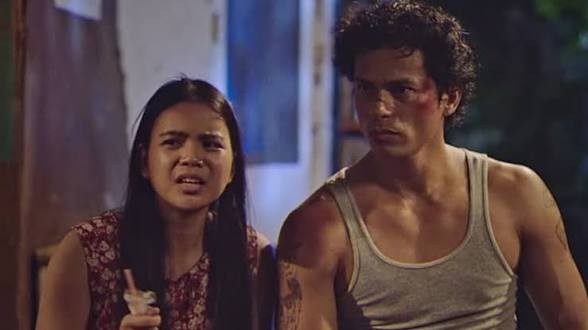 Leonor is struggling with not just the loss of her son, but the loss of the person she was. She’s no longer a filmmaker, and as an older woman she has now become a very specific kind of invisible. There are certain societal expectations of the elderly, particularly older women. She finds an outlet for her grief in the films that made her career, but also in a screenplay where her protagonist, Ronwaldo, shares the name of her deceased son. In her coma world, she finally has control, even rewriting scenes when she wants to change the outcome. It’s a power she doesn’t have in her daily life, where no amount of rewriting can undo the loss of her son.
Written and directed by Martika Ramirez Escobar in her feature debut, you can tell when a director loves and appreciates a genre because it shines through in every frame. The 1970s and ’80s Filipino action films had a specific look and style and were often very low budget, something she recreates with affection instead of parody. As we flit back and forth between the real world and the world of the film, Escobar cleverly plays with the aspect ratios to fully immerse the audience. The color saturation changes, even the sound design shifts, giving the actors an ADR quality to their lines. As the film becomes more meta and the boundaries between reality and Leonor’s movie begin to blur, Escobar never loses that sense of affection. The absurdity is funny without ever making the films that inspired her the butt of the joke.
 A strong cast of talented actors is anchored by Sheila Francisco as the titular Leonor. Even when entering the fantasy world, Francisco never physically transforms Leonor into an action hero. She hasn’t suddenly started doing backflips or become something she isn’t; the film simply reminds us that older women are fully realized people with interior lives, passions, and desires. The age of our bodies doesn’t necessarily reflect the age we feel inside, something Francisco captures beautifully in Leonor. Also helping to anchor the film in its action era is Rocky Salumbides as Ronwaldo. He captures the style of the old-school Filipino action hero perfectly while bringing a surprising depth to a type of role that doesn’t often allow for it.
Leonor Will Never Die is a joyful exploration of the past, the present, and film itself. With an ending that perfectly fits the blend of whimsy and self-awareness, Escobar reminds us why sometimes the best way to celebrate the movies we love is simply to let ourselves get lost in them.
Leonor Will Never Die is available to stream on multiple platforms, including TUBI.