
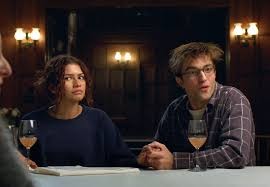
What begins as a lighthearted wedding week between two people deeply in love quietly detonates into one of the most unsettling and morally consuming films of the year.
The Drama arrives with a title that warns viewers of what to expect. Written and directed by Kristoffer Borgli, the film is a dark romantic comedy only in the loosest sense. This designation becomes increasingly difficult to hold onto as the story tightens its grip. Borgli isn’t interested in comfort; he’s drawn to the rupture, the instant a secret enters a room and alters its gravity, and to the quiet unraveling of two people who once loved each other with ease, before knowing too much. The film centers on Emma and Charlie, a happily engaged couple, days away from their wedding. When an ordinary evening conversation about secrets among friends takes a turn, what is revealed in that conversation reshapes everything that follows. Borgli structures the fallout with precision, tracing how a single truth ripples outward through a relationship, a friend group, and two people who suddenly must decide what they actually believe about love, accountability, and whether the past has an expiration date.
Zendaya plays Emma with a warmth that makes the film’s central tension genuinely painful to watch unravel. She establishes Emma early as someone carefree and loving, the kind of person whose joy feels effortless, which makes the vulnerability that emerges later all the more striking. Zendaya does not play Emma’s secrets as a performance of guilt but as something more honest and harder to watch: a woman who has lived with the weight of her past long enough to have made a kind of peace with it, now forced to hold it up to the light in front of the person she loves most. Her nervousness is never theatrical. It is quiet, physical, and completely convincing, the kind of internalized dread that communicates everything while saying very little.
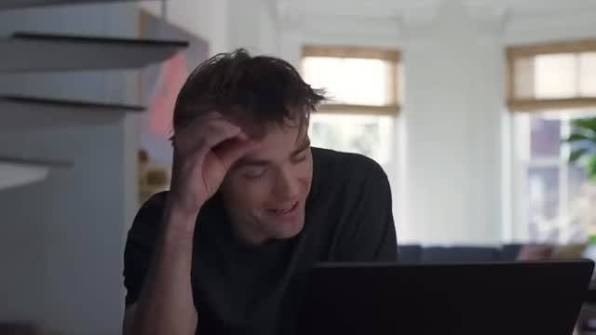
Robert Pattinson’s Charlie is the audience’s surrogate, and Pattinson weaponizes his natural screen presence, that particular quality of always seeming to be working something out behind his eyes, to devastating effect. Charlie is a man who wants to do the right thing and cannot figure out what the right thing is. He wants to be happy. He wants to be loyal. He wants to be fair. Pattinson renders the paralysis of those competing instincts with an authenticity that is almost uncomfortable to witness, because his confusion feels less like a character note and more like a genuine human being failing to locate his own moral center in real time. His growing paranoia does not read as weakness but as the natural consequence of a foundation shifting beneath someone who built everything on certainty. The audience experiences his shock and fear alongside him, which is precisely where Borgli wants us, implicated, uncertain, unable to simply watch from a safe distance.

Visually, the film leans into the contrast between its wedding-week brightness and the psychological shadow that creeps beneath it. Carefully curated romantic aesthetics are held in tension with an increasingly claustrophobic intimacy, close-up framings, restless editing, and the camera lingering on faces a beat longer than comfortable. The score operates similarly, romantic and slightly off-key, as though something in the music itself knows what the characters are only beginning to understand.
The Drama is a film about loyalty tested not by circumstance but by conscience, about the limits of love when love is forced to share space with something it cannot categorize. It generates significant heat not through spectacle but through sustained, excruciating intimacy, the kind that makes you aware of your own moral reflexes in ways that linger well past the credits. The Drama will not be for everyone, and Borgli seems entirely aware of that. It asks its audience to sit with moral discomfort rather than resolve it, to consider what love demands of us and whether those demands have limits. It is a film about secrets, yes, but more urgently it is a film about what we choose to do with the truth once we have it, and how that choice reveals something about us we may not have been prepared to see.