
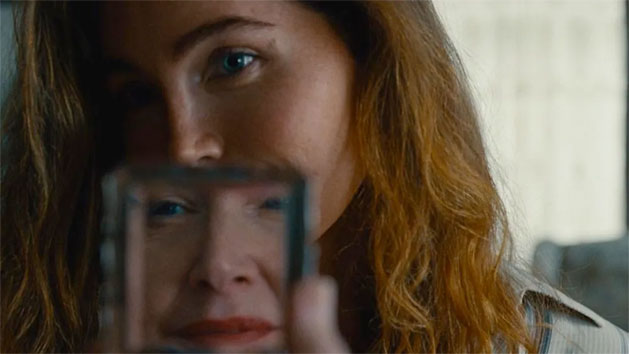
 Andrea Pallaoro’s “Monica” is a beautiful film. It’s a film filled with nuance and subtlety and takes the classic tale of someone returning to their old home and gives is a contemporary all too relevant twist. Trace Lysette is excellent as the titular Monica, a woman who is spending her every waking moment trying to survive and reach some sort of human connection that she craves. This stems from her past with her family, including her mother who disowned her at a young age prompting her to run away from home. For a movie so centered on what is a very important, and common obstacle for people of the LGBTQ community.
Monica is a trans woman who moonlights as a sex worker while enduring certain relationship issues including her ex boyfriend. One day, she receives a call from Laura, the sister-in-law she has never met, informing her that her mother, Eugenia, is seriously ill and succumbing to dementia. It has been a long time since Monica has seen her mother—not since she kicked Monica out of the house as a teenager years ago because of her unwillingness to accept her sexuality. But something compels her to make the journey home and chance a reunion with the family she left behind–or what remains of it.
Director and co-writer Pallaoro have every chance to transform “Monica” in to an overwrought melodrama. Instead a lot of the film explores the idea of re-connections, and forgiveness, and finding ways to let go of the past. Lysette’s performance is wonderfully gentle and often times mesmerizing, which says a lot considering she spends a lot of her shared screen time with co stars Emily Brown and Patricia Clarkson. Clarkson is especially fantastic as Eugenia, the matriarch of a fractured family who is slowly succumbing to dementia.
The twist of “Monica” is that when she returns home to connect with Eugenia before she passes on, Eugenia doesn’t recognize her for who she knew her as initially, and mistakes her as another home care taker. This could also easily fall in to the trappings of trite emotional bait, but it’s compelling and even heartbreaking in its way. This opportunity, though. gives Monica a chance to not only work around to the inevitable revelation of who she used to be, but this accidentally opens up avenues between Eugenia and Monica that they didn’t have before. There are so many great moments of quiet reflection where Monica is able to kind of embrace her mother as she hasn’t for many years.
Meanwhile she slowly begins to connect with her nieces and nephew, all of whom are mostly raised by Emily Browning’s good hearted and doting sister in law in Monica, Laura. The more Monica realizes that her return might not be so fraught with turmoil or conflict, she gradually understands a lot of the purpose and stability Laura promises. This prompts her to step up and in many ways understand the family she left behind. I was surprised quite often how director Pallaoro preferred to show rather than explain, opting for so many sad moments of intimacy, and desperation.
Even when director Pallaoro could drop a big epic climax on us, she instead opts for something so gentle and quaint that it makes the whole journey absolutely worthwhile.