
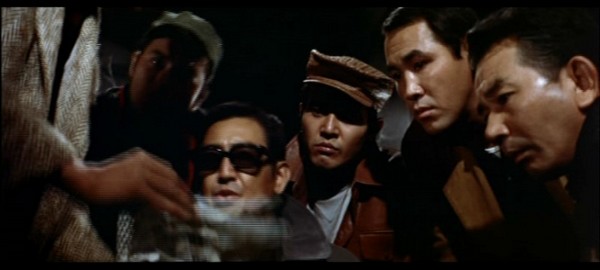
Out on Blu-ray and 4K UHD June 25, 2024
When a big gang from Tokyo moves into Yokohama, the local gang needs to relocate and start over, leading to violence and confrontations.
Written by Kinji Fukasaku, Fumio Kônami, and Hirô Matsuda with Fukasaku directing as well, Sympathy for the Underdog is a solid yakuza film, one that shows their territory keeping, their wars, and the effects of these wars on the men in their midst. The film here is well-written and well-directed, showing that Fukasaku was a master who could work in many genres (most general audiences know him for Battle Royale and its sequel). The work here is on point, showing the life as not so glamorous, but also showing the human side of things, the connections between the people involved, how they care about each other, thus building a layered story and film.
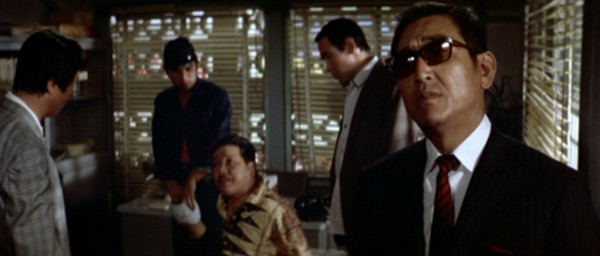
The cast here is solid with some old school vibes to them, so this is something that needs to be considered here. Acting the 1970s was not exactly like it often is now, there was a way that most men in Japanese movies played their characters more subdued which is true here, while not being afraid to go full force into the violent sequences. The cast here is an ensemble one, a group effort, with leads Kôji Tsuruta and Tomisaburô Wakayama setting the pace and the mood a lot of the time. These leads are perfect in their parts, showing just the right amount of emotion and going into their characters knowing they are complex being, making them more human by letting them be themselves through their performances.
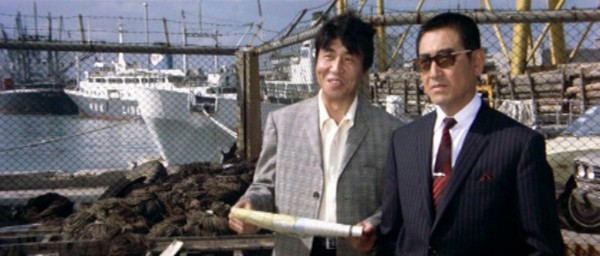
The film here is older and it shows not just in its style, acting, writing, etc, it also shows in the cinematography, in how the scenes are framed and shot. The cinematography by Hanjirô Nakazawa is nice here, with dark moment, a style that works still over 50 years later. The high-definition transfer by Radiance Films here looks really good with a few moments where a bit more light could have made a world of difference visually, but as these were shot this way, keeping them as is for this new release was the right way to go.
To go with this new digital transfer, this new release has a few extras including the usual reversible sleeve with new artwork, the booklet with new writing, and the film’s trailer. The more interesting extras here are the interview with Olivier Hadouchi (Fukasaku biographer) and a visual essay by Aaron Gerow about Okinawa on screen.
This release is one that will appeal mostly to fans of yakuza movies, fans of Fukasaku, and those with a deep interest in 1970s Japanese cinema. It’s a good release, one that makes one wish there were more extras on the disc, but the quality of what is here easily makes up for the quantity.
