
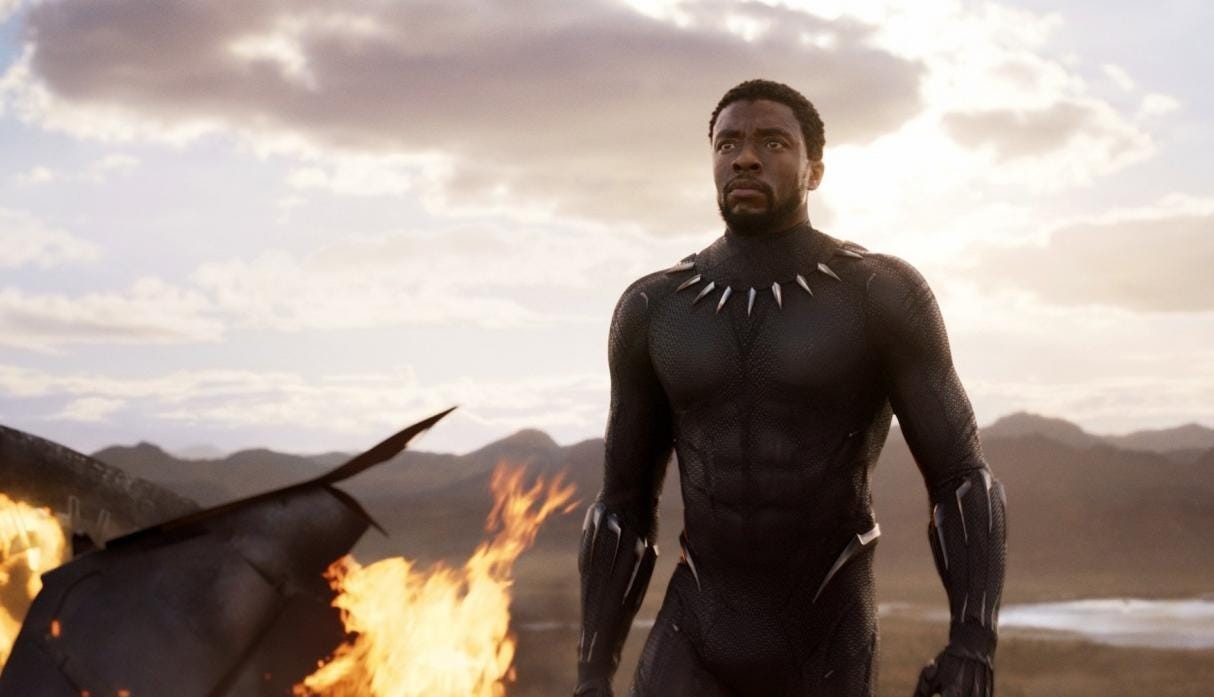
What begins as a royal homecoming quickly unravels into a sweeping battle for identity, legacy, and the soul of a nation.
Centered on a king who is still learning how to carry the weight of a throne, Black Panther explores the uneasy intersection of tradition, responsibility, and global power. Blending superhero spectacle, political drama, and cultural mythology, the film delivers an engaging, fast-paced story that raises compelling questions about leadership, justice, and what a nation owes to itself and to the world.
Directed and co-written by Ryan Coogler, the film maintains an accessible yet emotionally resonant tone, wrapped in Marvel’s crowd-pleasing action. Coogler moves the narrative with purposeful momentum, balancing humor, intense action, and character-driven tension without allowing any single element to overwhelm the others. While the film offers sharp commentary on colonialism, diaspora identity, and generational trauma, these themes remain woven into the story rather than dissected outright, allowing the emotional beats to land alongside the political ones. Black Panther follows T’Challa as he confronts the sins of his father’s past and decides whether Wakanda will remain in isolation or step into the world as a powerful ally. His battle with Killmonger becomes more than a fight for the throne, it becomes a battle for Wakanda’s identity, legacy, and moral responsibility.
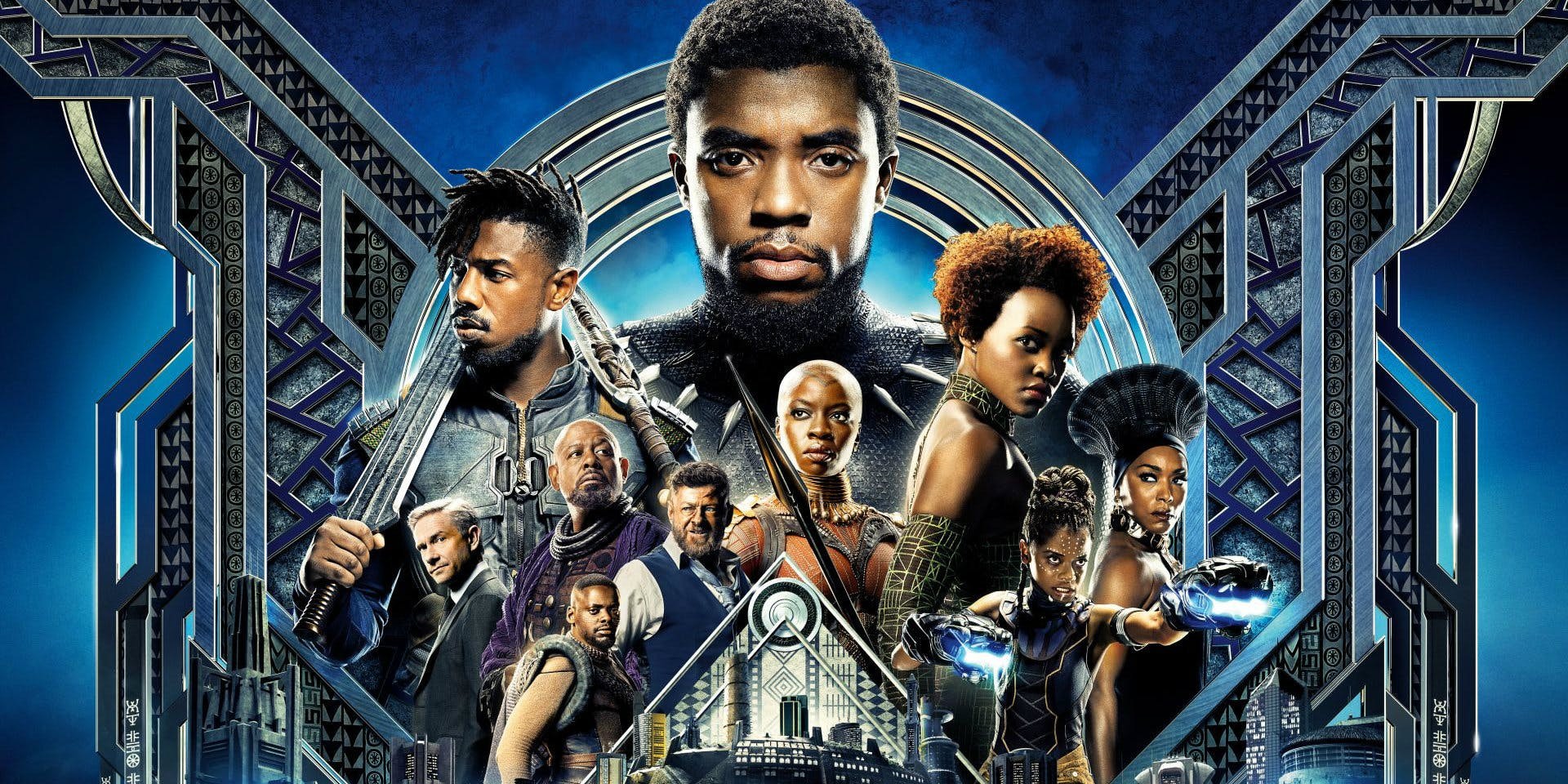
Chadwick Boseman delivers a grounded, compelling performance as T’Challa, a leader pulled between mourning his father and stepping fully into his own power. Boseman’s portrayal is marked by restraint, dignity, and simmering vulnerability; he plays T’Challa not as an infallible hero, but as a man learning to redefine justice in a world more complicated than the one he inherited. His physicality, measured, graceful, and commanding, helps anchor the film even as it expands into global stakes. Boseman brings a quiet strength to the role, allowing T’Challa’s moments of doubt to feel as meaningful as his moments of triumph. Opposite him, Michael B. Jordan electrifies the screen as Erik Killmonger, a villain whose pain is as compelling as his rage. Killmonger is driven, bitter, and brutally honest about the ways the world has shaped him. Coogler crafts him not as a one-dimensional threat, but as a tragic byproduct of violence, abandonment, and systemic oppression. Jordan’s performance captures this duality with precision: he is charismatic yet volatile, sympathetic yet terrifying. His mission to force Wakanda into global warfare reflects both a deep desire for justice and a warped solution born from unhealed childhood wounds. He is one of the MCU’s most unforgettable antagonists because he is fully realized, wrong in method, but painfully right in perspective. The supporting cast of talent add to the world building, stakes, support, and tension. The ensemble, Letitia Wright, Danai Gurira, Lupita Nyong’o, Angela Bassett, Winston Duke, Sterling K. Brown, each brings depth and individuality to the world of Wakanda, reinforcing the film’s rich sense of community.
Music also plays a crucial role; Ludwig Göransson’s score blends African instrumentation with modern orchestration, mirroring Wakanda’s fusion of heritage and futurism. The rhythms pulse with life, reinforcing emotional reveals and action sequences with equal impact. The film is striking, bursting with color, texture, and detail that reinforce Wakanda as both a futuristic powerhouse and a deeply rooted African nation. From the glowing vibranium mines to the luminated Jabari mountains, every location feels purposeful, designed to visually embody the film’s thematic questions of tradition versus innovation. Black Panther offers cultural significance, emotional depth, and powerful performances wrapped in blockbuster spectacle. It stands as one of the MCU’s most celebrated entries, not only for its action and world-building, but for its historical impact and the enduring legacy of Chadwick Boseman’s portrayal. And for those still wondering: can a superhero film also be a cultural milestone? Black Panther doesn’t just answer yes, it makes the question itself feel inevitable.