
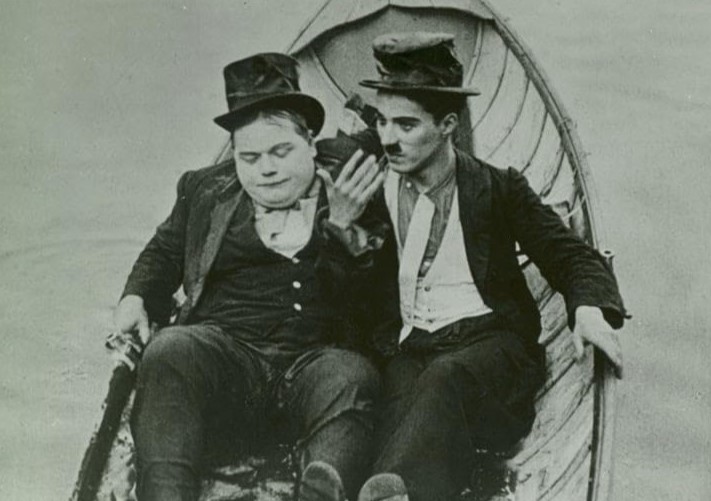
Mr. Full (Charlie Chaplin) and Mr. Fuller (Roscoe “Fatty” Arbuckle) are shabby gentlemen who dress in battered formalwear. However, they are both unapologetic drunks who commit acts of mischievous violence against anyone who cross their paths. They are neighbors in a hotel, where their long-suffering wives wait for them with irritation and intimidation. The men respond to this display of spousal anger with greater agitation – Mr. Fuller going so far as to choke his spouse. The pair grow tired of their domestic chaos and steal money from their wives’ purses, heading off to a restaurant where they wreak havoc on the unsuspecting patrons. The wives and the restaurant patrons chase the duo to a park, where they abscond with a rowboat and sail off across a pond, only to fall asleep in their pilfered vessel as it slowly sinks beneath the water’s surface.
This Keystone two-reeler was directed by Chaplin and marked the only time he was paired with Arbuckle as a comedy team. Their comic cooperation is brilliantly funny in their characterizations of ne’er-do-wells who revel in their drunkenness. The fondness that they have for each other on-screen is priceless – at one point, Chaplin stumbles and Arbuckle drags him along effortlessly, with a hopelessly drunk Chaplin looking about as if nothing was amiss.
“The Rounders” comes from a time when bad behavior in movie comedies went unpunished. The men unapologetically bang their canes on the top hat of the restaurant doorman (a white actor in ridiculous blackface makeup), light a match on the back of a bald man’s head, and throw haymaker punches at anyone tries to disrupt their reckless antics. Some of the physical comedy in “The Rounders” is wildly inventive, especially when Arbuckle puts his feet on a champagne ice bucket stand, rolls a tablecloth from a table over his girth, and tries to go to sleep.
Imposing Phyllis Allen towers over Chaplin as Mrs. Full while Arbuckle’s petite real-life wife Minta Durfee is his reel-life Mrs. Fuller, and both women succeed in making their awful husbands look like unlikely heroes; Al St. John is briefly seen as a hotel bellhop while a young Charley Chase can be spotted among the restaurant patrons. And if you look very carefully, you can see Chaplin trying hard not to break character and laugh in the closing gag as the men sink into the pond.