
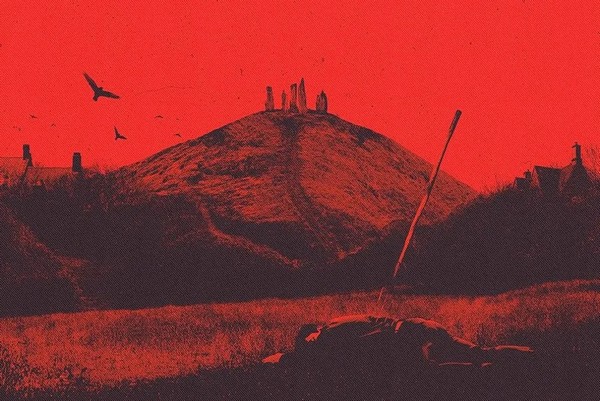
 The Last Sacrifice, a documentary by Rupert Russell, expertly explores how an English farmer’s ritualistic murder jump-starts a rise in witchcraft and folk horror in culture and film; streaming on Shudder starting February 16th, 2026.
A young nerd travels with his drunkard friend Rowsdower, who wonders if there’s beer on the sun, to … wait, what. Okay. I’ve been told I’m not reviewing The FINAL Sacrifice, my favorite episode of Mystery Science Theatre 3000, but The LAST Sacrifice, Rupert Russell’s fantastic and scary documentary of witchcraft and murder in modern England.
In 1945, a farmer was found dead in a grisly fashion on a lonely hill, deep in rural England. Stabbed through with his pitchfork and a sythe through the neck, Charles Walton’s murder was bloody and strange, unlike anything expected from the peaceful community. The suspicious populace stonewalls any attempt to solve the case from outside forces; thoughts of witchcraft and pagan ritual enter the air. The murder sets off a new life to witchcraft in the United Kingdom, leading to an increase of folk horror in culture, including more specifically Robin Hardy’s classic The Wicker Man. The murder is also the launch point for Rupert Russell’s fantastic documentary The Last Sacrifice, exploring not only the murder but all that came from it, crafting an overarching and incredibly designed documentary of witchcraft of the late 20th century in the British Isles. It’s a film of shocks and surprises, of unexpected turns, and strange connections; of history and horror. I won’t give away those great moments and reveals, but trust me, it’s a hell of a tale, told very well.
Akin to 2015’s The Nightmare, The Last Sacrifice succeeds not only as a documentary about scary things, but also as a scary, uncomfortable film in and of itself, with a fantastic, unenervating presentation filled with incredible style and techniques. Opening with a travelogue of our murder site, cut in with eerie music and disconcerting images, it’s clear Russell has the intention of avoiding “talking head with clips and cutaways true-crime documentary”, but instead reveling in the craft of the story and its implications, results, and world. The specific editing and sound, mixed with the content, are incredibly unnerving, shifting in my seat. I applaud Russell and editor Alexander McNeill for the effective methods.
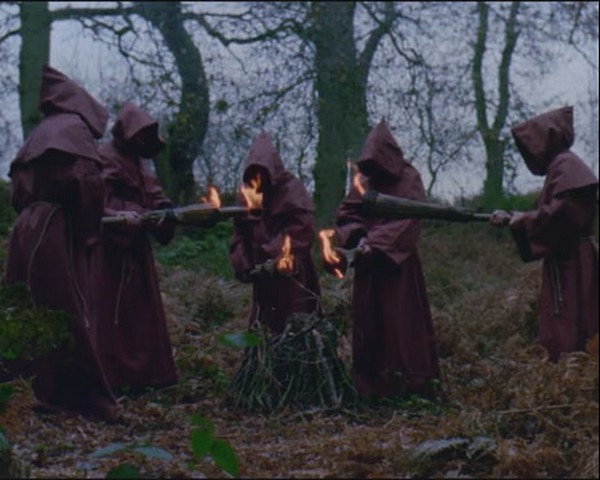 Russell, son of filmmaker Ken Russell, casts a wide net, but is never over his head as not only the history of the area, the history of witchcraft of the United Kingdom, especially after the murder, the investigations (or attempts thereof), occult happenings and personages, and the facts and fictions of books and films. But it stays balanced and thorough. Russell and McNeill beautifully craft and meld all the elements into a complete story with a verve of clip use. Documentaries and fiction films are used to bolster the speech and stories. Using segments of folk horror films as the visuals for the non-fictional storytelling, “re-enactments” using films like Robin Redbreast or The Blood Beast Terror give a weight and specialness.
The text of The Last Sacrifice can be looked at in two ways: internally to this murder, and externally to the world around it. Walton’s murder was strange. But why? That’s what star detective Fabian aimed to find out. A real-life Holmes, the most famous officer at Scotland Yard (he had his own show about his cases when TV took off!), came in. If he can’t solve it, no one can. He couldn’t. He receives just as warm a reception to his methods as Sgt. Howie in The Wicker Man on Summerisle. Strange locals, responding coyly, with hostility, or not at all. The murder and its aftermath are fascinating enough for a full documentary, but the expansion to the larger world of the time and after take The Last Sacrifice to a whole new level.
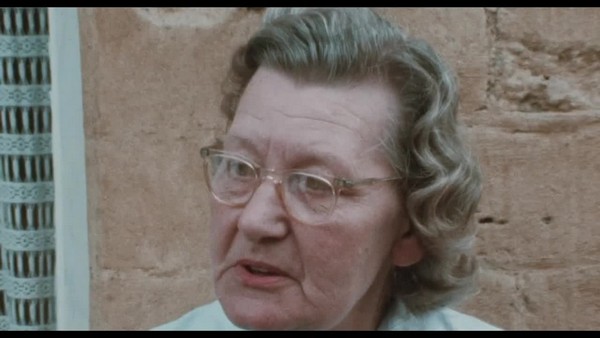 The Last Sacrifice is an expert and fantastic analysis of how culture and cinema inform, blend, and influence. The murder may be a starting point for the English to find new appreciations in witchcraft and folk horror. Increased personal freedoms led to more exploration of different methods of life, sex, and religion, helping along as well. Margaret Murray talked of witchcraft from the 20s onward (and had her own theories of Walton’s murder). Alex Sanders became a household name for the occult, with modern and archival interviewee Janet Farrar at his right hand. The true world informed the rise of folk horror on film with such works as The Wicker Man, The Devil Rides Out, Blood on Satan’s Claw, and countless others (featuring, in the documentary, up to the modern age with clips of Midsommar). Which then fed back into the occult and so forth. We might forget in 60 years, especially non-UK audiences, this cultural rise and shifts, with just the films left to speak of the era when cultural history moves on. The Last Sacrifice reminds the collusion of the worlds, bringin home with fantastic use of moments from the fiction and non-fiction film (labeled as such in a fun touch) and TV of the time and since; Russell and McNeill cut all together with ease, building the story and tension.
Rupert Russell’s The Last Sacrifice is an incredible documentary. It explores and expands on the touchstone of the ritual-like murder of Charles Walton and how the repercussions ripple through the UK, indicating a cultural shift in personal lives and film. Russell blends the worlds of his documentary with fact and fiction in inventive and often outright frightening ways. Streaming on Shudder starting on February 16th.
Rowsdower!