
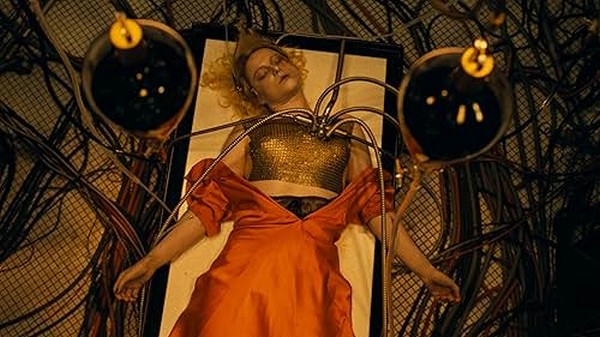
 The Frankenstein Mythos is updated in Maggie Gyllenhaal’s fantastic, ferocious, and feminist The Bride! Delirious and ambitious, the bonkers flick is bound to divide, but we’re on the side of Hell Yes!
TW: The Bride! Features sexual violence. Strobe warning for several scenes.
Just mere months after Guillermo Del Toro presented his fantastic take on the Frankenstein Mythos, Maggie Gyllenhaal delivers her very different but nearly as compelling and wonderful take on the characters and their needs and wants. The Bride! (typically with an exclamation point, but leaving off form here for flow) is wholly different from any previous version: a frenzied tribute to those other Frankensteins, regular and Young, Bonnie & Clyde, with a twisted take on Baz Luhrmann & Bob Fosse, touches of Vertigo, film noir, and so much more. Most importantly, Gyllenhaal adds an engaging feminist take with discussions of women claiming their names, selves, and voices; being heard against abuse, danger, and discreditation. The Bride is a tornado of a film, tearing across the screen with a punk rock abandon in all the best ways.
I’m curious how the general public will take The Bride. Written and directed by Maggie Gyllenhaal, The Bride (should be obvious but not a remake of the 1985 Sting-led film) is deliriously bonkers and ambitious, a totally go-for-broke freewheeling spectacle. It’s big and maybe a little messy in all she wants to accomplish. As I’ve said elsewhere, I’m all for going big and grand, even if it doesn’t all work. Put it all out there, toss it to the screen. Some characters and subplots might not be fully developed, but I wholly appreciate what is there and the ideas behind it. Plus, it was too entertaining to really think about those aspects during the film, setting in to think and discuss afterwards.
For this update of Frankenstein, Gyllenhaal, in her second film after 2002’s The Lost Daughter, transfers the action to America during the Great Depression. A world of gangsters and molls, intricate production designs, huge neon signs in the cities and open fields of the country. The lavish production design, such as Dr Euphronius’s impressively awesome lab, sells the world and world-building with explosive delight. Mary Shelley, in some sort of limbo, decides now is the perfect time to set in motion a sequel to her famous tale, inflicting the mind of Ida, an escort embroiled in gangland. With Shelley pulling the strings, Ida ends up dead and ready to be revived by Dr Euphronius, compelled by the century-old Frankenstein’s Monster. At rebirth, she has forgotten her previous life (setting up a motif of how women’s selves, wants, and accomplishments are pushed down, controlled by men), and well, I’ll not spoil, but it becomes a wild adventure in Chicago, New York, and everywhere in between. It slides into an unexpected Bonnie & Clyde for Frankenstein and his Bride (to rhyme). Amidst that, we have mobsters, emboldened copycats, movie musicals, detectives, and more. 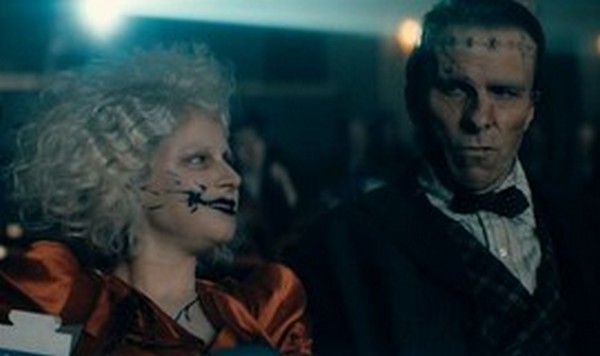
I can see many viewers jumping off the slab at a dance sequence, a fantasy bit, or in a big story shift. It’s asking a lot of the viewers to go along. In every way, it’s a heightened reality; everything is big and just the right level of camp. The Bride doesn’t play by the conventions and expectations to great effect. Gyllenhaal uses the audience’s understanding of the Frankenststein story as she sees fit, with sly and not-so-subtle references to other entries, particularly Universal with James Whale’s The Bride of Frankenstein of 1935; but quotes along with moments of Mel Brooks’ Young Frankenstein. It’s a hilarious film amid all the chaos; continually surprising.
The Bride sparks to life with the electricity of all the performers. Jessie Buckley, fresh from Hamnet, continues to powerhouse of performances. She has a lot on her shoulders, the wild Ida, coming to terms and finding her identity, as Mary Shelley, and in the combination of Ida, Mary, and The Bride. It’s an intense layering of concepts and confessions. She’s ferocious, and I’m all here for it. Christian Bale’s Frankenstein makes a perfect pairing with her. They have brilliant chemistry, and he’s written just as well. Not a true monster, and not a saint; a lost man trying to find love. He might go the wrong way, but it’s not a maliciouslness; a nearly innocent way of seeing a relationship. Two broken people finding their place with one another. It’s so damned good to see Annette Bening as this film’s mad scientist, nearly a Dr Pretorious. Wonderfully crackpot, she’s relishing the oddity of it all. At her side is Jeannie Berlin as the scene-stealing Greta, a sort of Igor (to note: Igor wasn’t an assistant to Frankenstein until Son of…, played by Bela Lugosi, who gets a cameo via White Zombie). Also on hand are a fiery Penelope Cruz, leaning heavily into the style of the period and Gyllenhaal’s husband Peter Sarsgaard as her fellow detective. She’s the mind and does all the real work, but he gets the credit; how they work together with a bouncy tempo and charisma. However, their characters are a little useless for the film and could be cut with little loss. And Maggie gets her brother Jake in for a few choice moments; campily working a 30s Hollywood star to the hilt.
Strung across the film, and very much Gyllenhaal’s point in making the movie, are the fantastic feminist notions. Think of Barbie with more bloodshed. Explorations of how women are mistreated and abused, forgotten, and ignored. How in a misogynistic society, accomplishments are glossed over or undercredited, along with a hefty discussion of consent. She does this in both subtle and hit-with-a-hammer ways. It’s delicious, and I loved it. I’ll leave the film to speak for itself, and I can guess a certain section of society will cross arms and pout. But screw them, plus they probably already checked out when the film became Cabaret for a few minutes.
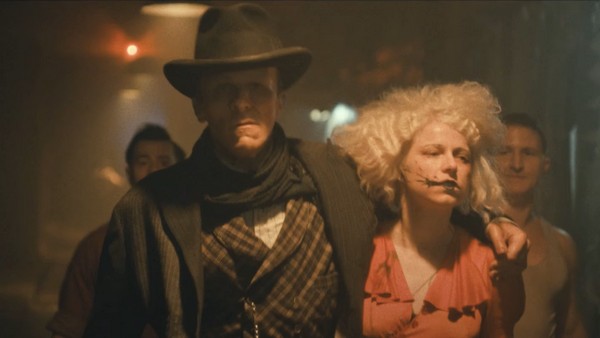 On a technical level, it’s astonishing. The production design is massive and wowing, detailed and over-the-top, perfectly realised with grandeur. Gyllenahaal builds a wonderful tableau. She knows how to compose iconic shots, filled with color and control, with fantastic use of people and locations. Jason Collins’s make-up designs are bound for the Oscars next year, whether it be the layers and layers on Bale’s Frankenstein or the inky designs and shocked hair of Buckley and more, including a grotesque body horror and damage.
A delirious explosion of energy and oddity, from a frantic Mary Shelley exploding from the scene to ending with the best needle drop, Maggie Gyllenhaal’s The Bride is a triumph of style and substance. Maybe certain bits could be explored more; some may say it tries too much. Maybe it does. But I was all in the rollicking ride. I see this as either a love-it or hate-it picture. And I loved The Bride!