
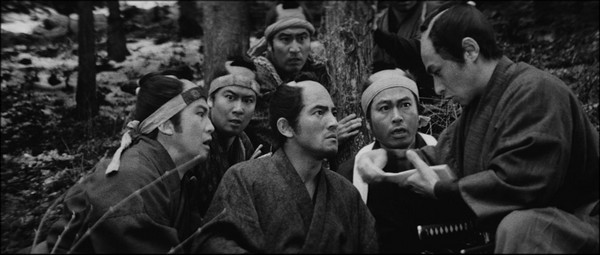
 Across three films, groups of Samurai endeavour to destroy corrupt and cruel feudal lords in Eiichi Kudo’s Samurai Revolution Trilogy, now on Blu-Ray via Arrow Video.
The Films
TW: The films often feature violence against women, both physical and sexual.
Three films make up what’s known as the Samurai Revolution Trilogy, directed by Eiichi Kudo, are startling and fascinating jidaigeki (period dramas) of the foibles of obedience and disgrace, revenge fothe unjust, and violent stories of honor via the “Bushido Code” in the Tokugawa shogunate (a period of 1603 – 1868, with the films taking place across the span.) 1963’s 13 Assassins, written by Kaneo Ikegami (remade in 2010 by Takashi Miike) starts the set. This was followed by The Great Killing in 1964, also written by Kaneo Ikegami. Finally, in 1967, 11 Samurai, written by Takeo Kunihiro.
All three are variations on a theme, turning the legends of the 47 Ronin into different takes of a group of samurai working to gain justice for those unjustly pushed under the thumb of the expectations and rules of the shogunate. Ideas are also explored differently in the recently reviewed 1963’s Cruel Tale of Bushido.
The trilogy is all very good, thrilling films of high drama, strong action, and impressive cinematography. However, this trilogy is a case of “I wish I liked more than I did.” Maybe it might be watching on the heels of Cruel Tale of Bushido, which more succinctly discussed similar topics of the hierarchy of Japan’s culture, the ideas of honor and respect – expected and earned, and descending to violence to solve social and personal problems (with modern shifts, revolutoins, and social notes of the 1960s informing the creation of these films). Perhaps it’s just the repetition of watching the films twice each (once alone, once with commentary) for review that purposely built up a familiarity, even if all are different in how said justice is attempted. They aren’t carbon copies of one another, even with shared themes and basic story notes. I do believe if I give more time between viewings, it might all sit better.
But putting that aside, each film is compelling on its own. Seeing how the pieces move, the hows and whys of each action (often involving sexual violence against women as they go, be warned) is interesting. Each avenging faction has to work within and around the person they are aiming at for someone else’s revenge. It’s a tightrope in pushing back to remove cruelities and aspects of the culture, knowing that these steps may destroy a wider range, the Powers That Be, or oneself and family (some tough choices and actions regarding this). It’s a complicated labyrinth of people, places, and honor codes; sometimes those labyrinths are physical palaces, like in hour long action climax of 13 Assassins. It is all fascinating, if not overlong, with each film lasting about two hours give or take.
Kudo, with the three different cinematographers, shoots the films in glorious black-and-white. The compositions are often incredible in the design of people and places, using the era-based sets and costumes to great effect. It’s quite the accomplishment in epic filmmaking. Additionally, the action beats are sublimely executed. Gripping swordfights, both tightly controlled and interesting chaos, other action beats, and the physicality of the actors.
While these films didn’t fully grasp me as a casual fan of the genre, I can see how they would connect far more with those more versed in the era, both the setting and the cultural shifts of 60s Japan, than inform this look to the past. I appreciate Kudo’s work in the Samurai Revolution Trilogy, and I do look forward to giving a second viewing and enjoying more. They are important films, cultural touchstones, and reflective of their eras, both contemporary and historical. Check them out.
The Packaging
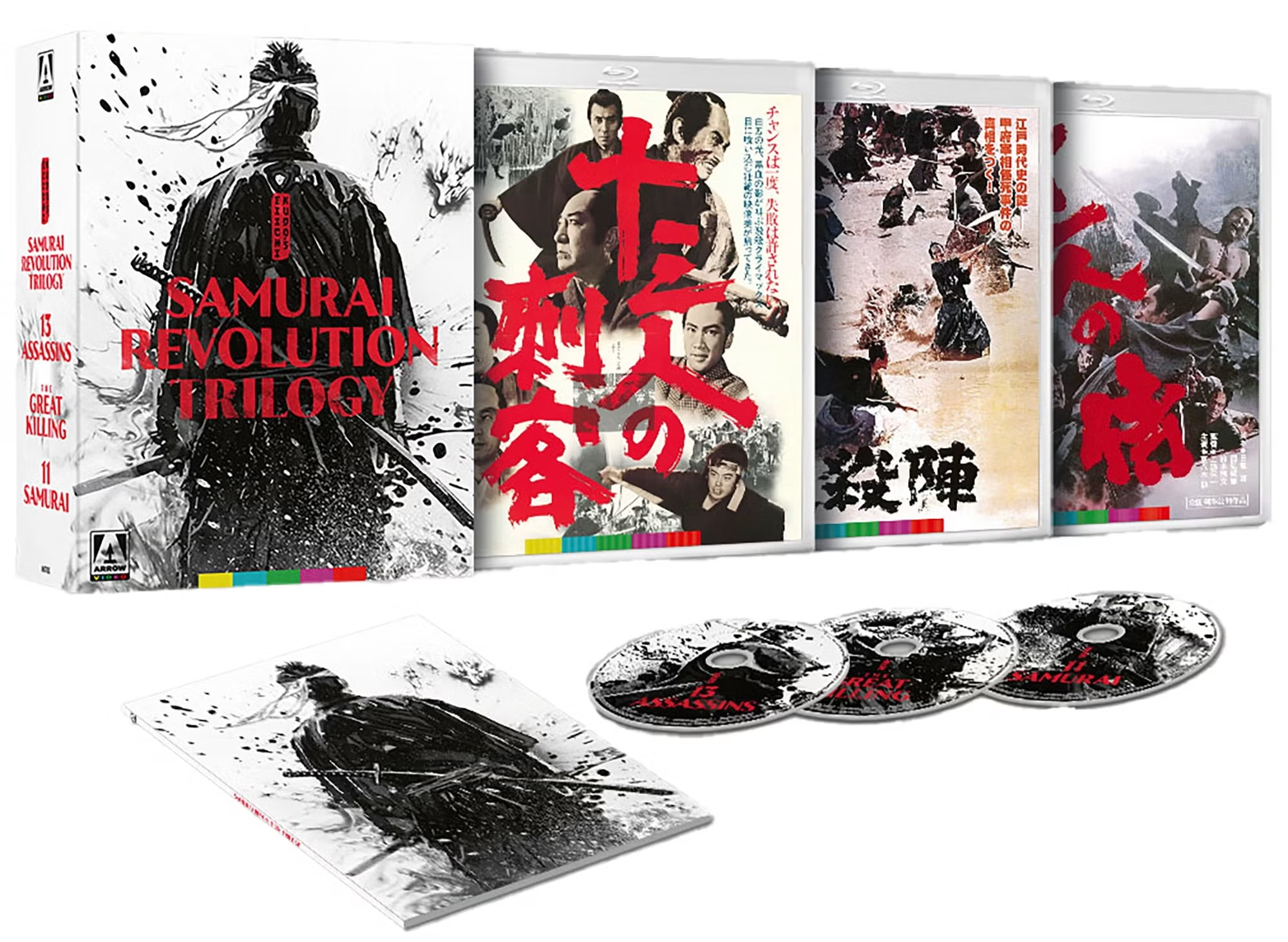
Arrow presents the Samurai Revolution Trilogy over three Blu-Ray discs. Each disc has its own case, with stylized artwork on the disc and one side of the reversible sleeves by Tom Fournier. The other side is original poster art. A booklet slides in with the three discs in the sturdy box featuring more of Fournier’s art.
The Presentation
The beautiful, stark black-and-white transfers beautifully, clear with great contrast, even in the many foggy or rain-laden scenes. They are busy visually, but nothing is lost. All three films feature the original lossless Japanese mono, with newly translated English subtitles.
The Features
Arrow slices into a great state of features, ones that helped me, and likely other outsiders to this corner of cinema, gain an appreciation for the films and the world around them.
Commentaries
Each film has a commentary: 13 Assassins by film critic and Japanese cinema expert Tom Mess. David West, film critic, covers The Great Killing and 11 Samurai. All three are excellent commentaries, discussing not only the internal hows and whos of the film but the wider glances of culture of the setting and, most interesting to me, 60s Japan as cultural attitudes shifting in a time of social revolution. The connection of modernity and antiquity in film is fascinating to me.
Disc 1- 13 Assassins
The Samurai Variations (new)
A video essay by James Balmont on the career of composer Akira Ifukube. If you don’t know the theme, though he worked on the film above, you know his iconic score for Godzilla (I vocalize it at least once a day).
Samurai Guerilla Part 1 (archival)
Misao Arai, Kudo’s former AD, and filmmaker Dirty Kudo discuss Kudo as a director and Toei as a production company in the 60s. Incredibly insightful and filled with both new knowledge for me and an appreciation of the times. (30m(
Trailers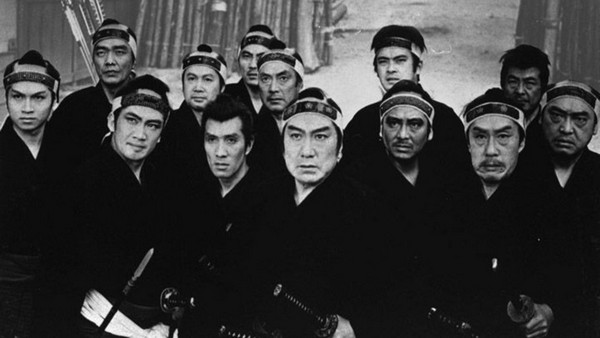
Disc 2 – The Great Killing
Magician of Light and Shadow
Daisuke Miyao, film critic and Japanese cinema expert, discusses the incredible cinematography of The Great Killing. As noted above, it’s gorgeous, and Miyao breaks down the whys and hows, highlighting specific sequences and getting in the dirt. Lovely. (30m)
Samurai Guerilla part 2 (archival)
The pair continues with specifically discussing the political implications of The Great Killing, mainly of the modern era. As noted, this is what I’m drawn to, media literacy, baby! I learned a great deal (30m)
Tribute to Eiichi Kudo (archival)
Masaaki Ito, former assistant and brother-in-law, remembers Kudo with stories and appreciation. (14m)
Disc 3: 11 Samurai
Fighting the Poison (new)
Jonathan Clements, film critic and Japanese cinema expert, expounds on the historical setting and context of then and now, a breakdown of the historical era, and how it reflects. (20m)
Samurai Guerrilla Part 3 (archival)
They continue with filming techniques of the films and how Kudo approaches the Samurai. Fascinating 26m
Eiichi Kudo: Art of Realism (archival)
Filmmaker and programmer of the House of Culture of Japan in Paris speaks about Kudo’s films. A great way to end the discs, wraps up well, focusing the whole of the films and what they mean and how Kudo made them. (14m)
Booklet
A bound 40-page booklet. In addition to the cast/crew/photos, it holds 3 essays: “13 Assassins: Bringing Realism to Jidaigeki” by Chris D., “The Great Killing: Revitalizing the Radical Legacies of the Jidaigeki” by Earl Jackson, and “Dreaming of a World Without Lords” by Alain Silver. These writings have a wowing depth, breaking down the movies incredibly well and thoroughly. Great reading.
Final Thoughts
Arrow puts together a fine collection. The movies are incredibly well done, and the features are a fantastic set that deepens the understanding of the world around the films. Highly appreciated. The Blu-ray set is out now.