
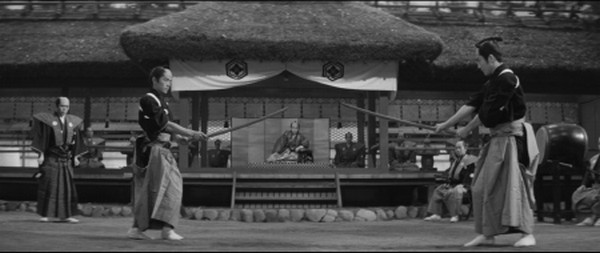
 A man recalls how seven generations of his family suffered under the expectations of the “honor code” in Tadashi Imai’s powerful 1963 drama Cruel Tale of Bushido, now on Blu-Ray via Eureka Entertainment.
The Film
Where is the line for service to others? At what expense for family or personal needs? What if what’s being asked goes against your personal codes; the person you have to answer to is cruel, straight up evil, or obviously using and abusing for position?
Being stuck in a terrible, unbalanced power relationship is something we all have had to deal with. But at least that awful boss who only thinks of the bottom line or seems to delight in putting a pile of work on your desk, knowing you’re already swamped. Does your honor or sense of obedience get lost lead to your own ruin?
Tadashi Imai’s 1963 film Cruel Tale of Bushido (often simply Bushido, more complicated in Bushido, Samurai Code of Honor, or with the subtitle Cruel Code of a Samurai) is a reversal of the samurai film, showing the holes in the system and hypocrisy presented straight in so many films. Kurosawa films such as Seven Samurai or Yojimbo, or even their Italian/American translations and riffs. A man with a sense of justice and a code of honor steps in to help the downtrodden. But just as easily, someone with said honor could be used against them, forcing loyalty to the point of mutilation or death. Imai’s film is fascinating in the exploration of how that system of obedience is abused, from 350 years ago to WWII and into the modern age (or 1963, but no doubt remains relevant).
Cruel Tale of Bushido, with a sharp script by Naoyuki Suzuki and Yoshikata Yoda (with a story by Norio Nanjo), uses that concept to explore generations of people stuck in a social system that leads to various cruelties and death. When, in the 1960s, a man’s fiancée attempts suicide, he thinks back on his family’s history. Including him, seven men across a few hundred years have had their own lives and spirits crushed under their leaders, with little recourse due to the so-called codes of “honor” of Bushido/Samurai. Said codes may or may not have been entirely true, modified, and changed for entertainment and simplification of history over the years (the provided booklet on the release digs into this). That said, these can be expanded and explored, used to spotlight inanities in personal expectations in society, no matter the historical truth of the situations.
The script sets up the brutality of the story very well, with each segment telling its tale, weaving into the others, with well-written characters that, even with the similarities in the stories (the nature of this film would purposely use repetition), are quickly defined. Kinnosuke Nakamura plays all the same line of men. Nakamura has a chameleon-like ability to disappear into each of them, helped by strong make-up and costume designs. He imbues a knowing sadness, maybe even a madness, in how each male heir of his line deals with his own issues to pass down, with maybe this time it’ll be better.
Outside of the compelling story, told with sharp dialogue and characters, Imai films with a gorgeous sense of space and time. It’s a beautiful production in costume and design. Shot in glorious monochrome, each scene is used to set the world; each segment standing on its own in look and design, often using claustrophobic homes and castles to bear into those under the cruelties. Disorienting and disheartening, it gets under the skin.
Cruel Tale of Bushido is a damning, scathing debasement of the terrors of blind obedience, or even knowing and hoping the powerful will be anything but terrible to those under their control as they chew them up for their needs. Imai’s film is powerful and immediately sad and disturbing, led by a fantastic multi-faceted performance by Kinnosuke Nakamura.
The Package
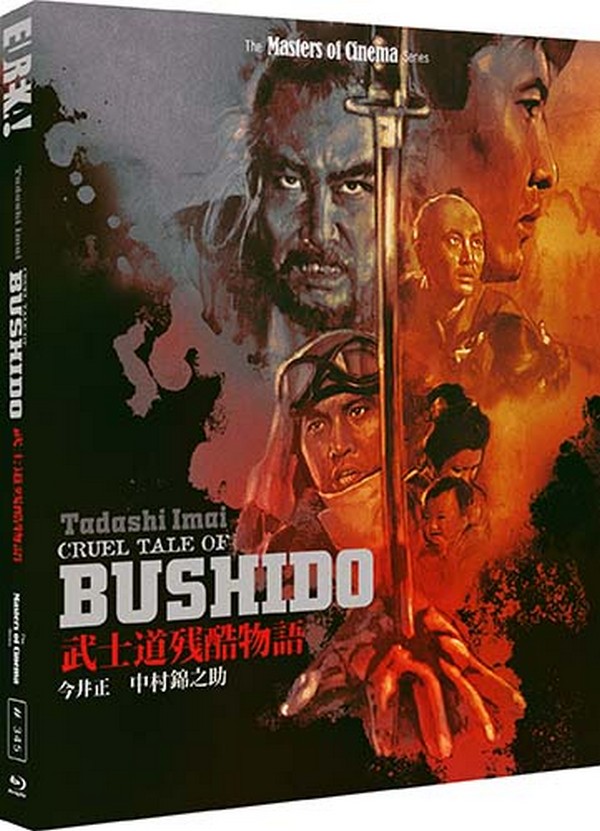
Eureka presents Cruel Tale of Bushido as part of their Masters of Cinema series (spine #345) for its first North American Blu-ray. The single-disc Blu-ray features the image of one of the cruel lords and film info. It’s housed in a clear Blu-ray case along with the booklet. One side of the sleeve features a B/W still of one of the abused men on the front and plot/features on the back. Facing in a film still. It is bound in a cardboard O-ring with new art by Tony Stella.
The Presentation
The movie may be cruel, but Eureka’s presentation is very nice indeed. Utterly gorgeous, from a 4k restoration from Toei, the complicated B/W photography is striking and sharp, highlighting the detail and darkness. The sound is available in 5.1 and Mono, both in Japanese with English Subtitles.
The Features
Eureka presents a modest but solid slate.
Telling A Cruel Tale
This interview with Tony Raynes digs into the storytelling of the film, deepening the messages and giving light. (16m)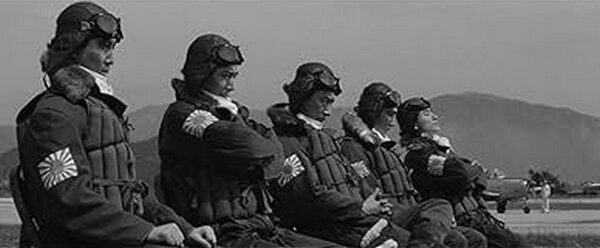
Seven Kings of Samurai: Tadashi Imai’s Cruel Tale
The video essay by Jonathan Clements expands past the film to look at Japanese history and the historical notes the film jumps into. Both special features shine lights the film’s ideas. I learned a lot. (20m)
Booklet
20-page stapled book with the standard cast/crew and stills, with the essay “Salarymen Samurai and the Myth of Bushido” by Hayley Scanlon. The writing is great, looking at culture and the so-called Samurai code, and how it’s been used by culture.
Final Thoughts
Cruel Tale of Bushido is a gripping and terrific tale of the terrible nature of blind obedience to cruel masters. The features are light but well-done, with a fantastic transfer. Cruel Tale of Bushido is an important film in the Samurai canon, even if anti-Samurai (in the same vein as all the best war movies are anti-war?). Check it out.