post

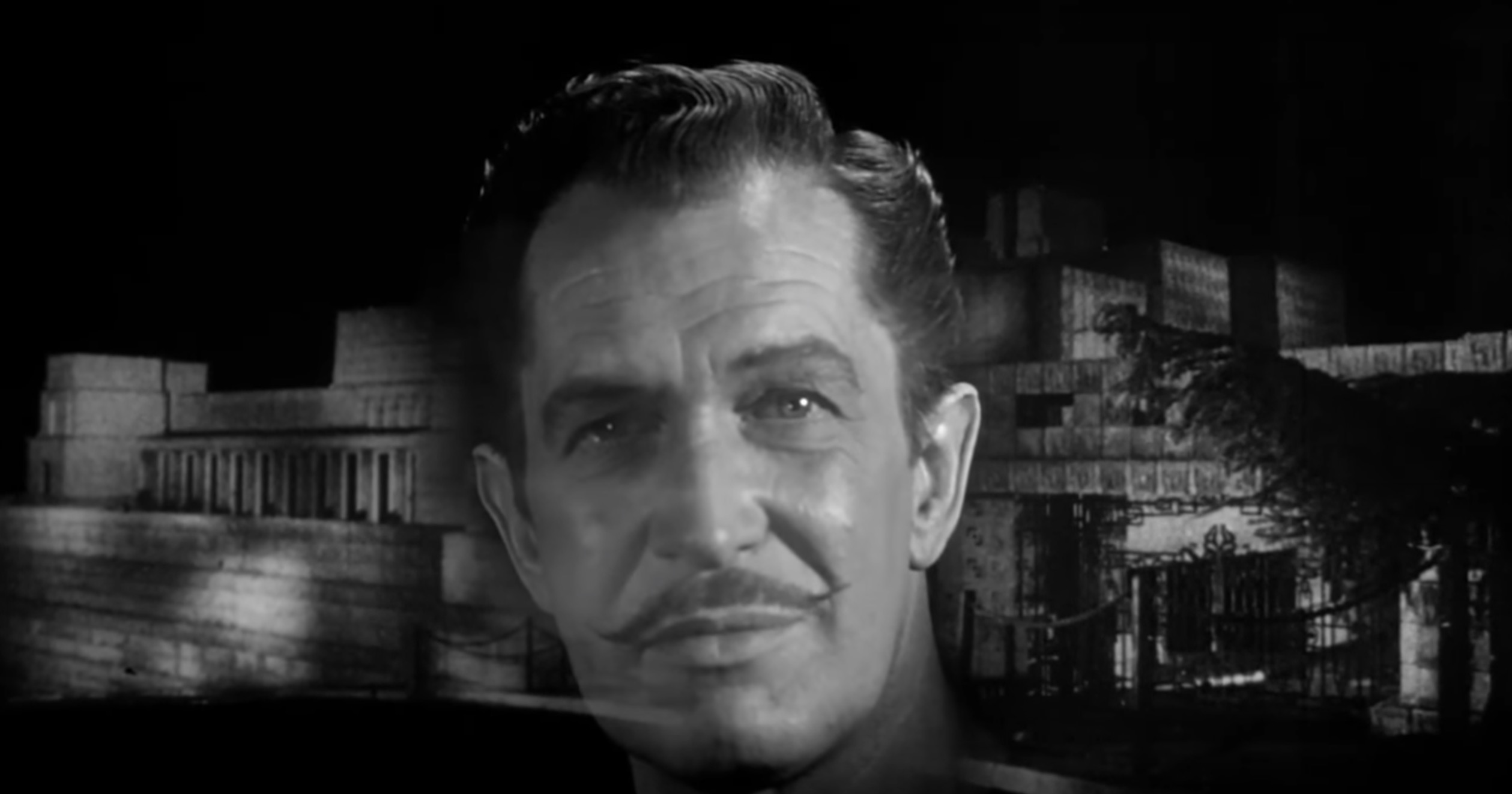
House on Haunted Hill (1959)

An eccentric millionaire and his steely fourth wife invite five strangers to their spooky mansion of a challenge-party. The guests and their hosts are to be locked in the mansion overnight without telephone access or electricity. Those who survive until morning will each receive $10,000 from their hosts. Those who don’t survive will have the funds forwarded to their heirs. However, the house supposedly comes with a grisly past involving ghosts and murders, and the evening proves to be anything but serene for all involved in this mayhem.
Continue reading →
post

Hello, Dolly! (2009)

You never know what you can discover just by leisurely scrolling through YouTube. Why, just the other day I discovered something completely under that proverbial radar: a 2009 video record of the Moscow Operetta Theatre’s production of “Hello, Dolly!” And if you thought the Barbra Streisand film took too many liberties with the Broadway show, wait until you see this Russian reimagining of the musical comedy classic!
Continue reading →

post

Cool Cat (1967)

Notable for introducing the first new characters in the brief (1967-69) era of Warner Bros.-Seven Arts cartoons, “Cool Cat” debuted the eponymous feline and his predator, the bumbling Briton Col. Rimfire, in a variation of the Bugs Bunny-Elmer Fudd hunting romps. The only difference here is that Cool Cat is blissfully unaware that Col. Rimfire is pursuing him. Even more peculiar, the feline star mistakes the colonel’s vehicle – a metallic pink elephant on wheels – for being a real pachyderm and he has a running one-way conversation with the machine.
Continue reading →

post

Disneyland Dream (1956)

One of the funkier aspects of the Library of Congress’ National Film Registry is the inclusion of extraordinarily obscure amateur works alongside Hollywood productions. In 2008, a home movie made in Connecticut in 1956 by Robbins Barstow called “Disneyland Dream” was added to the National Film Registry alongside such classics as “Foolish Wives,” “The Invisible Man,” “The Asphalt Jungle,” “Flower Drum Song,” “Deliverance,” and “The Terminator.”
Continue reading →

post

Conrad the Sailor (1942)

For every Bugs Bunny or Daffy Duck that becomes a pop culture icon, there are countless cartoon characters that get tested in one or a few shorts before being dropped for lacking versatility and viability. Conrad the Cat, a yellow bipedal feline created by Chuck Jones, is an example of a character that was jettisoned after failing to immediately click on the screen.
Continue reading →

post

Sherlock Holmes in Washington (1943)

When a British secret agent carrying confidential documents is abducted from a train traveling between New York City and Washington, DC, His Majesty’s government calls on Sherlock Holmes to travel across the Atlantic to locate the missing agent and retrieve the documents. Bringing along Dr. Watson, Holmes quickly unravels the mystery behind this disappearance while exposing a Fifth Column spy operation in the nation’s capital.
Continue reading →

post

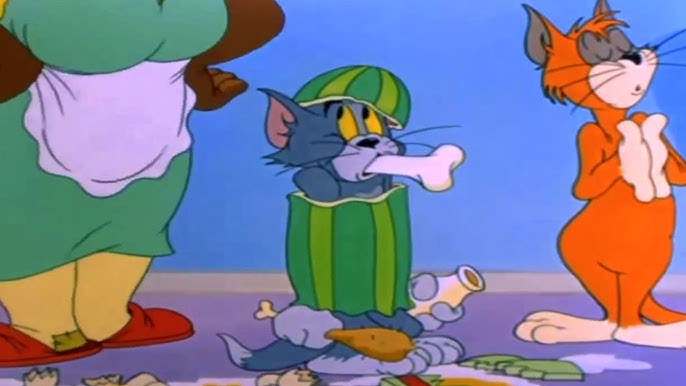
Old Rockin’ Chair Tom (1948)

One of the most misunderstood (and, subsequently, controversial) characters in animation history is the amply proportioned Black woman who appeared in 19 of the Tom and Jerry shorts. Contemporary sources refer to as “Mammy Two Shoes,” but that name was never used on-screen or in the screenplays – that moniker was first applied incorrectly in a 1975 Film Comment article and stuck ever since. Not only did she not have a name, but viewers never saw her face (outside of a split-second gag in the 1950 “Saturday Evening Puss”) and never truly understood her relationship to the troublesome cat and mouse duo. It is widely assumed she is a maid or housekeeper because she wears an apron, but if that is the case her (presumably white) employers are never shown or even mentioned. In “Saturday Evening Puss,” she refers to the residence as “my house,” suggesting homeownership rather than domestic servitude.
Continue reading →