
 Now Streaming on Amazon Prime Video.
Barry Keoghan presented such a heartbreaking and nuanced performance in “The Banshees of Inisherin,” it’s pretty excellent to see how much he’s snuck up on movie fans over the years. “Saltburn” is that movie that he might be known for, for a long time because while that might seem like a slight, it’s astonishing how good he is here. Keoghan is wonderful at playing the chameleonic Oliver Quick. Keoghan portrays such a layered and complex protagonist whose shades of morality are often at odds with what the audience is allowed to perceive.
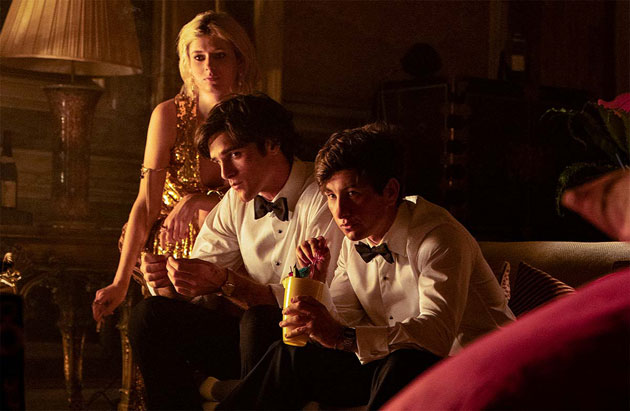
Struggling to find his place at Oxford University, student Oliver Quick finds himself drawn into the world of the charming and aristocratic Felix Catton, who invites him to Saltburn, his eccentric family’s sprawling estate, for a summer never to be forgotten. So many of the events that unfold seem to fall against Oliver’s favor, but director Emerald Fennell allows a narrative that’s part deception and part an indictment on our infatuation with the affluent, and obscenely wealthy. “Saltburn” is engineered much in the vein of “The Great Gatsby” and “The Talented Mr. Ripley,” to where Keoghan’s Oliver is allowed to view the ugliness and darkness of this elite family he’s asked to holiday with.
Over the course of the story so much of the perspective is shifted and “Saltburn” morphs in to such a darker and more menacing tale of obsession and fetishization. Fennell is never shy on leaning in to the hyper sexual, darkly comedic, holding a mirror up to the Catton clan and how they perceive more simple ideas like loss, grief, and just morality in general. Everything is a status symbol, and everything lives and breathes on social status. Emerald Fennell derives a wonderful performance from Keoghan alongside a cast that punctuates the film including Rosamund Pike, Richard E. Grant, and Jacob Elordi, respectively.
Elordi has also grown a lot of as an actor and screen presence, working well off of Keoghan and portraying Felix, such a bizarre, over sexualized, often objectified individual that we never quite understand. So much of what we think we understand is only what Oliver allows us to; the narrative twists in peculiar, memorable ways allowing for imagery that’s both perverse and might just become iconic over the coming years. There’s everything from the infamous bathwater scene, the bloody oral sex sequence and oh so much more that punctuates the inherently sick humor that Fennell aspires toward.
I admit I was pleasantly surprised by how Fennell was able to bring so much of his elaborate narrative together, even if it veers on silliness every now and then. “Saltburn” is such an unsettling and mean masterpiece, one filled with such a despicable central character that we, even at his worst, are never quite sure if we’re on his side.