

What begins as an ordinary day filled with small routines in preparation for New Year’s Eve, slowly unfolds into an intimate, devastating portrait of a life cut short.
Fruitvale Station follows the final hours of Oscar Grant, grounding its narrative not in spectacle, but in humanity. Written and directed by Ryan Coogler in his feature debut, the film delivers a deeply personal and emotionally immersive experience that forces the audience to confront the weight of systemic injustice through the lens of one man’s story. Rather than framing Oscar as a symbol, Fruitvale Station insists on presenting him as a fully realized person, flawed, loving, frustrated, and hopeful. The film moves at a deliberate, observational pace, allowing moments to breathe and conversations to linger. The tension does not come from plot twists, but from the knowledge of where the day is headed, making each interaction feel fragile and painfully finite.
At the center of the film is a career-defining performance from Michael B. Jordan as Oscar Grant. Jordan brings an effortless naturalism to the role, making Oscar instantly recognizable as someone we know. His performance captures contradiction with remarkable ease: Oscar is trying to be better while still wrestling with old habits; he is tender with his daughter yet guarded with the world; hopeful about the future while burdened by his past. Jordan’s portrayal never asks the audience to excuse Oscar’s mistakes, only to understand his humanity. By the time the film reaches its inevitable conclusion, the loss feels profoundly personal.
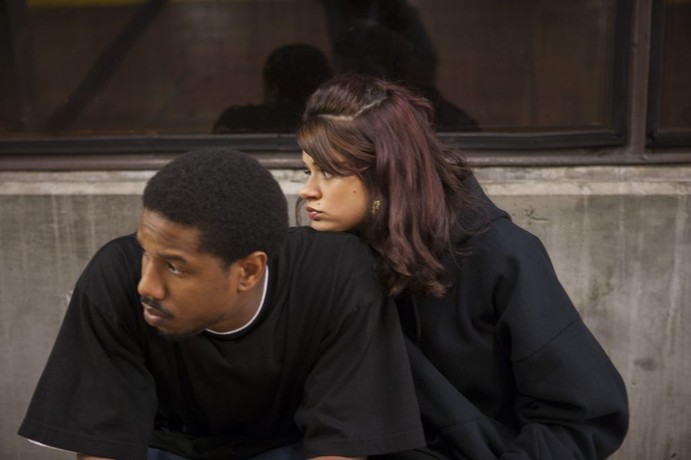
Equally powerful is Octavia Spencer as Wanda, Oscar’s mother. Spencer infuses Wanda with warmth, strength, and quiet resilience. Her scenes with Oscar are filled with unspoken history and unconditional love, grounding the film emotionally. Spencer’s performance anchors the story in generational pain and care, reminding us that Oscar’s life and death reverberate far beyond him alone.
The film’s emotional impact is cumulative rather than explosive. Each small moment, Oscar comforting his daughter, reconnecting with his partner, sharing casual conversations with strangers, adds weight to what is ultimately taken away. This approach makes the final act especially harrowing. The violence is sudden, jarring, and stripped of cinematic flourish, mirroring the senselessness of the real-life event. Coogler refuses to aestheticize the moment, instead allowing its brutality and injustice to speak for itself.
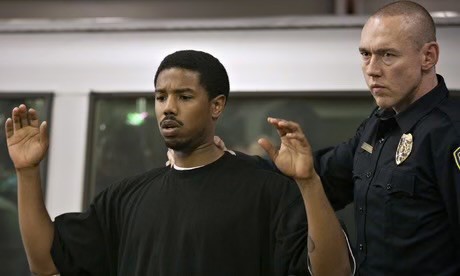
The film is restrained and intimate. Handheld camerawork places the audience directly alongside Oscar, creating a sense of closeness that is both comforting and unsettling. Everyday locations, grocery stores, kitchens, and train platforms, are filmed with an almost documentary-like simplicity, reinforcing the idea that tragedy does not require extraordinary circumstances. The framing often keeps Oscar centered in the shot, subtly reminding us that this is his story, even as forces beyond his control close in around him.
Fruitvale Station confronts police brutality, systemic racism, and the criminalization of Black bodies without resorting to didacticism. The film does not frame its message through speeches or grand statements; it communicates through lived experience. Oscar’s story becomes emblematic not because it is unique, but because it is tragically familiar. The frustration and anger the film provokes are inseparable from its empathy, forcing viewers to sit with discomfort rather than offering easy catharsis. More than a decade after its release, Fruitvale Station remains painfully relevant. Its storytelling is gripping, its performances deeply affecting, and its message unavoidable. The film stands as an essential work in conversations about police violence and accountability, not because it shouts, but because it humanizes. By asking the audience to know Oscar before he becomes a headline, Fruitvale Station ensures that his life, and the injustice of his death, cannot be ignored. This is not an easy watch, but it is necessary and one of Michael B. Jordan’s less talked-about but powerful performances.