
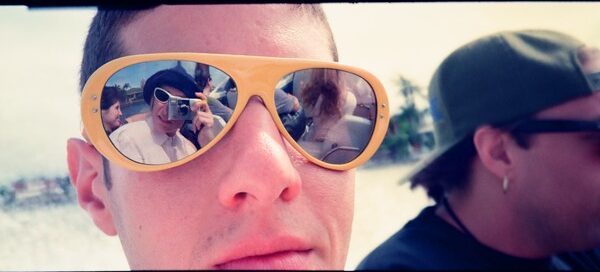
 Filmmaker Tamra Davis compiles her own interview and concert footage from a tour with The Beastie Boys, Foo Fighters, Sonic Youth, and so many more in the utterly engaging, raw time capsule The Best Summer, presented at the Seattle International Film Festival 2026.
My year of rockin’ music documentaries continues! After The Secret Lives of Bill Bartell, Born Innocent (Redd Kross), (and the connected non-doc of Teenage Lovedolls duology), Pavements (about the band Pavement, no s) and now, the Seattle International Film Festival offers The Best Summer a intimate, eye opening, and honest look at a slew of bands on tour in Australia and Asia over New Year’s 1995/1996.
Recently, while fleeing wildfires, director Tamra Davis came across a personal time capsule: a box of videotapes. No, this isn’t a found-footage horror film, but a blast from the past for Davis. It’s the end of 1995, she had just finished directing Billy Madison and married Mike D of the Beastie Boys. They were about to start on a hell of a tour across Australia and SE Asia: The Beastie Boys, Sonic Youth, Rancid, Pavement, Foo Fighters, Bikini Kill, Beck, and others. Wow. I want to go to there. Armed with a Sony camcorder and time, Davis records the tour, the hangouts, the concerts, the downtime, and, with fast friend and compatriot Bikini Kill’s Kathleen Hanna, interviews performers in the greenroom.
Davis, and Hanna for a large portion of the film, gain an openness, a rawness that a different documentarian could never truly achieve. Sure, Dave Grohl might open up to Cameron Crowe, but that still has a sort of transactional nature, no matter how ingrained the recorder of images and words may be (side note: I highly recommend Crowe’s new book, The Uncool, about his time doing this very thing). But to your friends, the people on tour with you every day? The walls are down. The fears, the concerns, the fight of public versus private personas, can be revealed to Davis’s camera and Hanna’s questions. Their style is wonderful, Davis warms up with five softball questions (loved hearing what everyone was reading), and Kathleen Hanna gets into the depth of thought; highlights with Kim Gordon and Grohl’s raw, soul-bearing talk (and we see Grohl morph into the charming frontman he is, while reeling from the still stinging loss of Kurt Cobain a year before). Hanna’s awesome with Bikini Kill as a musician, but she’s a wonderful and charming interviewer. She’s someone easy to open up to, with such vibrancy, bright eyes, and a smile. The Best Summer loses a bit of energy when Bikini Kill leaves the tour. 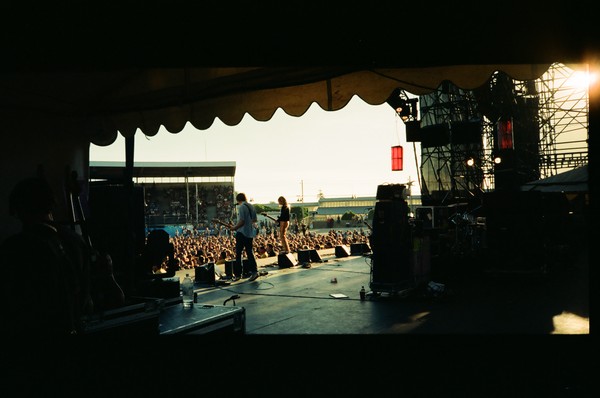 I appreciate how much this is just dropped in. No build to a big concert, no fighting with producers or “will we pull this off?”, people come and go from the film without fanfare. “Oh, Beck’s here for a while” or “Rancid is not on this part of the tour”. Maybe I’d like to hear from some folks more often, for example, Thurston Moore of Sonic Youth has one interview and remains off-screen; although Davis and Kim Gordon’s friendship gets plenty of screen time (along with Gordon and Moore’s daughter, toddler Cece), there is no high drama to get over, no personality clashes. It’s a vibe. In the Q&A, Davis talked about toying with modern talking heads, a voiceover, or more context. But Gordon talked her out of it, saying, “Take me to the 90s and just leave me there.” It’s stronger that way. Even if someone doesn’t know the specific bands and people, the truths of what they say are more than who we know them to be, and the concert footage hits. Explaining it would lessen it. Many will know the whos and hows coming in. In my case, I was 13, and it brings me back to my carefree times of the 90s, waved over in nostalgia; others can bring their own knowledge in, or fill in with Wikipedia if needed.
Mixed within the conversations, interviews, moments of just living on tour, is the music. Full songs, montages, and snippets are interspersed. It’s wonderful, transporting me to a series of shows I could never see now, letting them stand as they are, up close and personal. Davis had already directed a slew of music videos and would direct more, so she knows how to make artists look their best in performance. And while filmed on a handheld Sony Camcorder, it looks and sounds great. Only in a few moments does the video wash out or fuzz up; the same with the sound, it’s not crisp, but it’s real, occasionally blowing out. Honestly, this adds to the experience. If it’s too clean, the intimacy of a home movie, even of a huge star, is lost. The two sides of the film are mixed well, with neither taking too much from the other. Whether you’re coming here for the memories of music or the hearing from the musicians, you’ll be pleased; props to editor Jessica Hernadez for the flow.
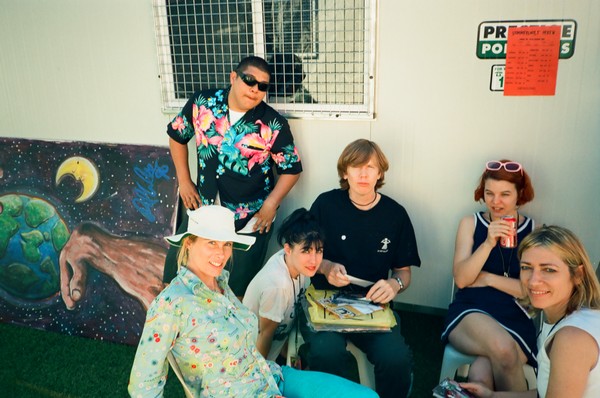 Tamra Price’s The Best Summer is a wonderful vibe flick of a documentary. It offers insight and performances, but exists best as dropping in on these folks at this point in their lives, whether very established acts like Beastie Boys, or on the rise like Foo Fighters (still doing their own laundry, a laugh with Pat Smear gathering everyone’s clothes) and Beck; it rings true and exciting. Thank you to Price for sharing her 1995/1996 life with us thirty years later. The Best Summer is presented as part of the Seattle International Film Festival, running May 7th through 17th, 2026. See siff.net/festival for more information and schedules.