
 The foundations of a small town crumble under the influence of a vampire in Tobe Hooper’s still-terrifyingly effective 1979 adaptation of Stephen King’s Salem’s Lot. Now on 4k UHD via Arrow Video.
The Films*
The second of Stephen King’s (published) novels, in 1975, and the second of the adaptations, in 1979 (both after 1974’s Carrie, with its adaptation by Brian DePalma in 1976), Salem’s Lot remains one of the best, on both counts, film and novel. As a novel, it’s my second favorite after its follow-up, The Shining. The story of a writer returning home at the same time that a vampire and his familiar set up shop (literally) to drain the town
Salem’s Lot has been adapted several times over the fifty years of publication: as an okay miniseries in 2004, a decent but rushed 2024 film from Gary Dauberman, used as a basis for the second season of the disappointing Castle Rock, the “WTF is that” of Larry Cohen’s A Return to Salem’s Lot, and the 2021 Chappelwaite is a prequel, based on King’s short story “Jerusalem’s Lot.” (I’ve not seen it, so can’t comment on quality). But 1979’s two-part, three-hour TV mini-series directed by master of horror Tobe Hooper remains the best. Unless you count Mike Flanagan’s Midnight Mass, which is essentially ‘Salem’s Lot mixed with Storm of the Century and other King work, the most King-like a story can be without being King. Ahem, I digress.
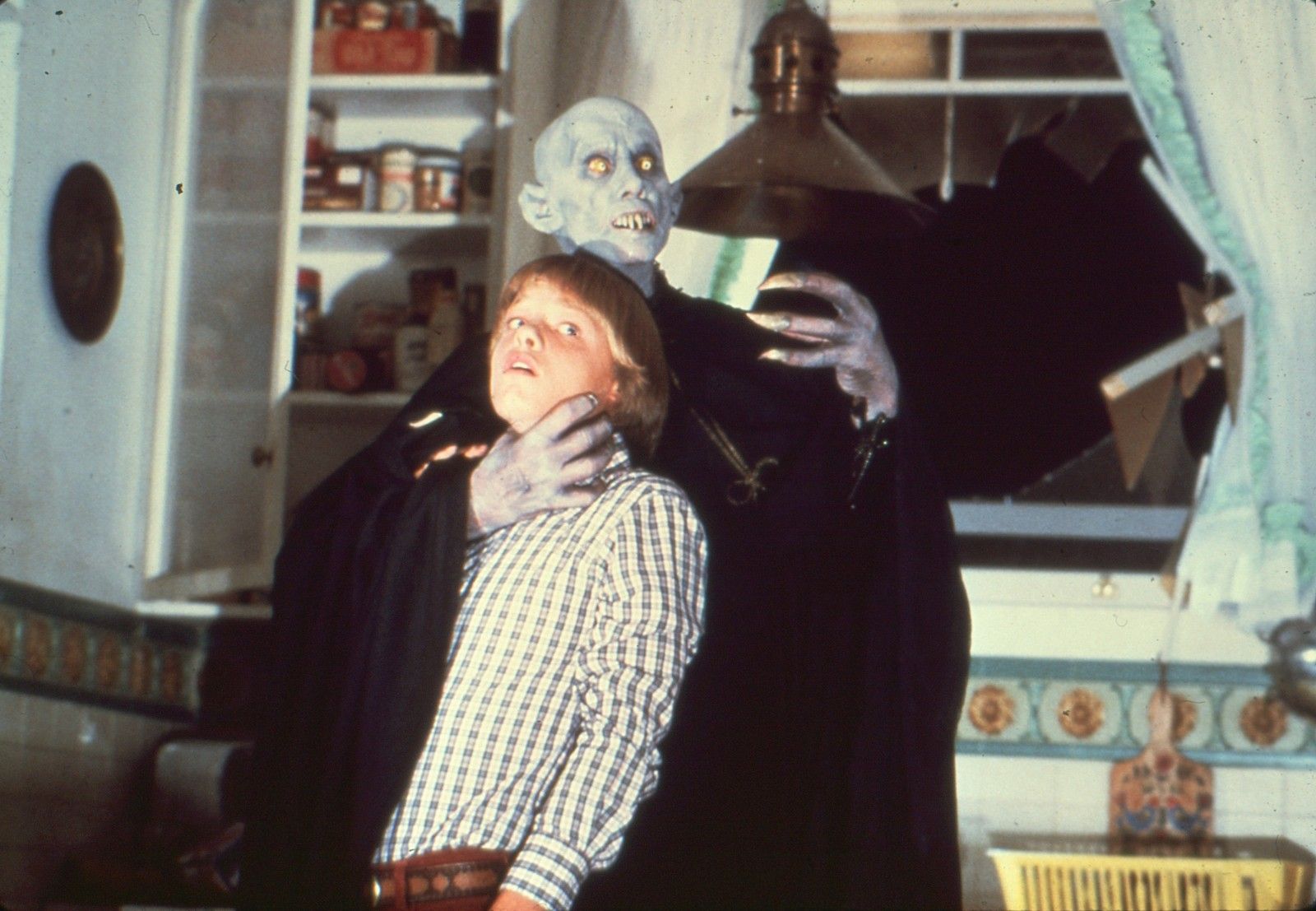
Salem’s Lot is, or was, unlike other horror or vampire novels of the time. It’s a homegrown, grounded, human drama based on the horror of the vampire, a metaphor for the secret histories and dwindling nature of the small town. It’s been much described as “Peyton Place With Vampires” (fitting as Paul Monash, the writer of the miniseries, wrote for the TV version of Peyton Place), the unspoken nasty underbelly of a seemingly perfect small town is exposed (see also David Lynch’s Blue Velvet). The supernatural intrusion of Barlow, svelte and Dracula-like in the novel, is altered to a scarily effective snarling Nosferatu-type here (on screen for only 90 seconds, but making a hell of an impression), bringing it all to the surface, stirring up the darkness to tear it apart while sucking it dry.
That’s what makes it effective. It’s simple and without unnecessary flourish. It’s a comfortable, lived-in terror of a small town and its people. The growing terror and unease hang over getting to know the people who populate the town. They are real people in their regular, work-a-day blue-collar jobs. Many audience/author surrogate Ben Mears, a grounding David Soul of Starsky & Hutch, meets as he returns to Salem’s Lot after 30 years are kind and helpful like a radiant Bonnie Bedelia as love-interest Susan (the script gives her more than King did), her kindly father, his old English teacher, said teacher’s students such as monster kid Mark Petrie, and more. Others are not so kind, like the stand-offish Sheriff, or Susan’s ex. Others have their own worlds going on: Fred Willard’s realtor and his affair with Bonnie; a pulled form life result is striking, favorite character actor Geoffrey Lewis pushing through as a blue-collar handyman, or Elisha Cook, Jr’s town drunk. They set up the town and its people, giving it a solid microcosm of the small town. 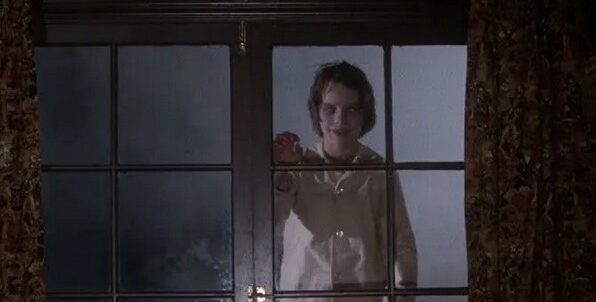
On top of the realness is the effective horror Hooper translates from the novel. The horror that gave generations of kids nightmares. Danny Glick coming through the window. His mother sitting up in the morgue. For me, it’s always been Lewis in the rocking chair. It’s literally a man in a chair talking (hissing?) to his former friend, but it works. Barlow, being Barlow James Mason, as Straker, eerily and icily giving “this is totally off vibes.” The whole of the Marsten House, the rotting hulk of decades of an evil seeping down from the hill to the town; as degraded as moss-covered as Crimson Peak, and half-decorated after the Sawyer home of Texas Chain Saw Massacre (so many stuffed animals and antlers). The whole film has a sickly malaise and discomfort. That’s a Hooper specialty: no one can deny the ever-present atmosphere of Texas Chain Saw Massacre, Eaten Alive, or Poltergeist. (Even the more wild cocaine-fueled later 80s oddities like Lifeforce, TCM2- my favorite, and Invaders from Mars still have atmosphere but different). There is no skimping in making a great film from Hooper, just because it’s meant for TV audiences.
Hooper’s Salem’s Lot remains an effective and scary, with great performances and world building, after nearly 50 years. It’s still nightmare-inducing and engaging. It’s telling the story has been told a few times since, but none have hit as strongly, save Midnight Mass. At three hours, it’s the perfect length to keep the depth of character of King’s novel and play it out with a quickness. Salems Lot is a prime example of how to streamline a hefty novel into a fantastic screen adaptation, something too many filmmakers failed to do.
On a personal note, I love the nature of 70s TVs. It’s a plethora of scrappy but very solid made-for-TV horror films like the film in question, Don’t Be AFraid of th Dark, Dark Night of the Scarecrow (okay that’s 1981, but close enough like Cutter’s Way is a 1981 70s film), and works by both Craven (Summer of Fear) and Carpenter (Somebody’s Watching Me) even as they made full features. But I also love the cheesy variety shows, go for broke oddity of the era. The weird commercials, it’s all a strange era. For fun, while watching the first half of the miniseries version, complete with “melodramatic teasers,” I put on a few commercials at each “your nightmares will be right back” fade out to replicate.
[want more? Read Felix’s review here]
- *Explaining the S in The Films. Salems lot has 4 cuts, depending on how you look: 1) The original presentation over two nights, slightly tamer than what we have now 2) Same length but with a little more blood and nastyiness for video formats as presented here adding up in 3h11m 3) The “movie cut” of the second, removing the mid-film credits, the “upcoming” and “previously on” bits, making it to 3h5m. Also presented on this disc. And finally.
- **The Theatrical Cut. Giving its own words as it’s presented on the second disc. At 1h50 minutes, it’s drastically cut down for theatrical distribution elsewhere in the world. It’s an interesting curio, a streamlined quickie version. So many character bits are cut to focus on the vampire action, and it loses a lot. It’s fine if you’ve seen the full version, but not a recommended starting point. In fact, it’s nearly beat-for-beat the 2024 movie (I thought this, then the commentary noted the same), excluding the shift in the third act of that. Really cool to include it, I’ve wanted to watch this version to see the differences.

The Package.
Arrow offers Salem’s Lot in a two 4kUHD disc set with no Blu-ray option. The negative-like image of Barlow over the Marsten House in on both discs. The reversible sleeve for the 4k case has two original art options. A bound booklet slides into the larger case with the same artwork as the discs. It also comes with a sticker of the Salem’s Lot sign and a double-sided poster of the sleeve art.
The Presenation
Wow, I’ve seen Salem’s Lot many times over the years. On TV, VHS, DVD, Blu-Ray, and now the 4k and I’ve never seen it better. With the 4k restoration of all versions, it’s gone from murky to clear (while still keeping Hooper’s purposeful darkness and atmosphere). Funny in making it 4k, some of the TV-ness is more noticeable – the seams of the sets making them more set-like, or makeup lines. But I don’t care, I love it. It makes it more real to me, enjoying the presentation as it is. The sound is original English mono, with English subtitles.
The Features
Arrow shoves a massive stake into the heart of the film with a blood-curdling amount of features. All but the Hooper commentary are new.
To note: No one who worked on the film gets a big say, outside of Hooper’s archival commentary and written material in the booklet. But that’s expected, nearly all the major cast and crew have passed except Bonnie Bedelia and Stephen King (in a connection, King speaks to Hooper’s Texas Chain Saw Massacre in last year’s excellent Chain Reactions). So much of what to follow is appreciation and looking from the outside in.
Disc one contains the two versions of the miniseries: in two parts or edited together.
Commentaries
Tobe Hooper (archival)
Hooper discusses approaching this film at this time in his career, how he worked on the adaptation and the details of pulling it together, especially the actors and special features. A little light, but with over three hours to cover, it’s solid.
Film critics Bill Ackerman and Amanda Reyes
The pair have a rousing, fun talk of the wider stance of the movie, the hows and whats of culture, King, what’s happened before and since, and the effect of generations. The two commentaries work together – I often speak of the internal and external commentaries. One to get the nuts and bolts of production, and one to take the eagle eye.
Commercial bumpers
The logo and “welcome back to” from the TV airings (16m)
TV-broadcast version of the Antler death
A less bloody option for an impalement, as gore was added in the home releases (21s)
Disc two holds Theatrical Cut & Special Features
Commentary
Fangoria and Rue Morgue’s Chris Alexander gives a wonderful, free-flowing talk over the film, giving great insight to the translation process and especially the differences in the cuts. As a filmmaker, he is insightful of the hows but also, as a film geek, gets groovy on the whole.
King of the Vampires
King biographer Douglas E. Winter talks about working with King over the years, the changes in horror literature of the day, and how King brought a (night) shift. As someone who knows King well, he can speak more directly to the man himself. (21m)
Second Coming
Grady Hendrix, author of Paperbacks from Hell and a slew of great horror books like My Friend’s Exorcism, gives his appreciation of the film, paperback novel culture, and King himself. (26m)
New England Nosferatu
Friend and adaptor of King (The Stand, Desperation, MUCH more), Mick Garris talks King, Salem’s Lot, and Tobe Hooper. The man is a horror buff as well as a filmmaker, and it shows anytime I hear him talk, and today with the glowing and full discussion of the three topics, fantastic insight on how the three came together, and the troubles of adapting King. (13m)
Fear Lives Here
Filmmaker Elijah Dreener visits locations in Northern California. Not far from where Halloween III was filmed! It’ so strange how little has changed. I love these things, whether from Sean Clark or here with Dreener. (7m)
We Can All Be Heroes
Heather Wixson, author of Monsters, Makeup and Effects and In Search of Darkness, gives a visual essay on Salem’s Lot. I generally like Wixton, but this honestly was just “here’s what I like with a lot of basic info, you know if you’ve seen the movie.” Meh. (10m)
A Gold Standard for the Small Screams
Critics Joe Lipsett and Trace Thurman of Horror Queers approach social issues built into ‘Salem’s Lot, but in King’s novel and Hooper’s film. As the podcast title would indicate, much relating to queerness in the title, but a wider lens is given in how small towns were changing at the time, the use of the outsider, and all it entails. Solid stuff. ; 20m
Trailers
Trailers for this film, the 2024 version, and the bonkers A Return to Salem’s Lot.
Image Gallery
90 production photos, BTS publicity stills, and home video covers
Final Thoughts
A top-notch Stephen King novel gets a top-notch film from Tobe Hooper, and now, finally, after so many lacking releases, a top-notch physical media edition. Arrow not only makes it gorgeous and the alternate cut, but with three commentaries and a solid slate of appreciative special features, it’s a lot for a vampire fan to bite into.