
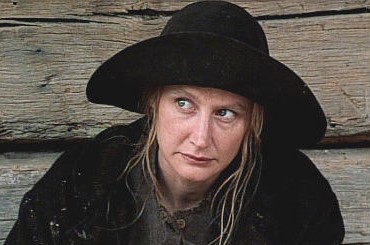
One key problem with the film industry is that too many worthy productions fall under the radar and never find the audiences they deserve. Robby Henson’s 1995 production “Pharaoh’s Army” is one of a countless number of smaller gems that never caught a break. Barely released in theaters and dumped into DVD release in 2004 with no fanfare, it remains an unfairly obscure title. This is a major shame, since “Pharaoh’s Army” is a provocative surprise at every level.
Set in 1862 Kentucky, the film is centered at the small farm of Sarah Anders (Patricia Clarkson). Her husband is off fighting for the Confederacy, and the tragedy of her young daughter’s death is aggravated by Yankee sympathizers who dug up and vandalized the child’s grave. She is alone with her 11-year-old son when a five-member squad from the Union Army arrives at her farm to steal her livestock and supplies. In the logic of the Civil War, the families of the rebel troops are also enemies to the Union and, thus, must be punished.
But when one of the Union soldiers is injured in a freak accident on the farm, Sarah finds herself housing these blue-tailed flies until their comrade is able to travel again. The squad’s captain (Chris Cooper) is attracted to Sarah, even though her sympathies (both emotional and political) lie elsewhere.
“Pharaoh’s Army” is unusual by depicting the Civil War’s ravages on the lives of ordinary people. Forget about Rhett and Scarlett, because the muddy Anders farm and the dreary toil in planting corn and feeding chickens was closer to the rural Dixie reality of that tumultuous era. Henson’s unadorned screenplay and Doron Schlair’s cinematography may seem bleak at first, but it brilliantly mirrors the harshness of this environment and the frictions experienced by those caught up in its chaos.
Throughout the film, its characters often wonder what the war is all about. The captain’s farming background puts him closer in kinship to Sarah, while one of his men (a Polish immigrant) doesn’t understand why so many men would sacrifice their lives for the sake of freeing the “nigs.” Sarah’s ambivalence to her unwanted guests ebbs and flows from hostility to indifference to brief flashes of maternal warmth and then back to frustration-laced anger. Her son, whose occasional narration through an elderly man’s voice of recollection holds the narrative together, is both baffled and upset by the intrusion into his life, and his pilfering of the injured soldier’s revolver early in the film plants the anticipation of a violent climax. (The act of gunplay is inevitable, but its results are highly surprising.)
In case you are wondering where the title comes from, it is from an Exodus passage cited by a humorless, pro-rebel preacher (Kris Kristofferson in a small but pivotal role that could have snagged an Oscar nomination if the film had any marketing muscle behind it). The odd title may have doomed the film’s commercial chances because it suggests a Cecil B. DeMille-style Biblical epic rather than this small, beautifully crafted work of emotional art.