
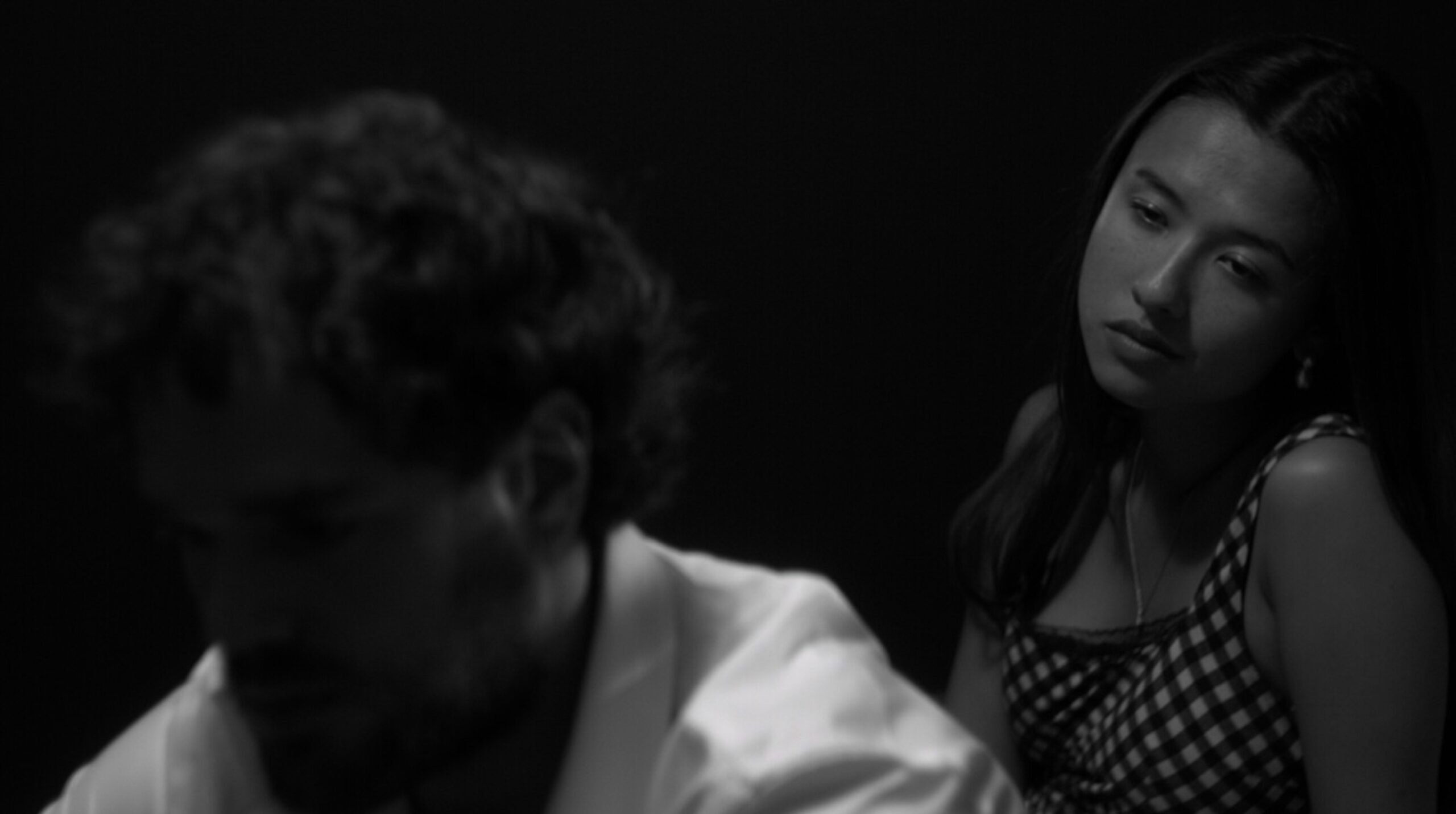
 What begins as an ambitious plan to steal a luxury car quickly spirals into a crime story filled with unexpected complications, fractured relationships, and the harsh reality that living like a gangster is far more complicated than it looks.
Centered on two brothers desperate to pull off a simple heist, Parallel Gazes (Les regards parallèles) (2026) blends crime drama, dark comedy, and surreal humor into a stylish debut that constantly subverts audience expectations. Written and directed by Vincent Bonin-Arena, the film embraces absurd dialogue, unconventional storytelling, and genre-bending moments that create an experience equally interested in comedy as it is in the consequences of ambition. What could have been a straightforward heist film becomes a meditation on friendship, loyalty, and the dangerous allure of choosing the wrong path as we witness the brothers take on their first crime assignment that goes from a brief victory to a dark descent.
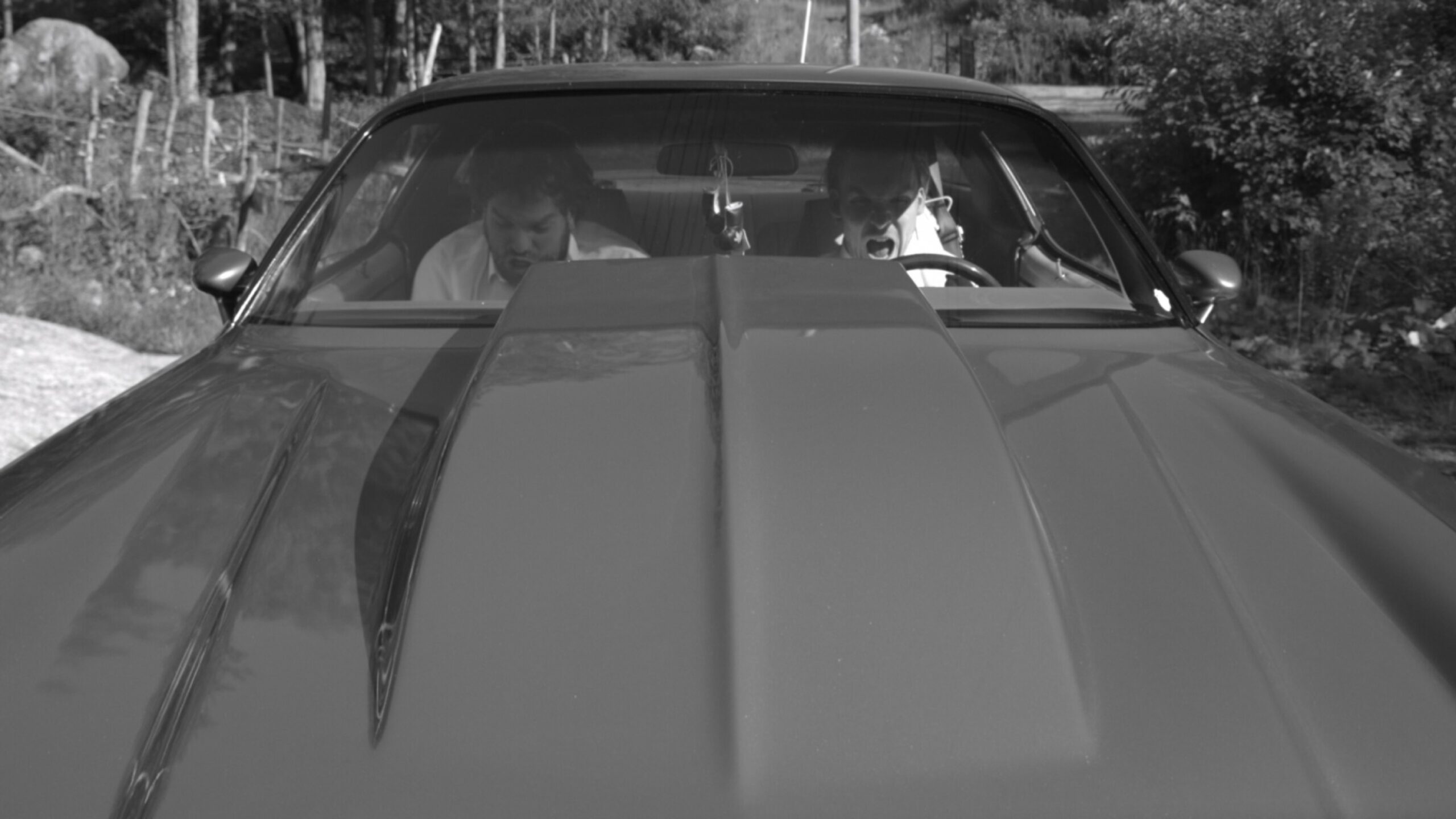 Mattis Savard-Verhoeven plays Félicien with a charisma that makes his blindness to his own limitations genuinely funny and gradually genuinely sad. He is a young man performing the role of a criminal with the conviction of someone who has studied the part without understanding the material, and Savard-Verhoeven plays that performance within a performance with a layered precision that keeps Félicien sympathetic even as his decisions grow increasingly difficult to defend. The desire to make his grandmother proud is real and recognizable beneath all the posturing, and it makes him considerably more interesting than simple ambition alone would allow.
Maxime Genois brings a warmer, more openly naive energy to Jean-Jacques, whose motivations are simpler and whose emotional investment in the outcome is no less genuine for that simplicity. He wants money. He wants admiration. He wants his girlfriend to be impressed. Genois plays these uncomplicated desires with an earnestness that makes Jean-Jacques the film’s most quietly heartbreaking figure, a person whose optimism the narrative slowly and methodically runs out of room to sustain.
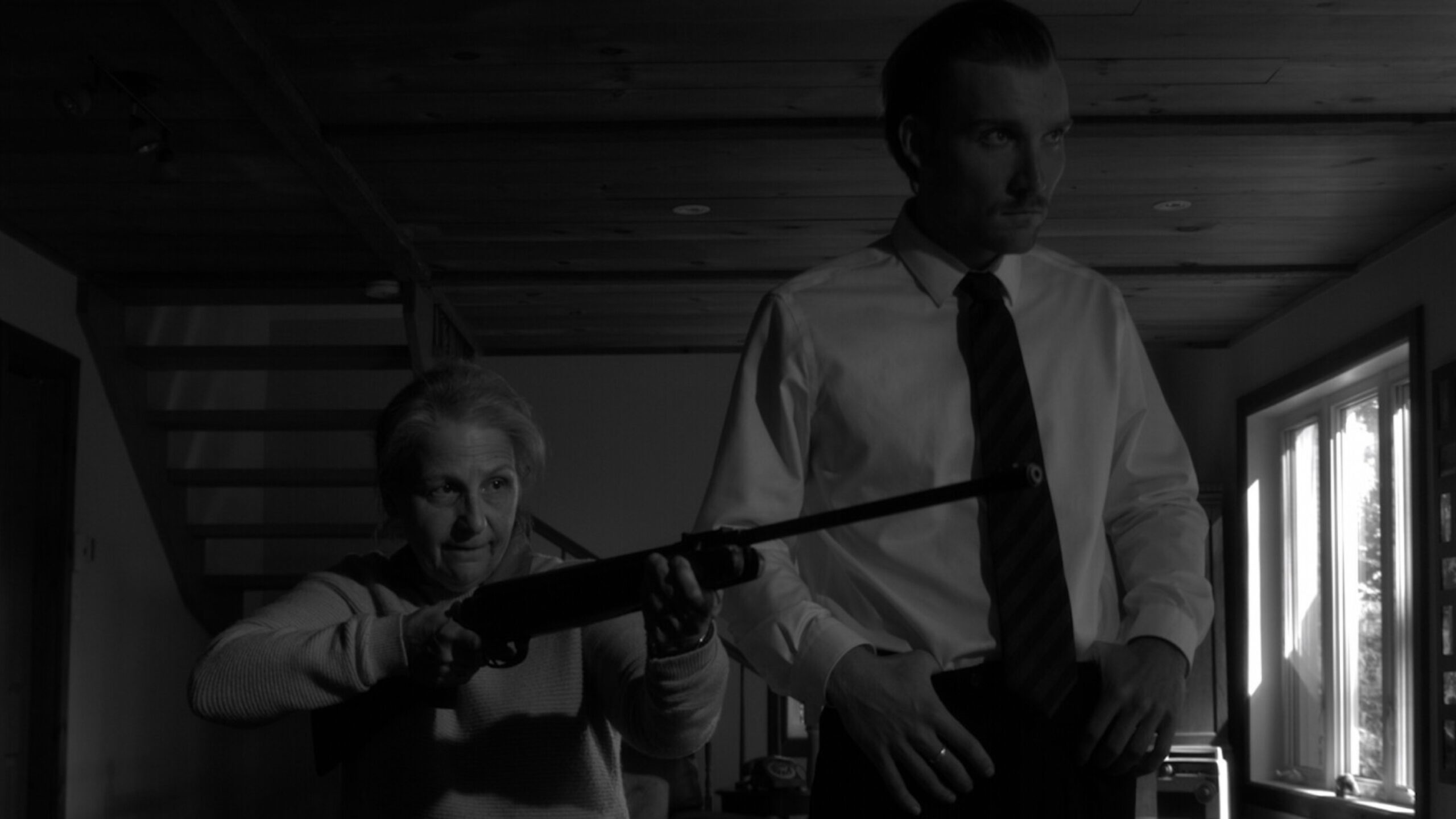 Parallel Gazes immediately distinguishes itself through its striking black-and-white cinematography. Rather than merely a stylistic choice, the monochromatic presentation reinforces the film’s noir influences while contrasting sharply with its offbeat sense of humor. The film favors carefully composed frames, slow camera movements, and deliberate pacing that encourage viewers to absorb the awkward interactions and surreal situations unfolding before them. The recurring musical score becomes another defining feature of the film. Although repetitive by design, it creates a rhythm that complements the narrative’s escalating absurdity, making otherwise ordinary conversations feel strangely suspenseful. Throughout the film, moments of tension are interrupted by unexpected humor, while scenes that initially appear comedic gradually reveal darker consequences beneath the surface.
While Parallel Gazes unfolds at a measured pace, its slow-burn approach allows the characters and relationships to develop naturally before the inevitable unraveling begins. The performances remain fully committed throughout, grounding even the film’s most surreal moments in genuine emotion. The ending arrives exactly where the film has been pointing all along, inevitable in retrospect and no less effective for it. Parallel Gazes understands that the tragedy of choosing the wrong path is not that you cannot see where it leads. It is that you can, and you keep walking anyway.
Fantasia 2026 runs from July 16th to August 2nd, 2026