
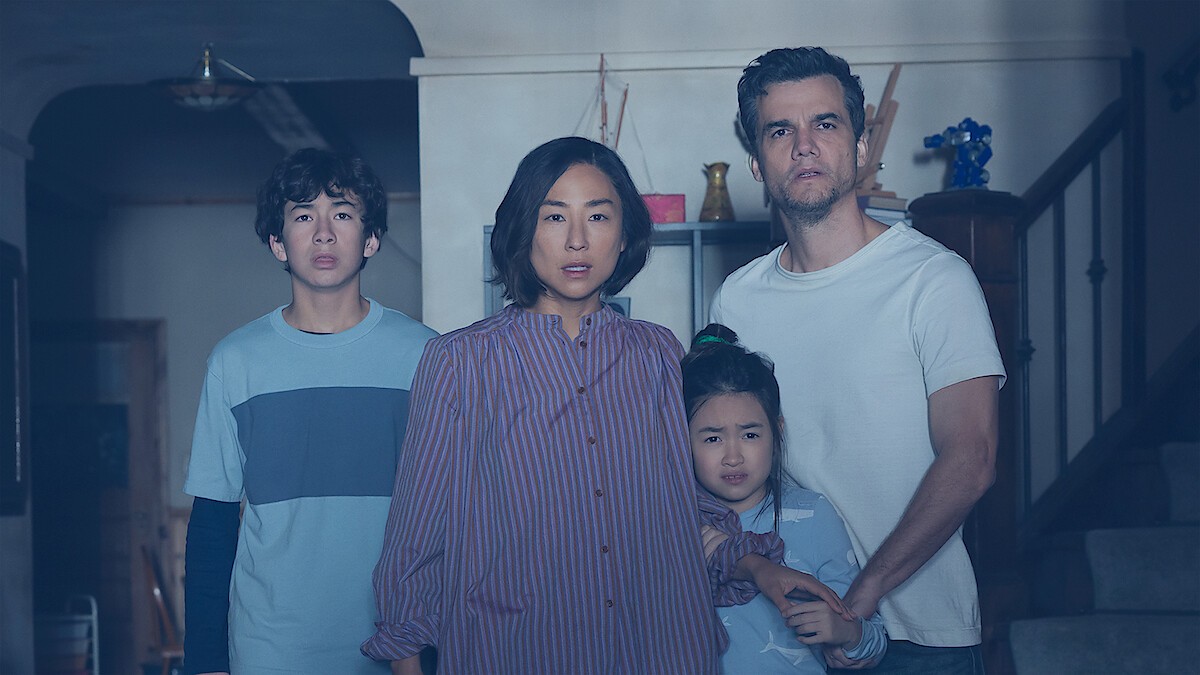
 An ordinary day for a family of four turns into a desperate struggle for survival after they wake up to find themselves mysteriously trapped inside their home.
With no way to open the doors or windows and communication with the outside world suddenly gone, The Last House (2026) takes the familiar idea of home as a place of safety and turns it into an increasingly claustrophobic prison. Blending science fiction, survival thriller, family drama, and creature-feature horror, the film delivers a slow-burning story centered less on a massive body count and more on the frightening question of how long an ordinary family could survive with only the resources already inside their home. Written by Matthew Robinson and directed by Louis Leterrier, the film uses its mysterious disaster to explore resourcefulness, fear, family dynamics, and what people are capable of when survival becomes their only priority. Jason Delgado and his family, wife Ann, children Graham and Ruth, and dog Cassidy, find themselves trapped in the house when an unusual storm hits their suburban home. The family quickly loses access to power, water, supplies, and outside communication, only to discover their neighbors are similarly sealed inside. As resources dwindle, they realize the rain brings hostile, mysterious creatures.
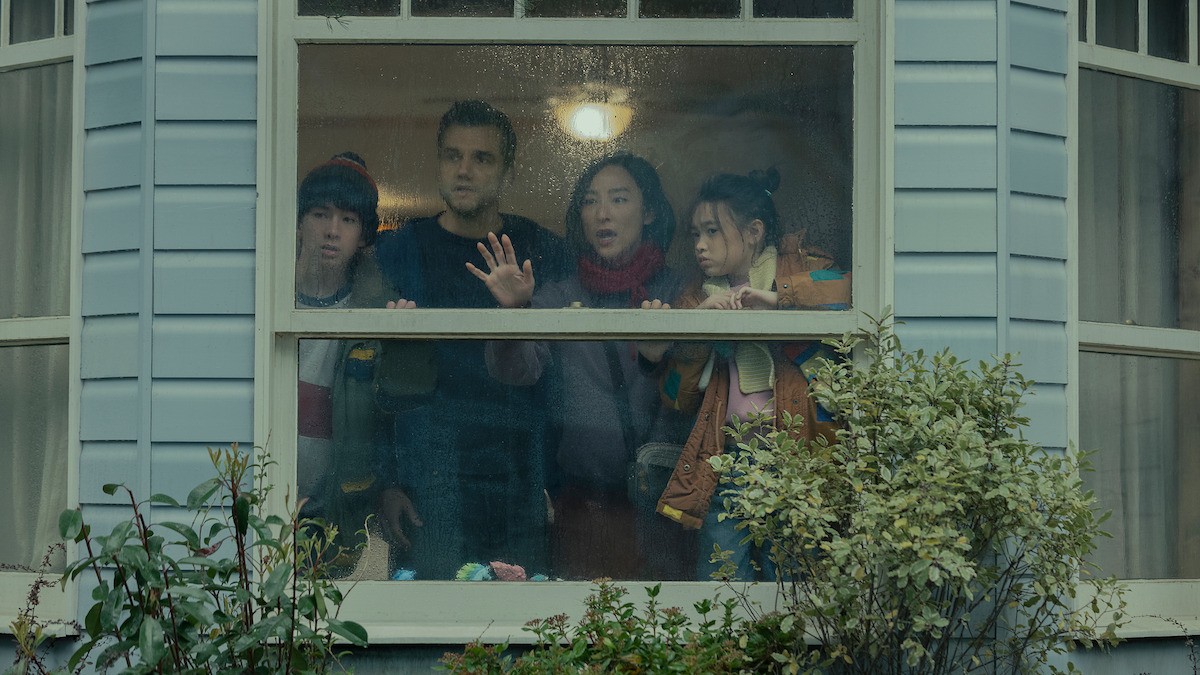 Greta Lee plays Ann, a mother trying to remain resourceful even as the reality of their situation becomes increasingly overwhelming. Ann is willing to take risks when necessary, particularly when the survival of her family is involved, but the film also allows her to be afraid. Lee captures the emotional exhaustion of someone attempting to remain present for her children while privately recognizing just how hopeless their circumstances could become. Ann’s fear never makes her helpless. Instead, it makes her resourcefulness feel more believable because every decision comes from understanding what she could lose.
Wagner Moura brings a similarly grounded quality to Jason. With his engineering background and practical survival skills, Jason naturally becomes one of the family’s primary problem-solvers. He tries to keep everyone hopeful while constantly searching for ways to make their limited resources last longer. Moura plays Jason as someone who understands that keeping his family alive requires more than simply protecting them from whatever exists outside. He must also maintain some sense of structure and purpose inside the house. His attempts to solve an impossible situation through science and logic give the story another interesting layer, particularly as the family encounters circumstances that cannot easily be explained.
 The Last House transforms a familiar suburban home into an increasingly threatening environment. The same rooms that initially represent comfort gradually become reminders of everything the family has lost. Windows provide a glimpse of the outside world but no escape from it, while the changing weather becomes an effective visual warning that danger is approaching. The film’s limited environment creates a claustrophobic feeling without requiring constant action. Much of the suspense comes from waiting, watching, and trying to understand exactly what is happening beyond the walls. The creatures are not constantly placed at the center of the story, allowing the mystery surrounding them to become part of the tension. The family dynamic becomes one of the film’s strongest elements. Rather than presenting the characters as experienced survivalists, The Last House asks what an ordinary family would realistically do when everything they depend on suddenly disappears. Food becomes valuable. Water becomes a concern. Electricity and communication can no longer be taken for granted. Small disagreements carry greater consequences because there is nowhere for anyone to go. The family’s ability to cooperate becomes just as important as their ability to defend themselves.
Interestingly, the film does not rely on constant deaths or violence to establish danger. Its relatively low kill count allows the story to concentrate on psychological pressure and survival. There is an ongoing feeling that something terrible could happen even during stretches when very little physically does. This makes The Last House considerably more of a slow burn than a traditional creature feature. Viewers expecting nonstop monster attacks may find the pacing restrained, but the approach allows the mystery and family relationships to remain at the center of the story. Those looking for constant action may find the slow-burn approach challenging, but viewers who enjoy contained science-fiction thrillers built around mystery and escalating tension should find plenty to appreciate.