
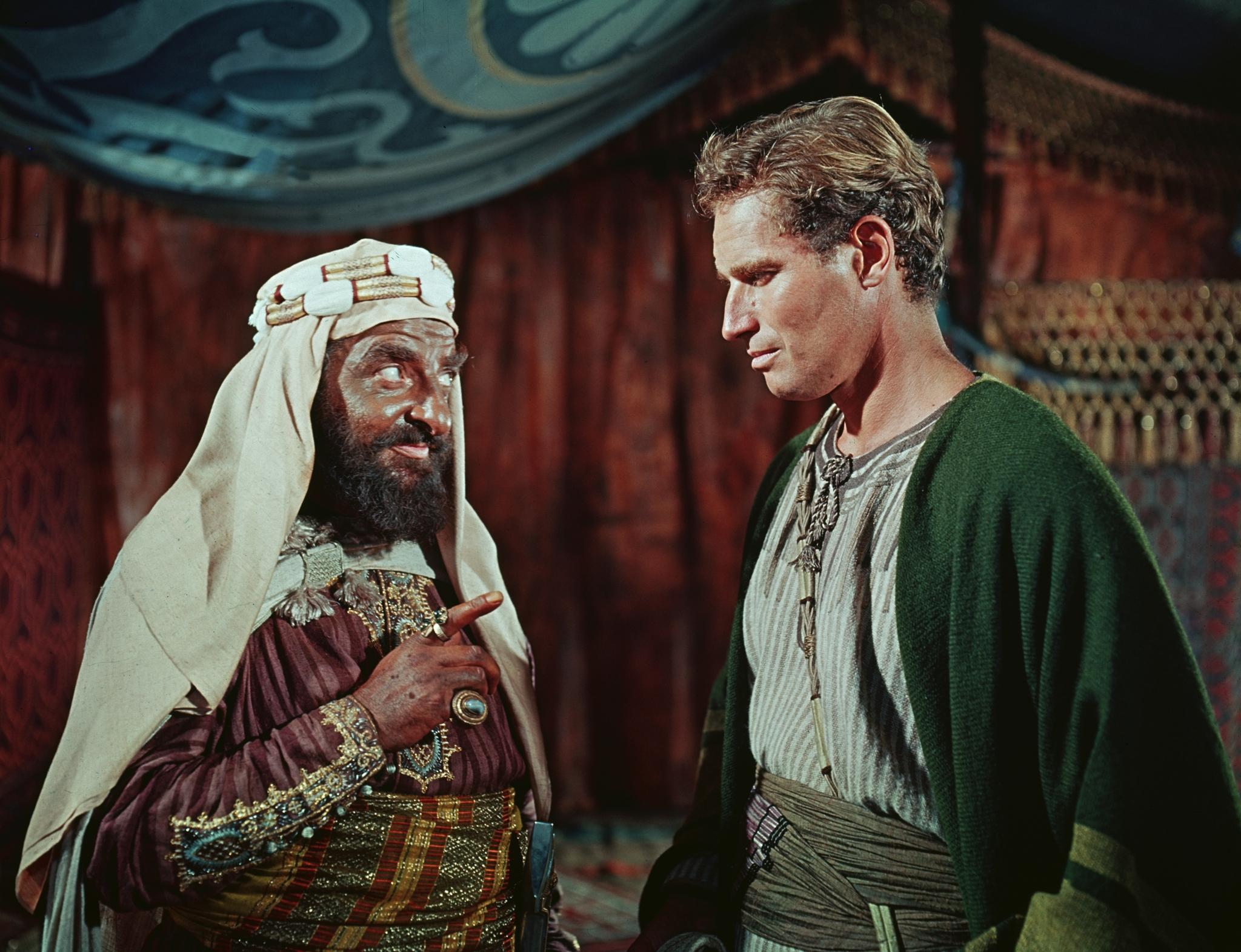
William Wyler’s 1959 “Ben-Hur” is a film that generates respect, if not adulation. And there is no reason to feel guilty about not loving this mammoth three-and-a-half-hour epic. Gary Giddins, writing in the New York Sun, probably summed it up best: “Watching ‘Ben-Hur’ all at once is like sitting down to a 10-course meal and finding that every course consists of potato dumplings, except for the seventh, which is strawberry shortcake (that would be the chariot race).”
Yes, “Ben-Hur” is certainly an eye-popping spectacle of old-school cinema that throws in everything but that proverbial kitchen sink: pageantry, seething melodrama, thousands of extras, huge sets, a touch of vague religious piety and a surplus of testosterone-fueled action. The chariot race is the crowning achievement here – not directed by Wyler, but by Andrew Marton with invaluable input by Yakima Canutt – and any student of action filmmaking needs to watch this sequence to understand the basics of editing, sound effects and stuntwork.
But despite the over-the-top production design, “Ben-Hur” takes itself much too seriously in presenting Lew Wallace’s overcooked Sunday School lesson. Anyone expecting the typical campy fun of the sword-and-sandal genre will be in for a rude shock as this solemn odyssey drags on and on and on. (As with most widescreen epics, this film loses its visual power when the 70mm panorama is telescoped for TV viewing.)
Charlton Heston’s stolid central character is something of a bore – the star was years away from developing his self-deprecatory teeth-gnashing style – and it is easy to look beyond him and witness the luscious scenery being vigorously chewed by veteran British hams Jack Hawkins, Finlay Currie and Hugh Griffith (who someone snagged a Best Supporting Actor Oscar despite being caked in Al Jolson-worthy blackface).
And speaking of Oscars, “Ben-Hur” won 11 Academy Awards including Best Picture. But, really, can anyone with seriously claim that “Ben-Hur” was better than the other four films that were up for Best Picture – “Anatomy of a Murder,” “Room at the Top,” “The Diary of Anne Frank” and “The Nun’s Story”?