
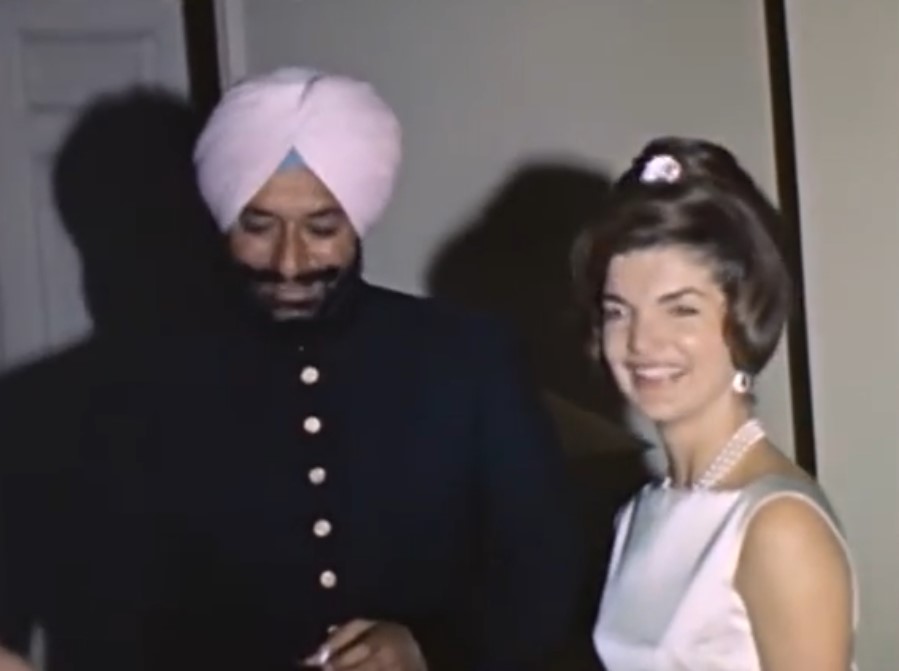
Long before Brett Ratner pointed his cameras at Melania Trump, another First Lady was given the big screen treatment. And while the resulting film may not have been a cinematic classic, at the time it proved to be an invaluable marketing tool for the administration of that First Lady’s husband.
In early 1962, U.S. relations with India were on shaky ground, and the administration of President John F. Kennedy believed the glamorous First Lady Jacqueline Kennedy could save the day with a goodwill tour. And rather than risk upsetting India’s neighbor and rival Pakistan, the administration opted to extend the tour to include a visit to that nation.
The goodwill tour was viewed in Washington as a significant diplomatic endeavor, and the United States Information Agency (USIA) was tapped to create a documentary on the trip. Rather than rely on its in-house staff, the USIA recruited the Hearst Metrotone News organization to oversee the production. Oscar-winning documentary director Leo Seltzer worked behind the camera and distinguished actor Raymond Massey was hired to serve as narrator.
Viewed today, “Jacqueline Kennedy’s Asian Journey” comes across as a boring travelogue, with the stylish First Lady and her equally fashionable sister Lee Radziwill (who is never identified by name) making appearances at a series of photo ops that include riding a painted elephant, riding a camel, visiting a pediatric hospital, visiting monuments including (of course) the Taj Mahal, and attending functions with the local government leaders.
Mrs. Kennedy is never interviewed on camera, and we only hear her voice briefly when she gives a pair of prepared remarks at special events, and later she has follow-up comments that are heard on the soundtrack. Instead, the film’s soundtrack is burdened with Massey’s sonorous voice reciting a pretentious narration that speaks of the region’s noble past with the camera captures the obviously ignoble poverty that the Indian and Pakistani people were experiencing.
But back in 1962, Mrs. Kennedy could do no wrong, and her trip was seen as a major diplomatic victory for her husband’s administration. That was no surprise, considering her popularity surpassed her husband’s – even the president would joke that people came to see her rather than him. And while the political aspects of the trip were acknowledged at the time, the press coverage also placed a great deal of emphasis on her wardrobe. While Massey’s narration avoids that subject, it is difficult not to notice her chic clothing. Seriously, check out those white gloves that Mrs. Kennedy wears throughout the trip!
USIA films were never meant to be screened in the U.S. but were packaged for release overseas. In the case of this production, the rules were altered for a domestic theatrical release. United Artists won the rights to theatrically release “Jacqueline Kennedy’s Asian Journeys,” with the caveat that its box office returns were donated back to the USIA so the agency could produce more Cold War-era propaganda films.