
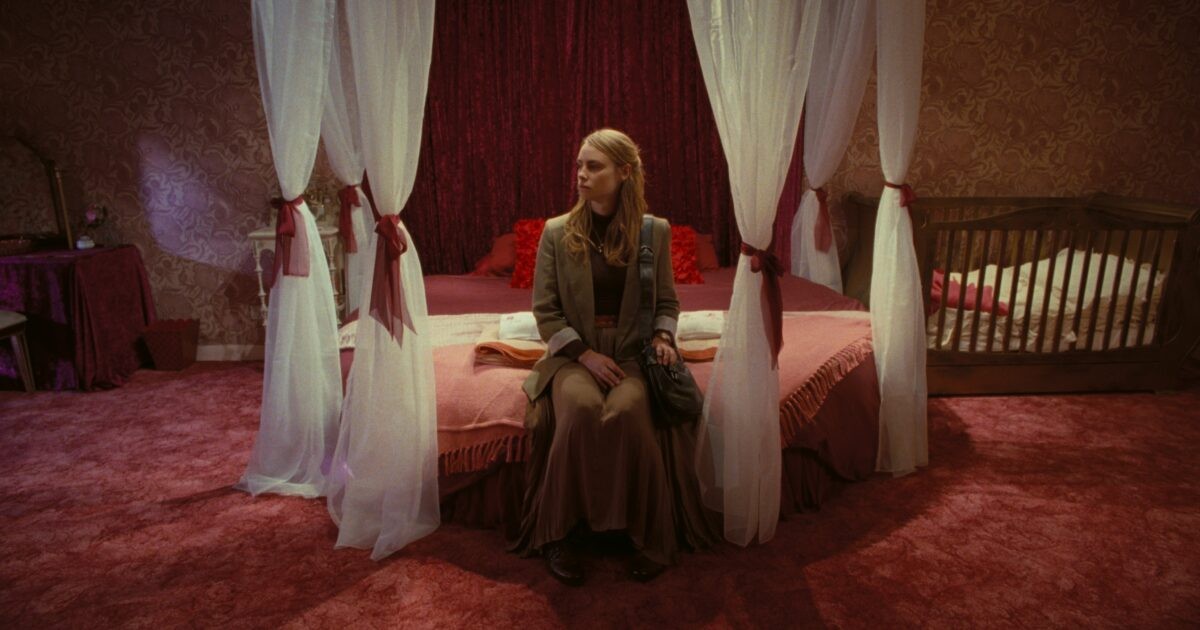
What begins as a struggling actress trying to build her career quickly dissolves into something far more sinister, a waking nightmare of trauma she can’t explain.
I Live Here Now is a slow-burning psychological horror wrapped in drama. The film constructs its unease methodically, trading jump scares for an unshakeable sense that reality itself is being eaten from the inside out. The film centers on Rose, an aspiring actress caught between the high-stakes pressure of a career breakthrough with a power agent and the shock of an unplanned pregnancy. Pushed to a breaking point by her iffy boyfriend, Travis, and his suffocating mother, Rose seeks refuge at The Crown Inn, a decaying motel where the boundaries of time and logic start to dissolve. Written and directed by Julie Pacino in her feature debut, the screenplay resists easy answers, content to let its terrors accumulate until the weight becomes almost unbearable. Shot on vibrant 35mm with striking 16mm sequences, Pacino trusts her audience to sit inside the wrongness and feel it without being handed an explanation. What distinguishes I Live Here Now from its genre contemporaries is how deeply, almost uncomfortably, it invests in the inner life of its central character. We feel and experience her fear and confusion. By the time the film reaches its fever-pitched final act, the line between what is happening and what she believes is happening has been deliberately, masterfully smeared.
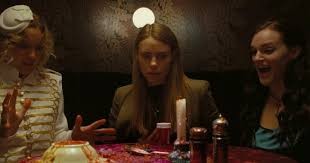
Lucy Fry anchors the film with a performance that is quietly ferocious. She is merely just a woman slowly coming undone in ways Fry makes feel inevitable and deeply earned. She moves through the film like someone perpetually fighting the instinct to run, cycling through survival modes, endurance, dissociation, fragile hope, without ever losing the thread of Rose’s specific, wounded interiority. Fry paints a picture of not just what Rose is going through, but why she hasn’t broken down yet, and why it matters so much when she nearly does.
Matt Rife takes on the role of Travis, Rose’s casual intimate friend. He is neither villain nor ally but a man who genuinely believes he means well while systematically failing to show up. Rife brings an eerie blandness to the role, a studied normalcy that makes his moments of passivity feel more threatening than any outright cruelty. He is the kind of obstacle that is hardest to name or escape, and Rife plays it with an unsettling ease that leans into how you never really know a person until you need them.
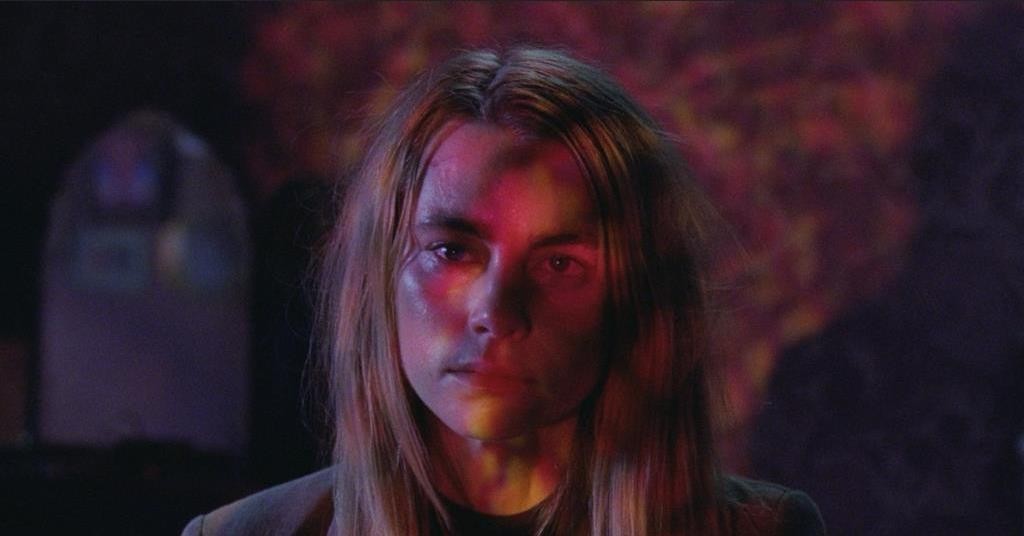
The 35mm grain gives the film a tactile, almost feverish quality; sequences are rougher, more fragmented, and function like torn pages from a memory Rose can’t fully reconstruct. The camera holds a stillness early on, wide shots of empty rooms and doorways held just a beat too long. As Rose’s reality destabilizes, so does the visual language: barely perceptible tilts, reflections that don’t match their angles, images that feel simultaneously too vivid and not quite there. The production design compounds this unease through details that linger in the motel’s peeling grandeur, its rooms arranged like stages for rituals not yet performed, hallucinations pressing in at the edges of otherwise mundane moments. The film utilizes subterranean drones and faint, textural hums that vibrate beneath seemingly quiet moments, triggering a visceral sense of dread before the viewer even realizes it.
I Live Here Now is a work of horror that trusts its viewers, opting for hallucinating, creeping dread rather than slashing and cheap thrills. It anchors its stakes in a genuine concern for its lead character and her trauma. Ultimately, the film serves as a powerful arrival for Pacino, establishing her not just as a rising talent but as a fully realized and fearless new force in the world of genre film.